

Outer Foot Pain After an Ankle Sprain: Cuboid Subluxation
If the outer middle of your foot keeps hurting after an ankle sprain, cuboid subluxation should be checked as well.
Sometimes, a few weeks after spraining an ankle, the swelling has gone down but the outside of the foot still throbs with every step. In that case, you may be dealing with a problem that an ankle sprain alone doesn't explain: cuboid subluxation (a slightly displaced cuboid bone). If you're struggling with ankle pain in Bangbae, this guide will help you tell the two problems apart and find the right direction for care.

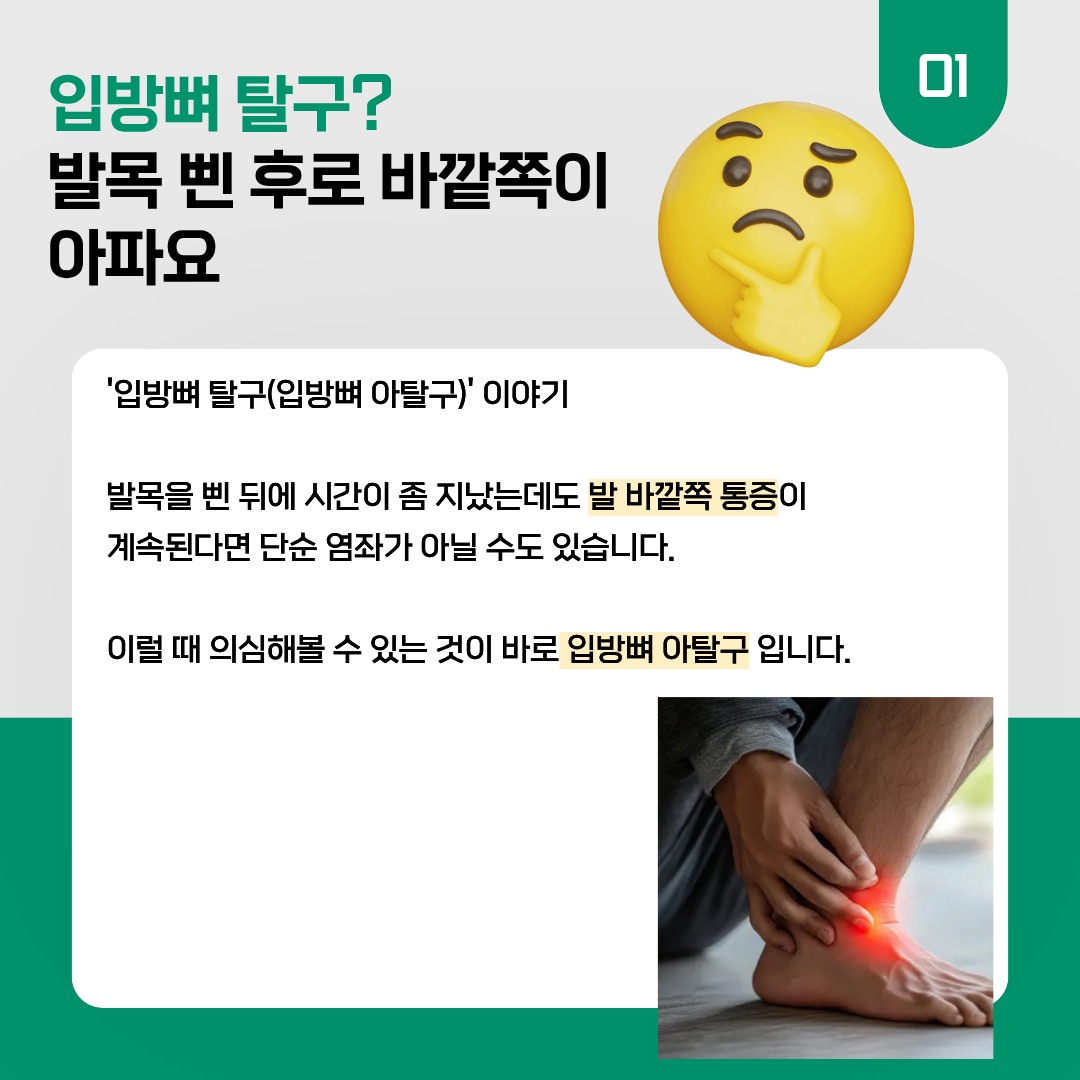
Cuboid Subluxation: The Problem Hiding Behind an Ankle Sprain
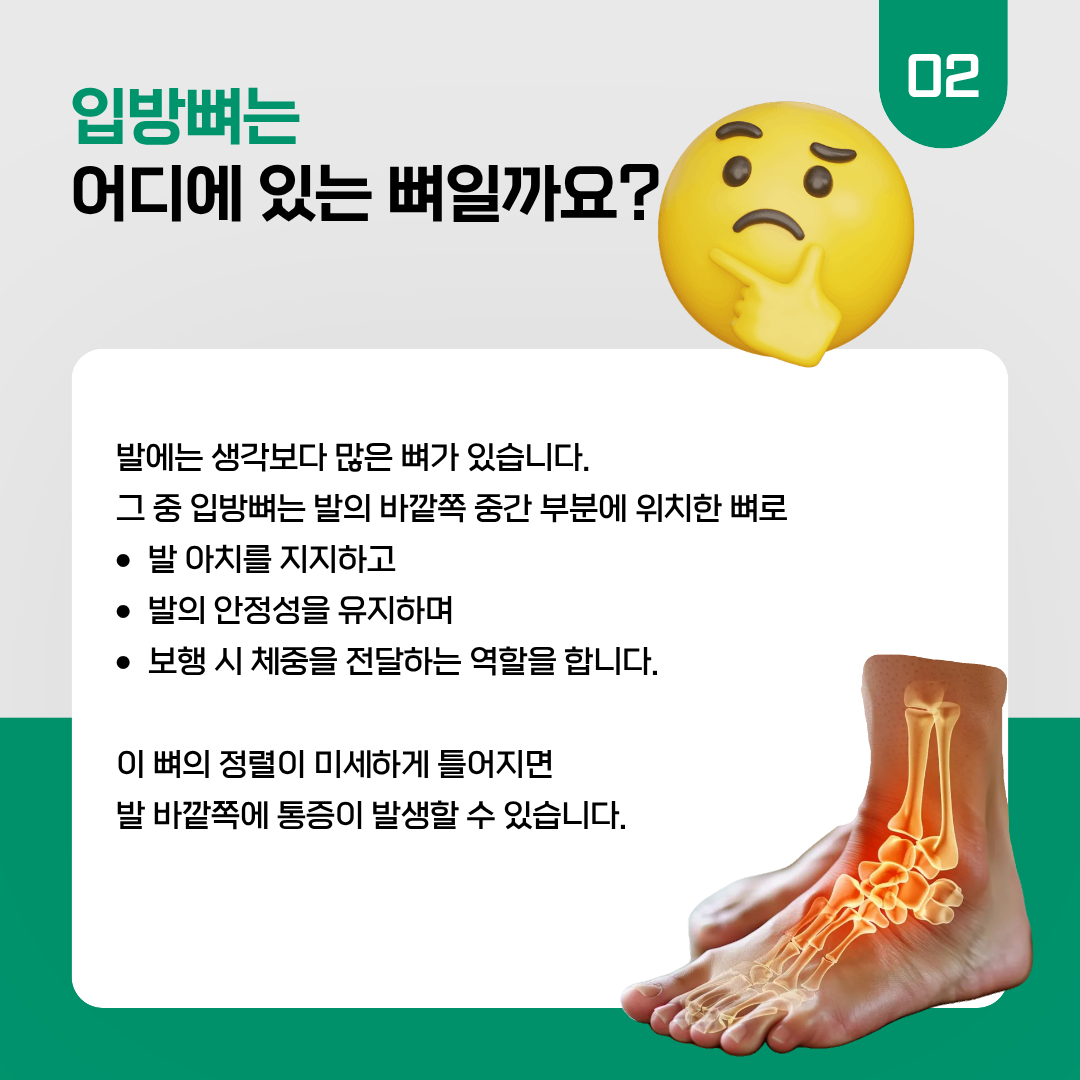
The foot contains more bones than you might think. The cuboid is one of them, located in the middle of the outer side of the foot. It supports the arch, keeps the foot stable, and helps shift your body weight forward as you walk.
Even a very slight misalignment of the cuboid can cause pain on the outside of the foot. This condition is called cuboid subluxation.
Why Does It Often Follow an Ankle Sprain?
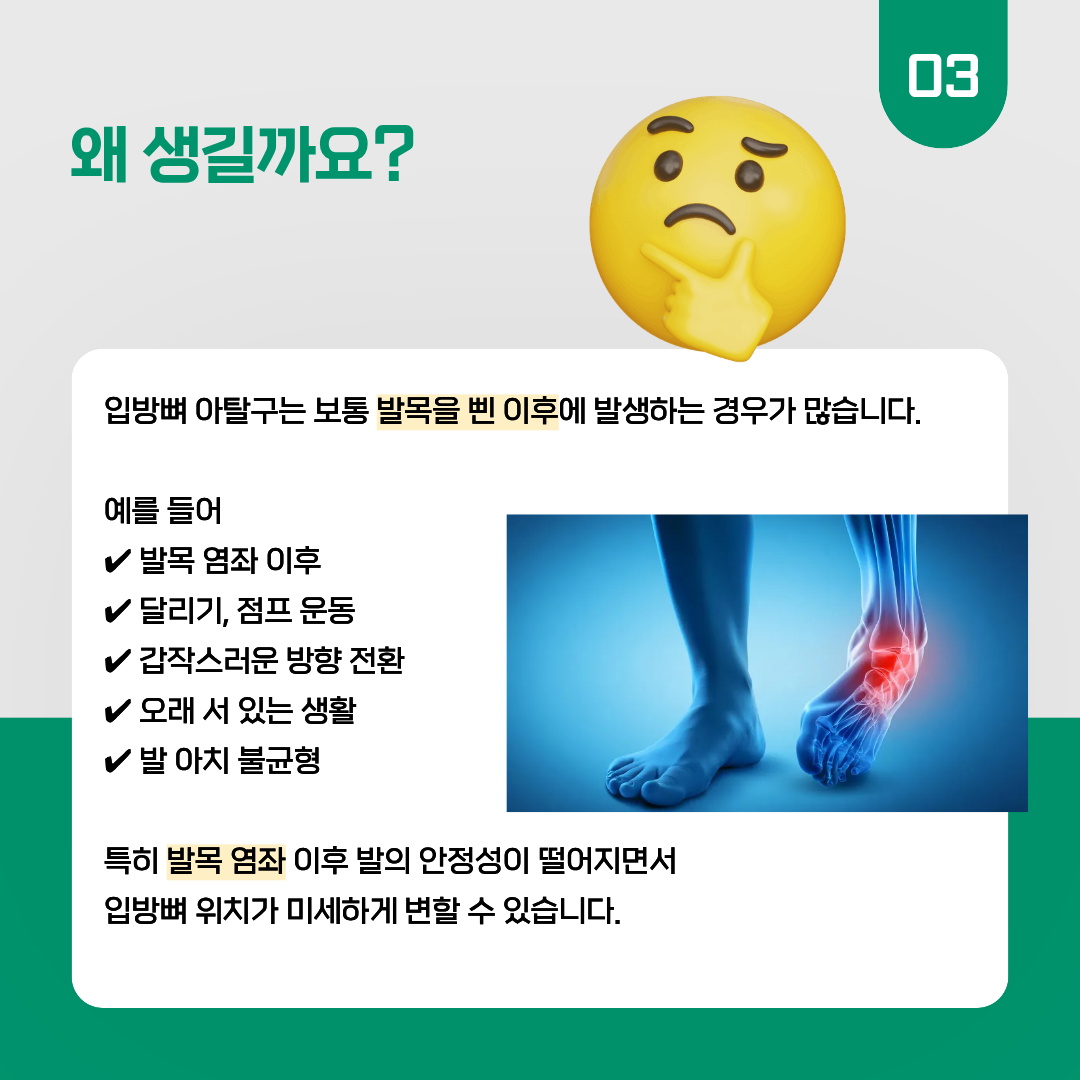
Cuboid subluxation frequently follows an ankle sprain. While the foot is less stable after a sprain, the position of the cuboid can shift slightly. Other contributing factors to consider include:
- A previous ankle sprain
- Running and jumping sports
- Sudden changes of direction
- Spending long hours on your feet
- An imbalanced foot arch
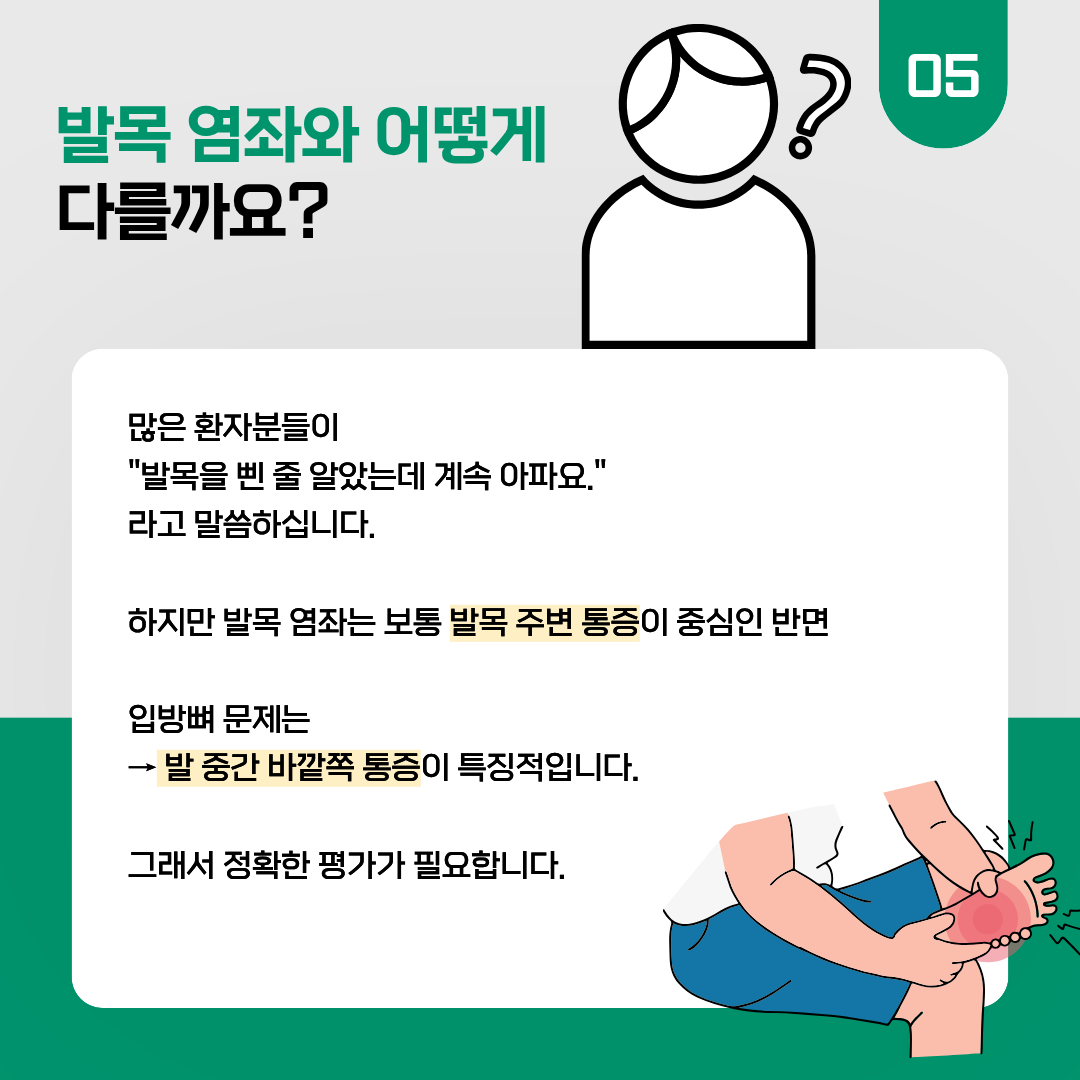
Ankle Sprain vs. Cuboid Subluxation: The Pain Is in Different Places
Many patients ask, "I definitely sprained my ankle, so why is it still hurting this long?" Because the two problems hurt in different spots, pinpointing the location is the starting point.
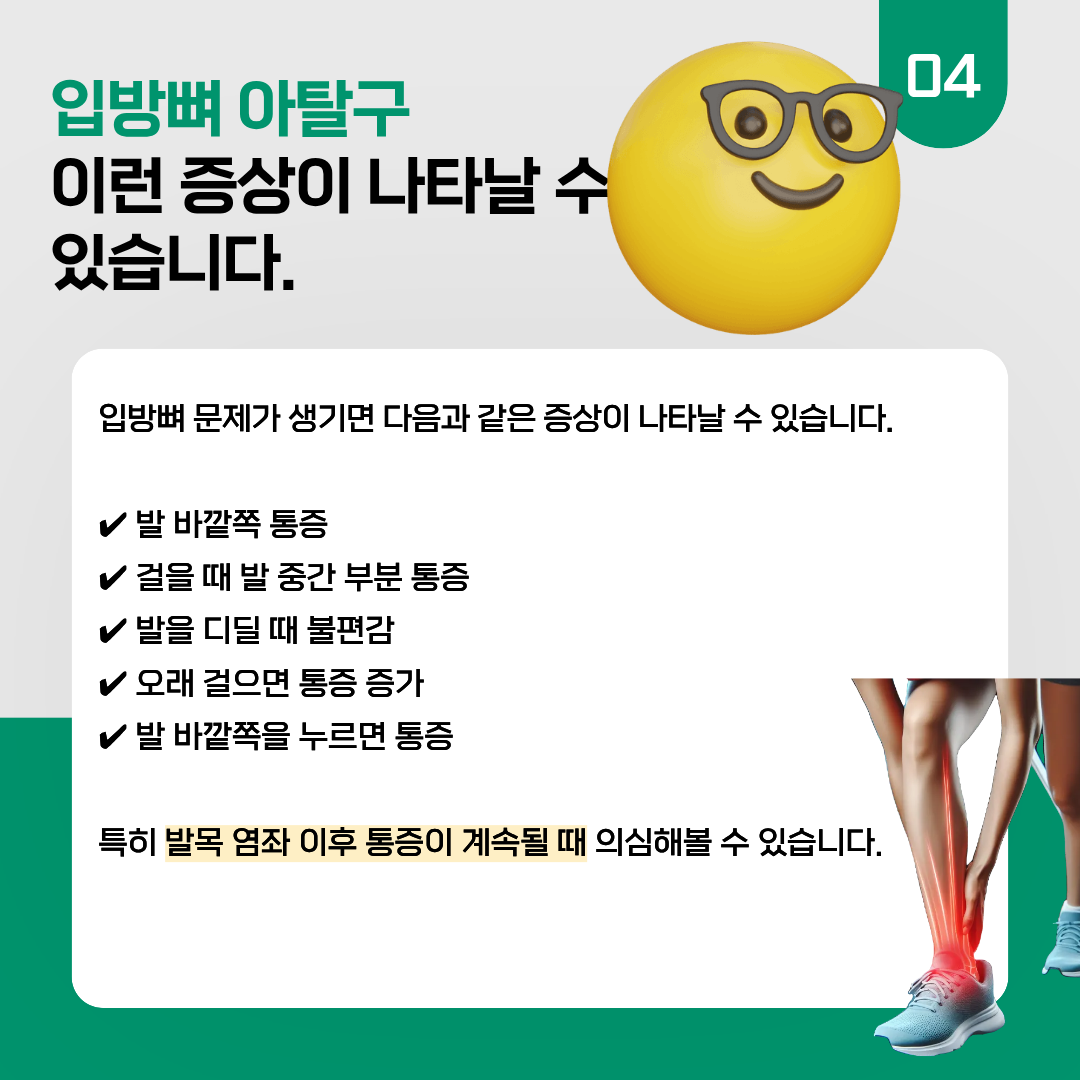
With cuboid subluxation, you may notice the following:
- Pain on the outside of the foot
- Pain in the middle of the foot when walking
- Discomfort when stepping down
- Pain that increases the longer you walk
- Pain when pressing on the outside of the foot
If this kind of pain continues after an ankle sprain, the cause should be identified with an accurate evaluation.
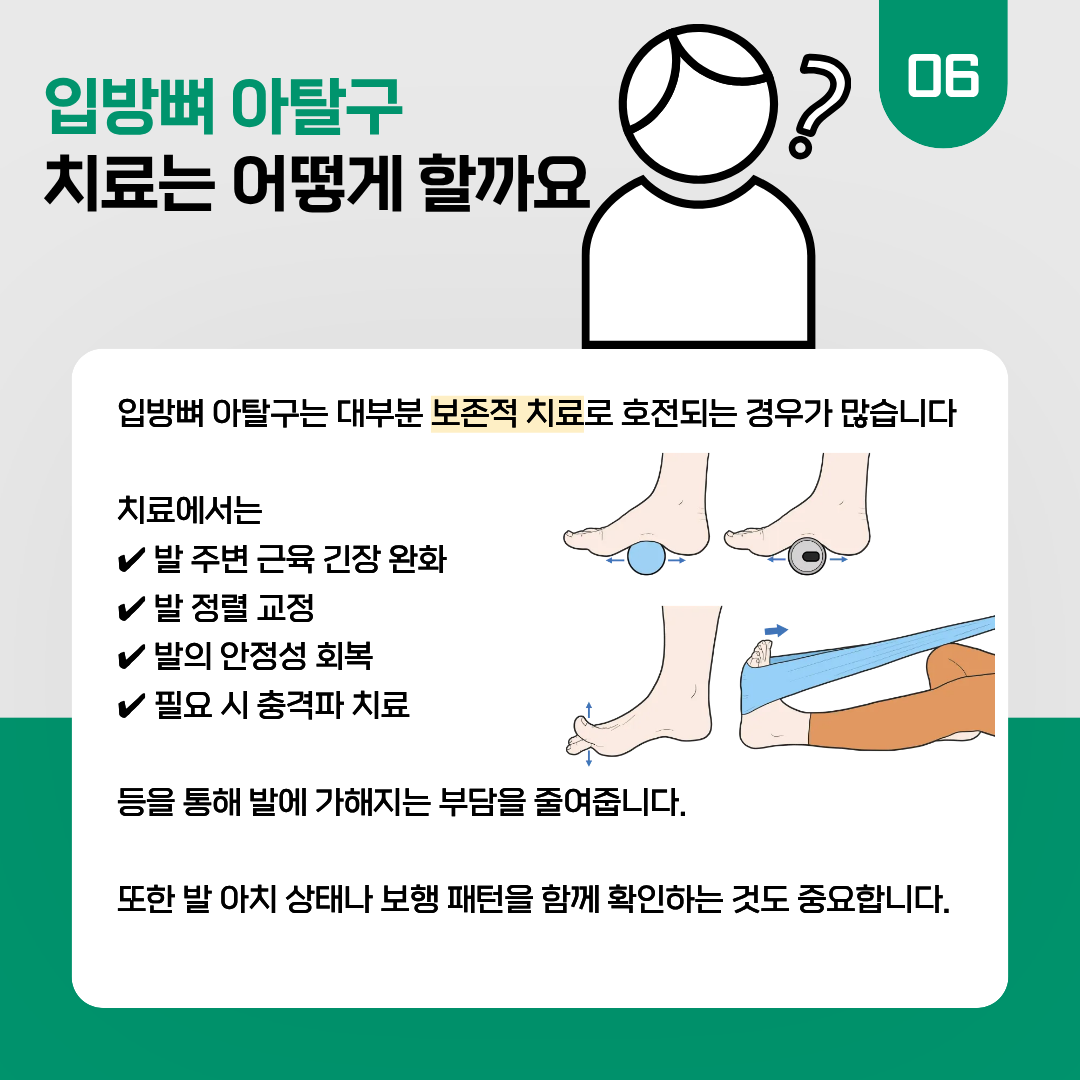
Treatment for Cuboid Subluxation Is Mainly Conservative
Most cases improve with conservative treatment. The process involves releasing tension in the muscles around the foot, correcting foot alignment, and restoring stability, with shockwave therapy added when needed to reduce the load on the foot.
We also check the condition of the foot arch and your gait pattern. If only the cuboid's position is corrected and the way you walk stays the same, pain on the outside of the foot can return.

Wrapping Up
- If pain on the outside of your foot continues after an ankle sprain, cuboid subluxation may be the culprit.
- The key to telling them apart is that the pain is in the outer middle of the foot, not around the ankle.
- Foot pain can disrupt your gait pattern and foot function, so it's best to get it checked and managed early. Whether you need treatment, and which approach is right, varies from person to person.
Last reviewed: 2026-10-07 This article provides general medical information. Individual diagnosis and treatment decisions are made during an in-person consultation.