

Child Sensitive to Touch: Tactile Sensitivity and Sensory Development
A child who is sensitive to touch is better understood as having differences in sensory development than as being picky
If your child bursts into tears over a sock seam or a single clothing tag, they may be sensitive to touch. We'll start by explaining that this often comes from differences in sensory development rather than a fussy personality, then go over why it happens and how you can help at home.

"It's scratchy!" "It's wet!" In more than a few homes, getting dressed turns into a battle every morning. A sock seam or T-shirt tag that doesn't bother anyone else can feel like a thorn to this child.
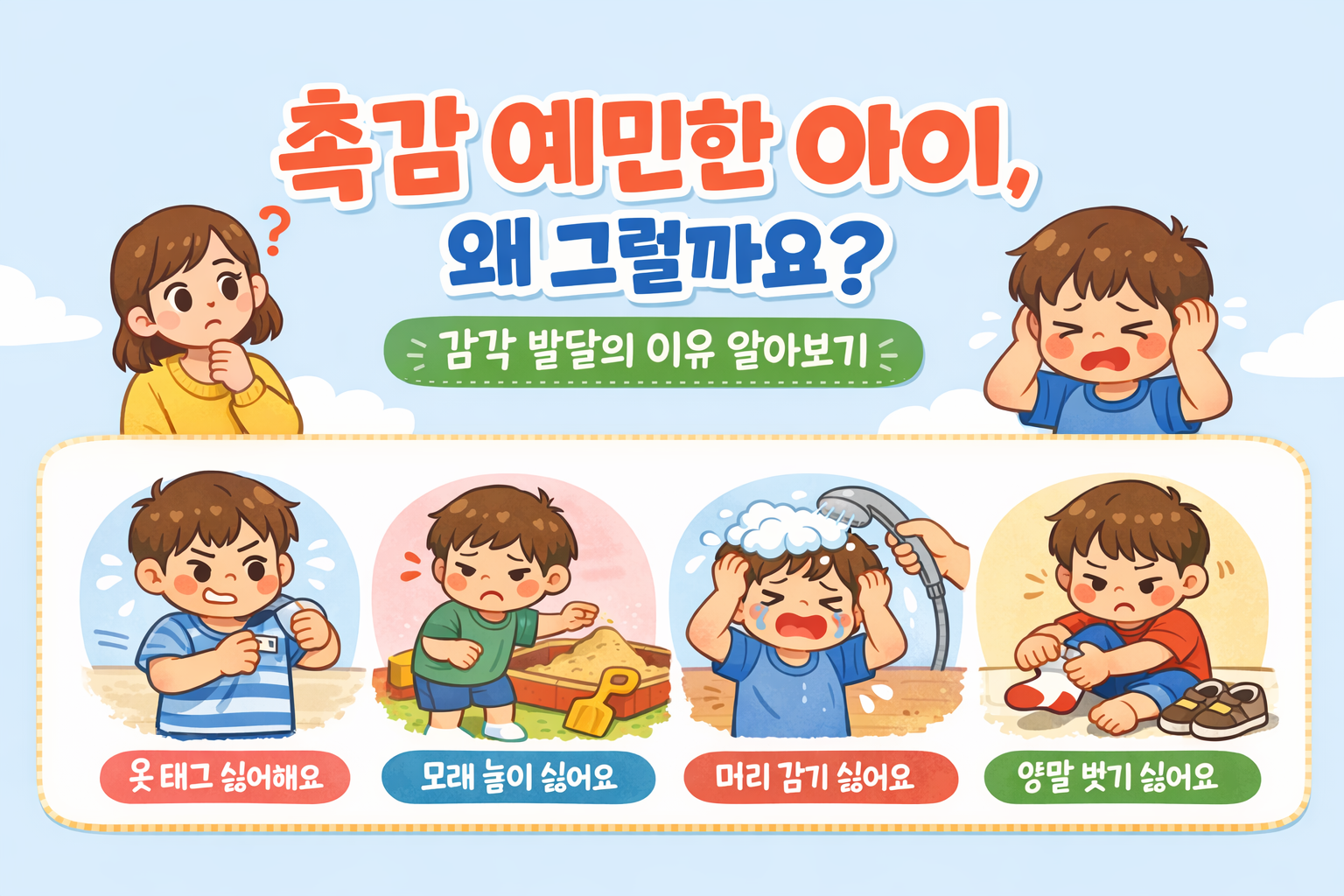
Is this a personality issue?
Raising a child, you may run into moments like these:
- Keeps asking you to cut off clothing tags
- Dislikes playing with sand or clay
- Strongly dislikes hair washing and nail trimming
- Tries to take off socks or clothes if they're even a little uncomfortable
At times like these, parents often ask, "Is my child just unusually sensitive by nature?" In reality, though, it's often related more to "sensory development" than to personality.
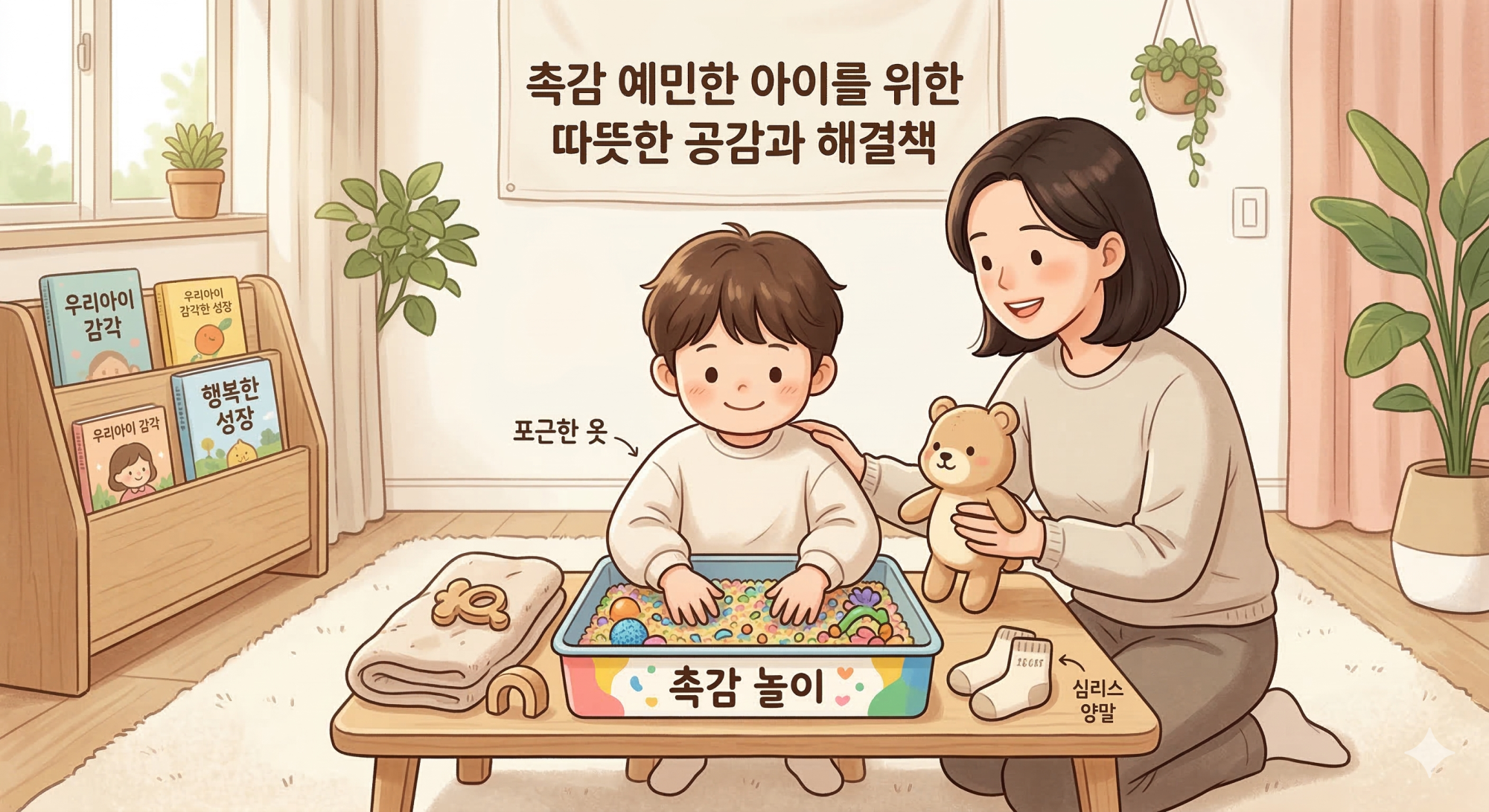
Touch-sensitive children and sensory sensitivity
Our bodies have a sensory system that takes in and processes outside stimulation. The main senses are touch, vision, hearing, the vestibular sense that handles balance, and proprioception, which tells us where our body is.
When the sense of touch is overly sensitive, a child experiences even small stimuli as big ones. Sand, paint, clothing tags, and hair that don't bother other children become very uncomfortable for this child. This is called tactile sensitivity or tactile defensiveness.
Behaviors that may point to tactile sensitivity
If you see these behaviors often, tactile sensitivity is worth a closer look.
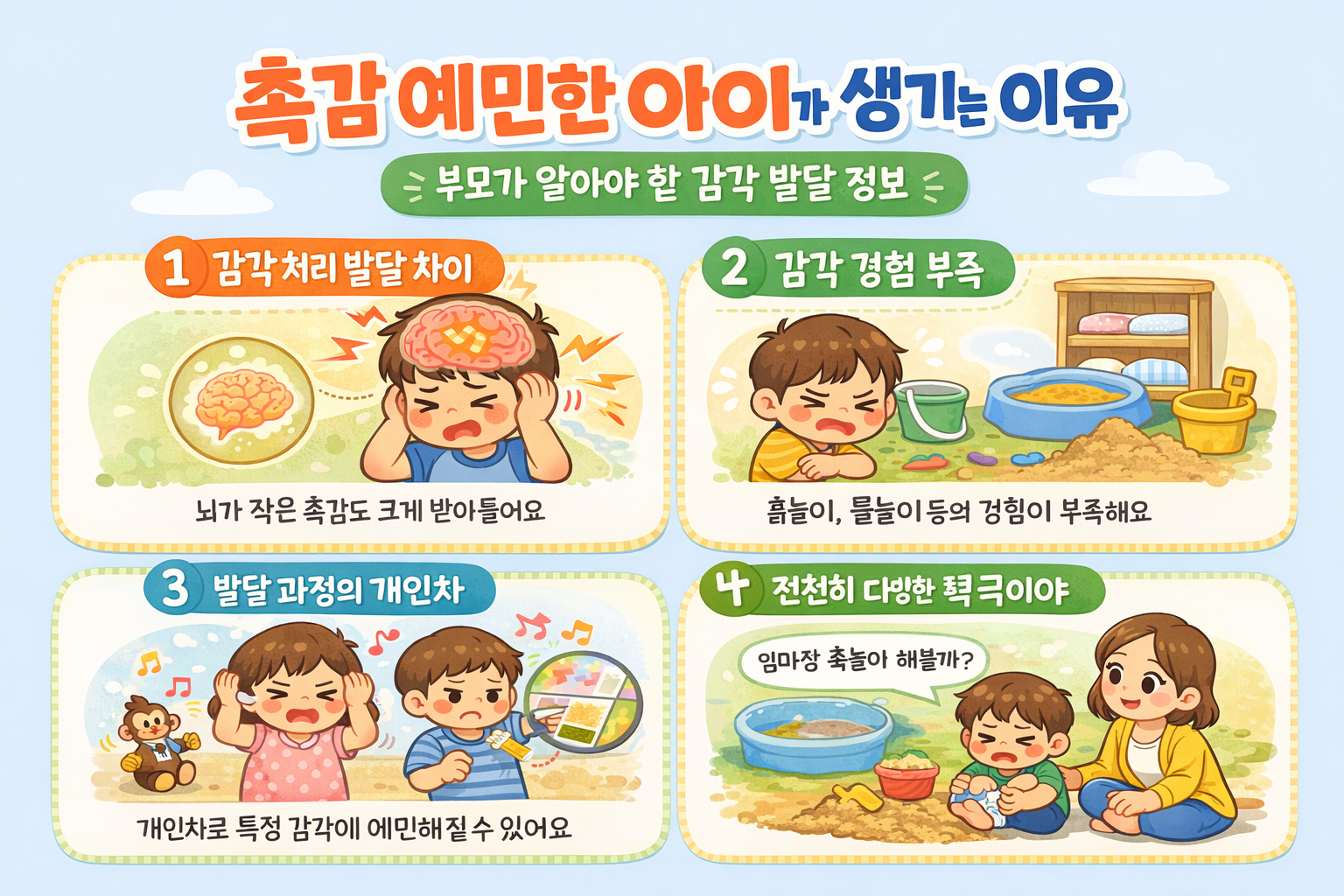
Why does tactile sensitivity happen?
There's no single cause; we usually look at it from these three angles.
Differences in sensory processing. Sometimes a child's brain, while processing sensory information, takes in stimulation as stronger than it really is. Then even a light touch feels intense to the child.
Limited sensory experience. If a child had few chances early on to play in dirt and water or touch different textures, their ability to adapt to sensations may develop less.
Individual differences in development. Every child develops differently. Just as some children are sensitive to sound and others to touch, it may simply be an individual difference.
Three ways to help at home
- Don't force it. Pushing sensory activities can actually increase resistance. Give your child time to explore at their own pace.
- Start with low-pressure sensory play. Begin with gentle textures, such as playing with rice, beans, water, or bubbles.
- Offer gentle deep pressure. Light pressure like hugs, rolling up in a blanket, or leaning into cushions can help calm the senses.
When to consider a professional consultation
It's a good idea to consider a consultation if:
- Touch sensitivity makes daycare life difficult
- Your child avoids sensory activities to an extreme degree
- You also see difficulties in other areas of development, such as language or social skills
In these cases, a sensory integration assessment can show where your child's sensory development stands. At Ssukssuk Child Development Center & Research Institute, we start by listening closely to your child and to you, getting a clear picture of where your child is now, and then recommend a treatment direction based on our center's diagnostic criteria.
Wrapping up
A child who is sensitive to touch may not be a picky child, but a child with differences in sensory development. When parents understand their child's traits and slowly open the door to a variety of sensory experiences, the ability to adapt to sensations gradually grows. Above all, understanding and respecting your child's discomfort is the first step toward healthy growth.
Last reviewed: 2026-10-07 This article provides general information. Your child's developmental status and treatment plan are determined through consultation and assessment.