

Slow to Respond to Their Name? How to Check at Home
Rather than name response alone, looking at joint attention like eye contact, pointing, and imitation gives a clearer picture of your child.

When you call your child's name again and again and get no response, worry about autism can send you to the search bar late at night. Responding to one's name is certainly an important developmental marker. But not every child who doesn't answer to their name is on the autism spectrum. Ssukssuk Child Development Center in Bangbae, Seocho-gu, has put together what to observe and how to check name response directly at home.
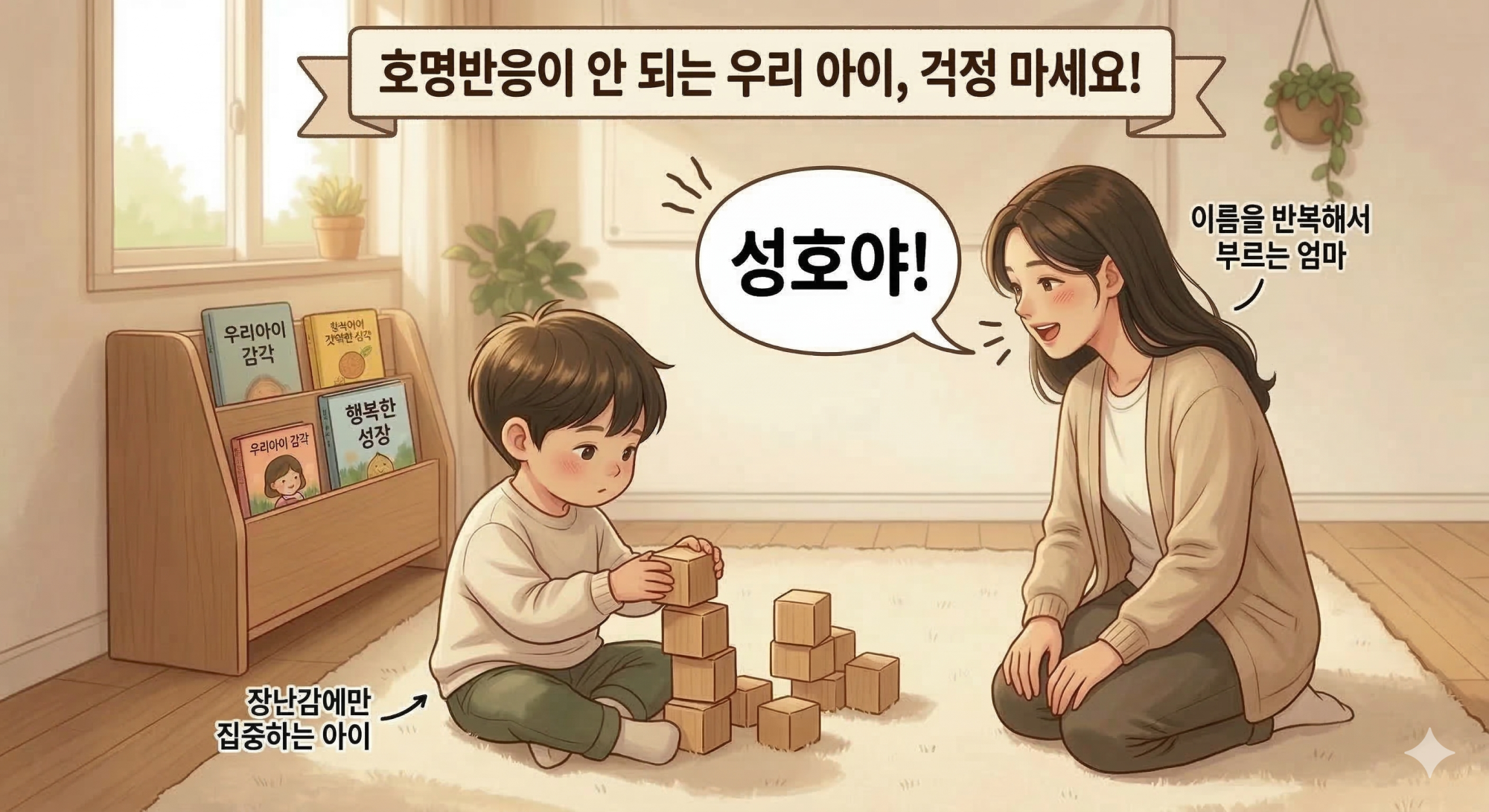
There are many reasons a child may not turn when called
There's more than one reason a child doesn't respond to their name. Before jumping to worry, think about these three situations first.
- A child with strong selective focus : Some children, once deep into a toy or video, block out surrounding noise unusually strongly.
- Differences in auditory processing speed : The child hears the sound, but their brain takes a little longer to process it as "someone calling me."
- A problem with hearing itself : Frequent ear infections or fluid in the middle ear (otitis media with effusion) can make sounds muffled and slow the response.
Three kinds of "joint attention" to look at alongside name response
Rather than looking at name response on its own, it's more important to see whether your child has the "drive to connect with others." This ability to share attention on the same thing with another person is called joint attention.
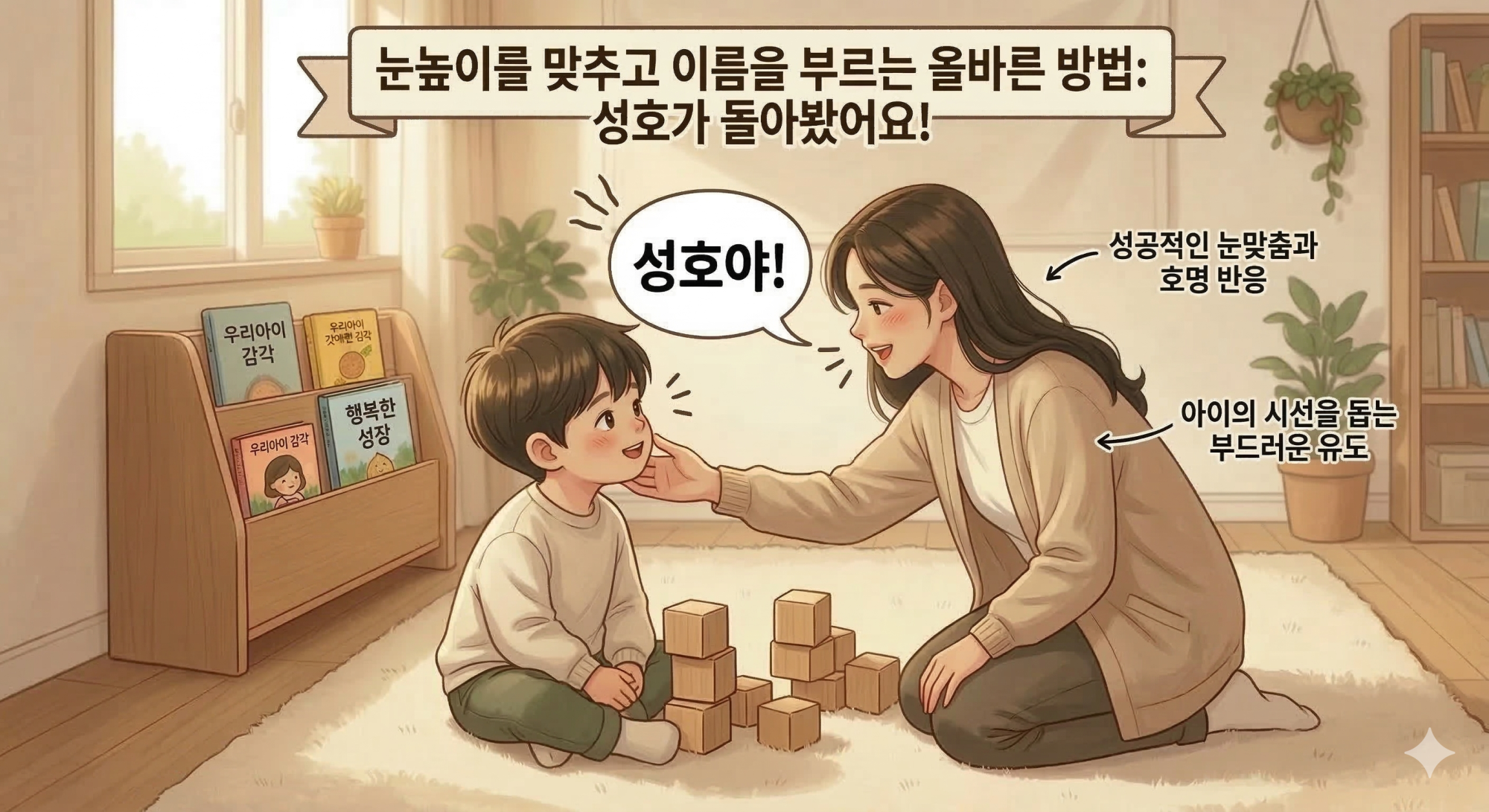
Three steps to encourage name response at home
Instead of watching anxiously, turn drawing out your child's response into a fun game.
- Call them within their line of sight — Call their name at eye level and within their view, not from behind. When they turn, reward them right away in a big way, like with tickles or a favorite snack.
- Make their name a happy signal — A child who only hears "OO, no!" or "OO, stop that!" during discipline starts to avoid the sound of their own name. Call their name more often when you're having fun together.
- Add something to see — While calling their name, hold a favorite toy beside your face. Their gaze will naturally move to your face and eyes.
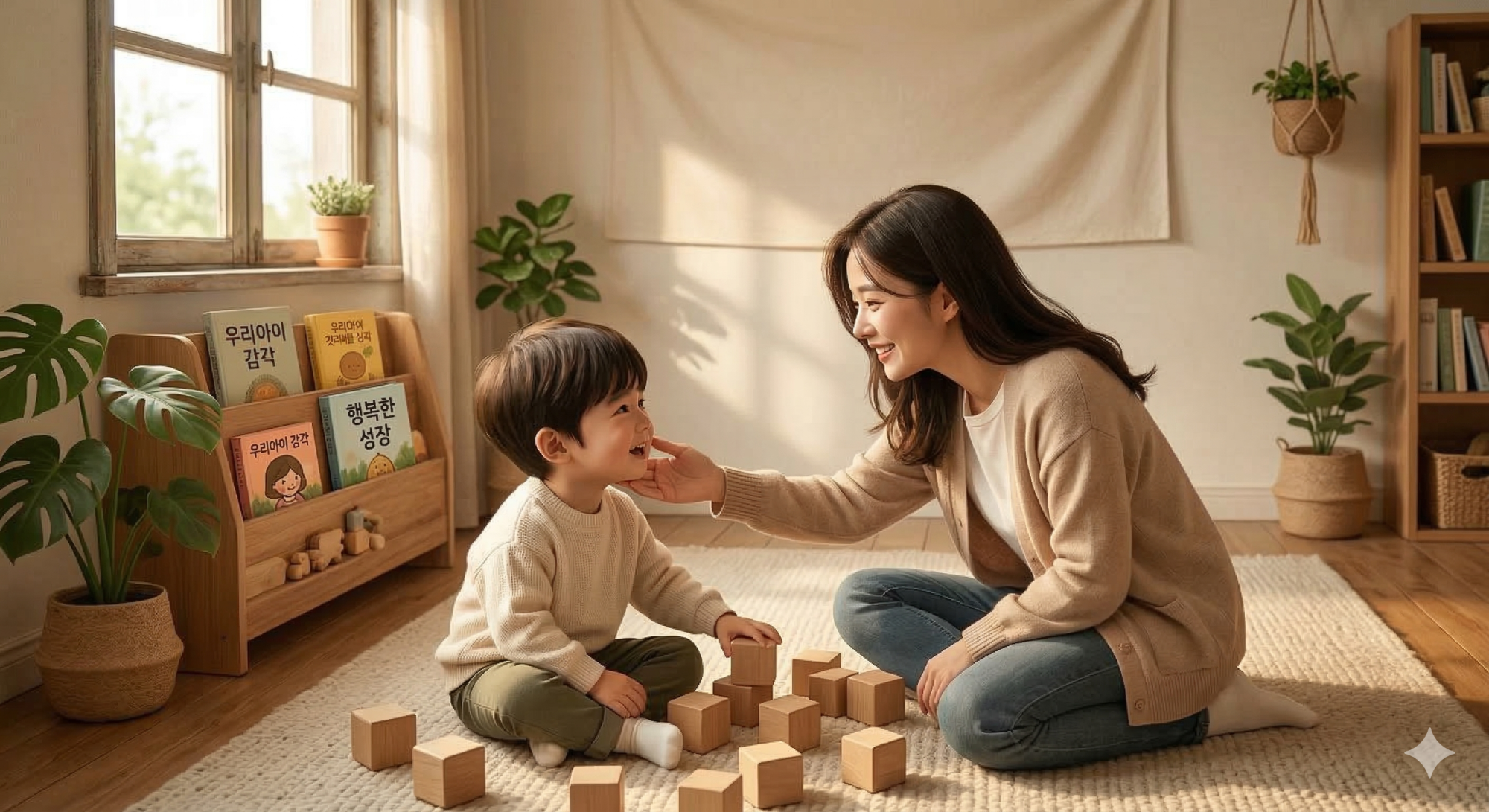
When should you visit a child development center?
Trouble responding to their name or slightly slower development is never the result of your parenting. That said, if your child is past 18 to 24 months and still shows very little name response and eye contact, don't keep worrying alone; get a consultation at a child development center. Early intervention isn't something to fear; it's one of the greatest gifts you can give your child.
At Ssukssuk Child Development Center, we start by listening closely to your child and to you, getting a clear picture of where your child is right now, and then recommend the right treatment direction based on our center's diagnostic criteria.
In closing
- Not every child who doesn't answer to their name is on the autism spectrum. First look at selective focus, auditory processing speed, and hearing.
- Look at joint attention, such as eye contact, pointing, and imitation, together with name response.
- Every child takes in the world at their own pace. If your child glanced at you for even a split second when you called their name today, that's meaningful progress too.
Last reviewed: 2026-10-07 This article provides general information. Your child's developmental status and treatment plan are determined through consultation and assessment.