

Daycare Says Your Child Can't Focus? Reading the Real Signals
"Trouble focusing" from daycare is information to interpret, not a verdict. Start by asking in what situations it happens.

Hearing "Your child has trouble focusing" at a daycare conference isn't a verdict on your child; it's information that needs interpreting. When you come home from conference season having heard "They keep wandering around during activity time" or "Their attention span seems a bit short," it's easy to start blaming yourself: "Are they developmentally behind?" "Did I teach them wrong at home?" But this can be a natural part of a child, as an individual, meeting daycare, a small "society," for the first time. Ssukssuk Child Development Center in Seocho and Bangbae shares a different way to read this feedback.

Is attention "lacking," or just "spread out"?
Daycare is a place where information pours in all at once. Friends laughing, music from the next classroom, even the cars outside the window all reach your child at the same time.
- A highly curious temperament : A child who wants to know about everything, with eyes darting somewhere new every split second, may not lack focus so much as have lots of interests. These children often have great potential to grow into keen observers.
- Different energy levels : For a child bursting with energy, sit-down activities are like clothes that don't fit. It's less about low attention and more a signal from the body that it wants to use its big muscles.
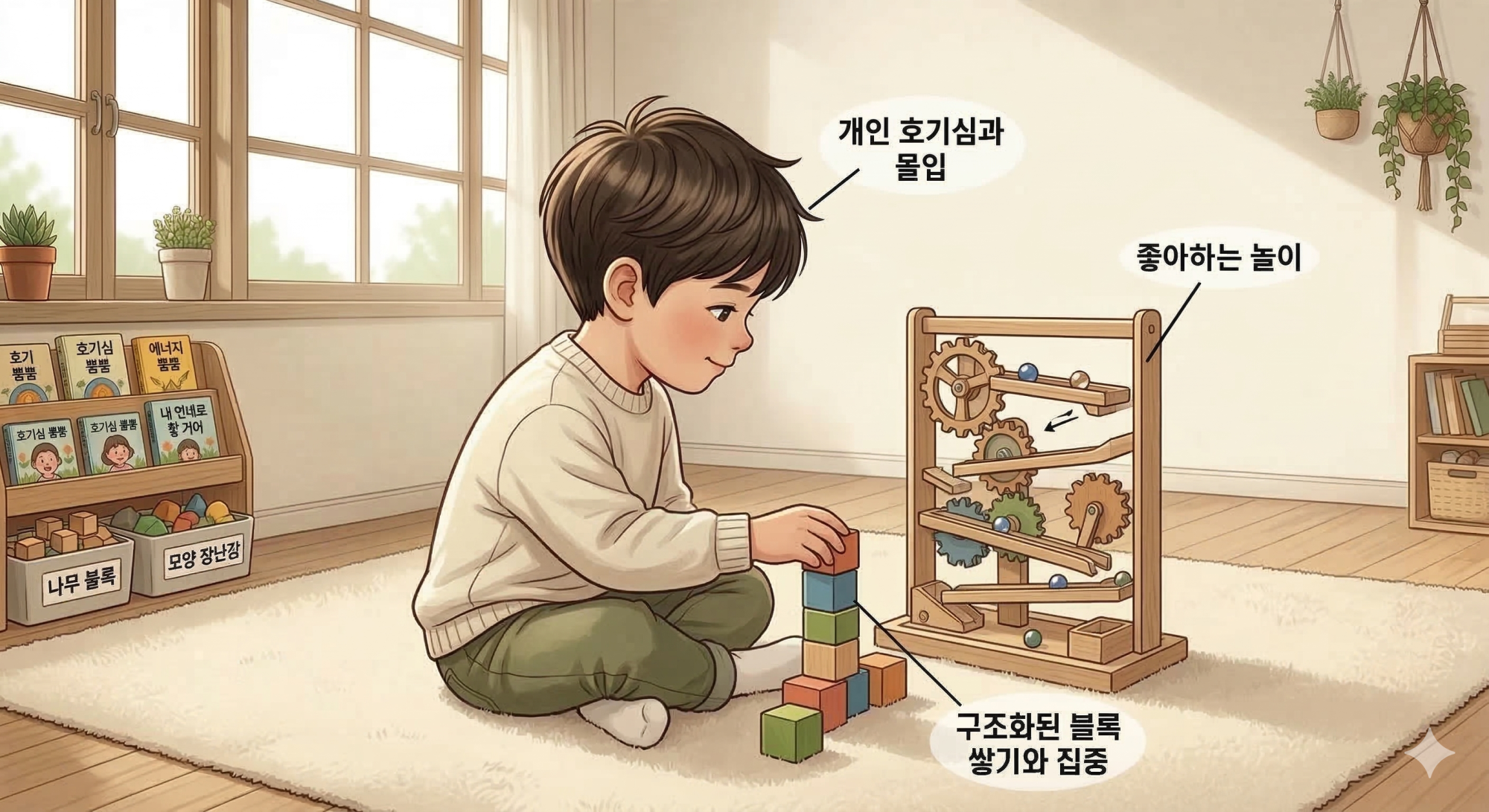
What the teacher says vs. what to check
If the teacher says your child "has trouble focusing," be sure to ask in what situations it happened. The same words can mean very different things depending on the context.

Building "focus muscles" at home
Forcing your child to sit down and study can actually backfire. Respect your child's nature while helping them get a taste of what focus feels like.
- "Staying together" before "finishing" — Before building an impressive block castle, practice staying in the same play with mom or dad, making eye contact, even for just 5 minutes.
- Put the environment on a diet — The more toys in the living room, the more scattered their attention. Set up a minimal play space with just the 2–3 toys they're playing with now.
- Specific praise for the process — Instead of a vague "Good job," describe the process, like "I love how hard you're working to fit that piece in," and your child's ability to stick with things will grow.
Don't let your worry rub off on your child
Children are geniuses at reading their parents' faces. If daycare feedback makes you anxious and you start pushing your child, daycare activities stay in their mind as "something hard." Your trust in them is the most powerful force for change.
Attention grows like a muscle, through time and practice. Seeming a little short on it now will never decide your child's future. Tonight, even for just 10 minutes, try the most fun eye-contact game in the world with your child. At Ssukssuk Child Development Center, we start by listening closely to your child and to you, getting a clear picture of where your child is right now, and then recommend the right treatment direction based on our center's diagnostic criteria.
Last reviewed: 2026-10-07 This article provides general information. Your child's developmental status and treatment plan are determined through consultation and assessment.