

Frozen Shoulder and Shoulder Pain: Why Range of Motion Shrinks
When your arm won't go all the way up, find the cause first, then restore both joint movement and muscle balance together.
Maybe your arm won't lift all the way when you try to tie your hair, or you pause while getting dressed because you can't reach behind your back. This discomfort is more common than you might think, and it usually starts with reduced shoulder range of motion. Before you visit a clinic for shoulder pain in Bangbae, here's a step-by-step Q&A on why shoulder range of motion decreases and what causes it, including frozen shoulder.

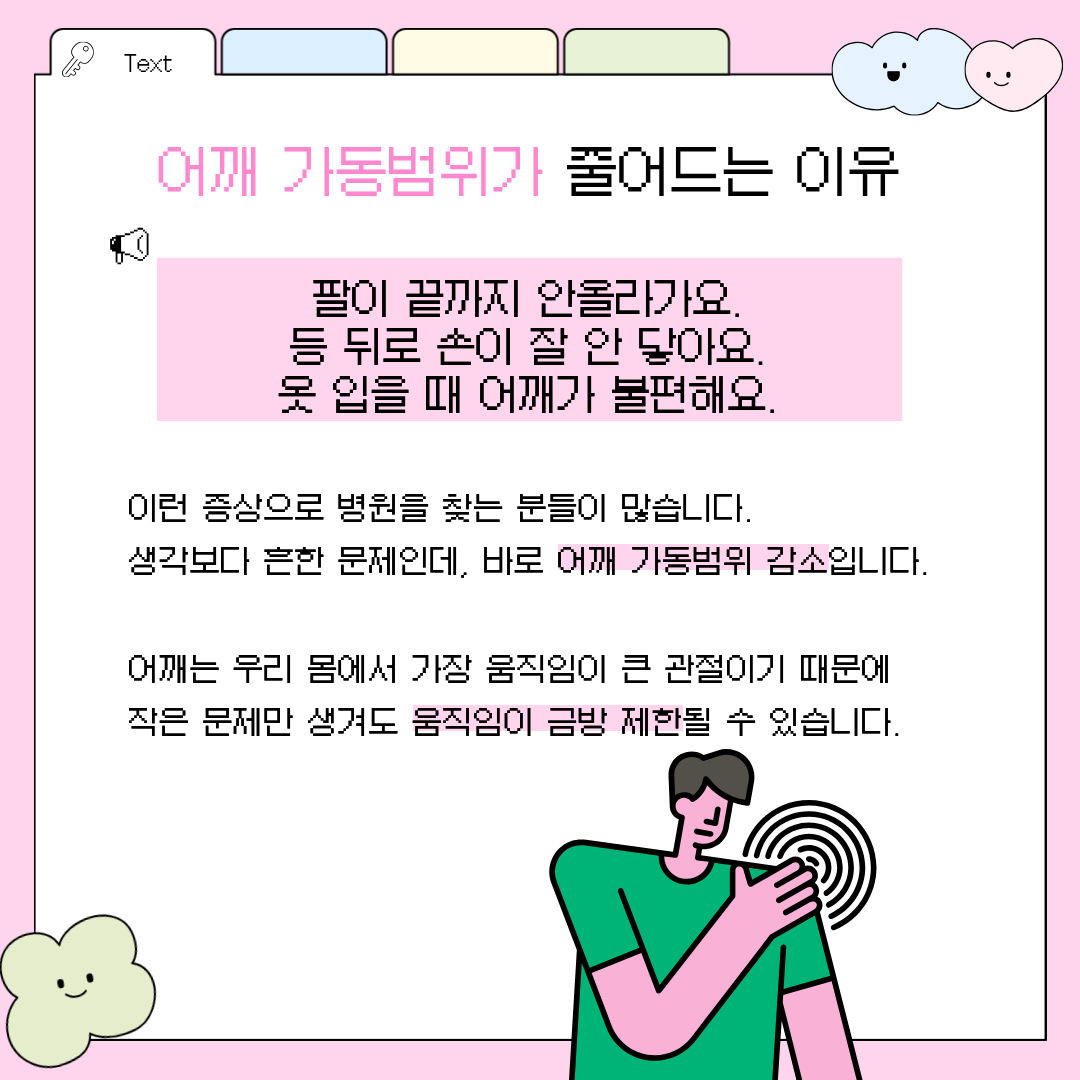
Why Does Shoulder Range of Motion Decrease?
The shoulder is the most mobile joint in the body, so even small problems can quickly restrict its movement. There isn't just one cause.
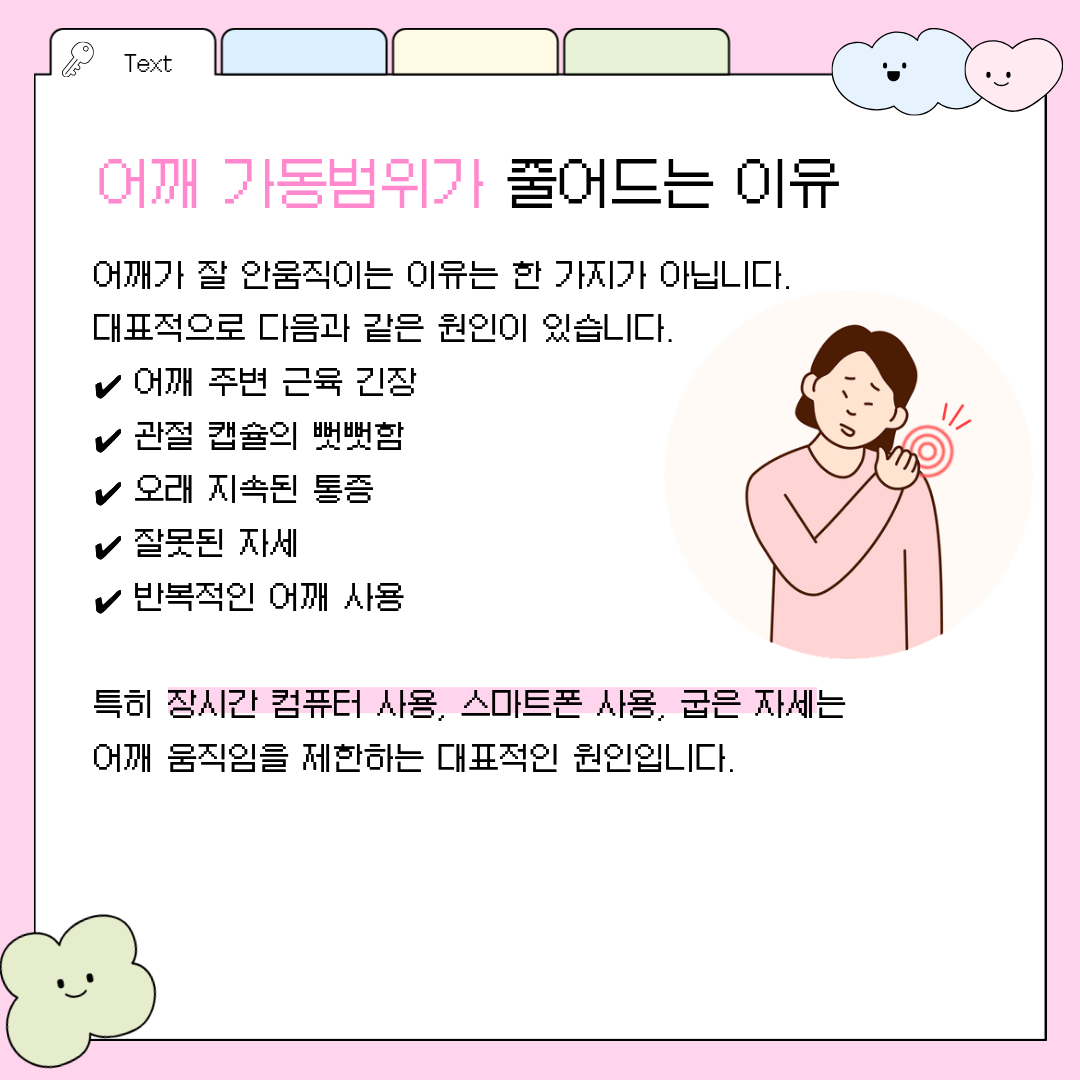
- Tension in the muscles around the shoulder
- Stiffening of the joint capsule
- Long-standing pain
- Poor posture
- Habits of repetitive shoulder use
Among these, spending long hours hunched over a computer or smartphone is a common reason the shoulder gets locked up.
Which Movements Should Raise Suspicion?
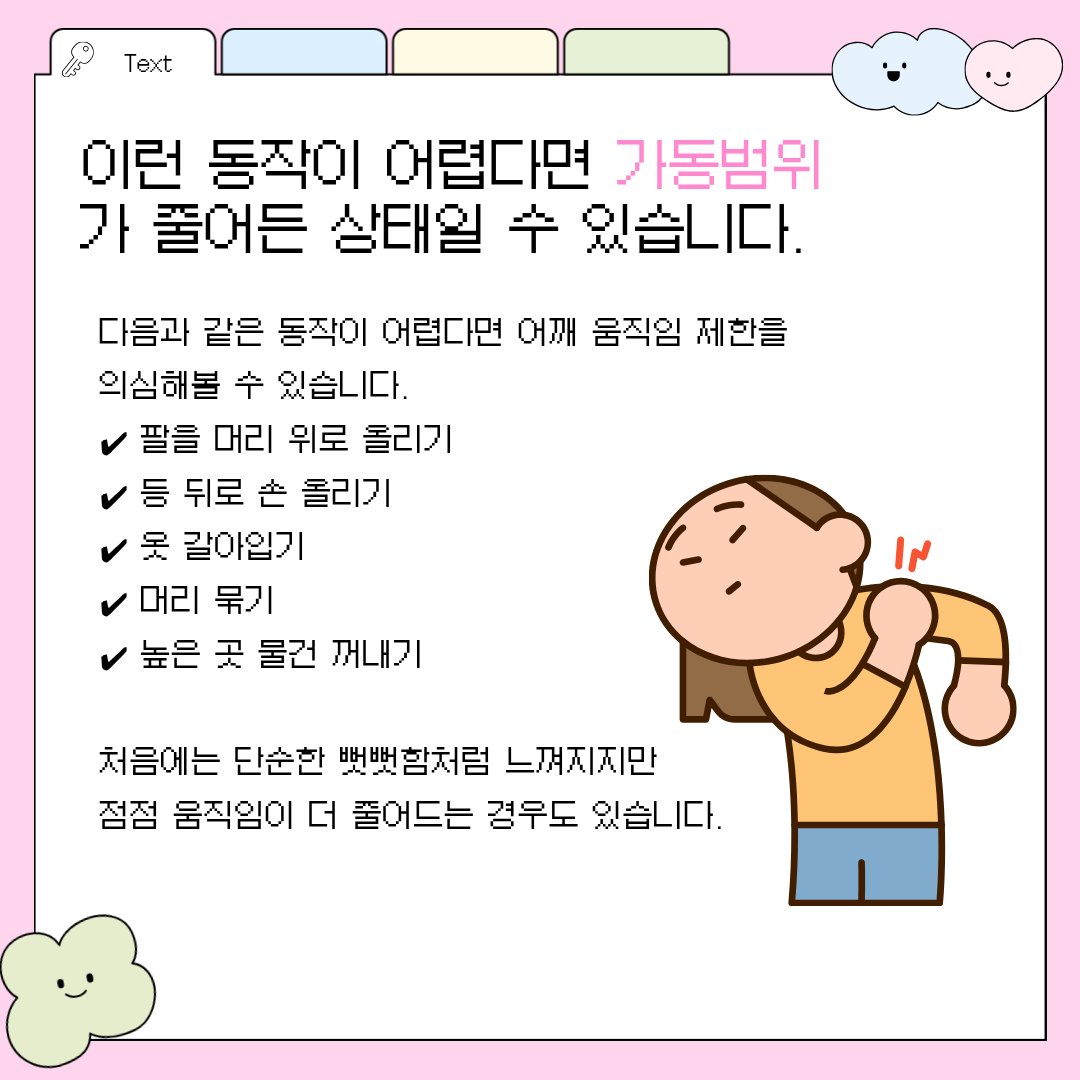
If the following movements are a struggle, your shoulder range of motion may be reduced.
- Raising your arm overhead
- Reaching your hand up behind your back
- Getting dressed
- Tying your hair
- Reaching items on a high shelf
At first it may feel like simple stiffness, but in some cases movement becomes more limited over time.
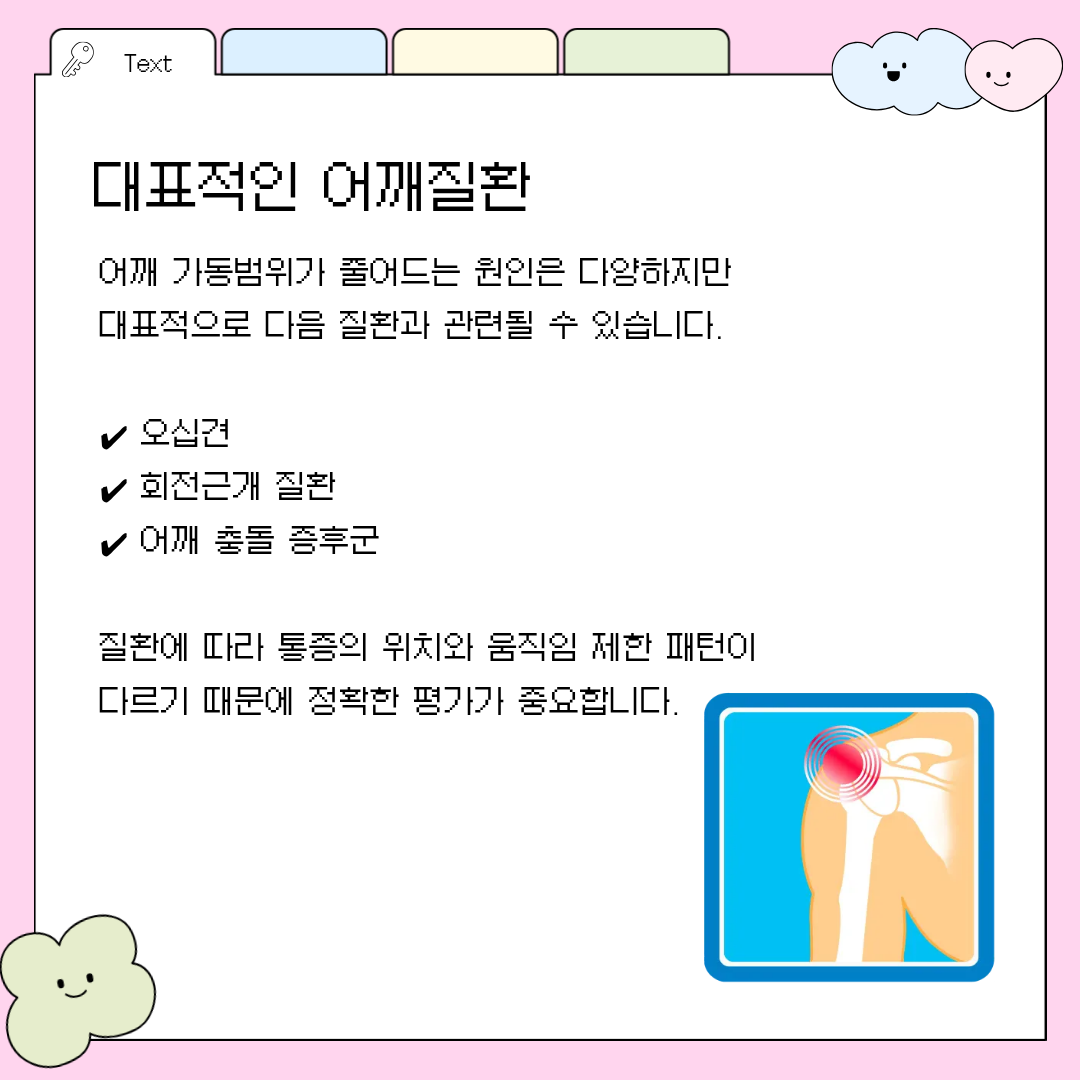
Frozen Shoulder and Other Shoulder Conditions to Consider
Common conditions that reduce shoulder range of motion include frozen shoulder, rotator cuff disorders, and shoulder impingement syndrome. Each condition differs in where it hurts and how movement is blocked, so the first step is an accurate evaluation of whether it's frozen shoulder or something else.
Will Stretching Alone Loosen It Up?
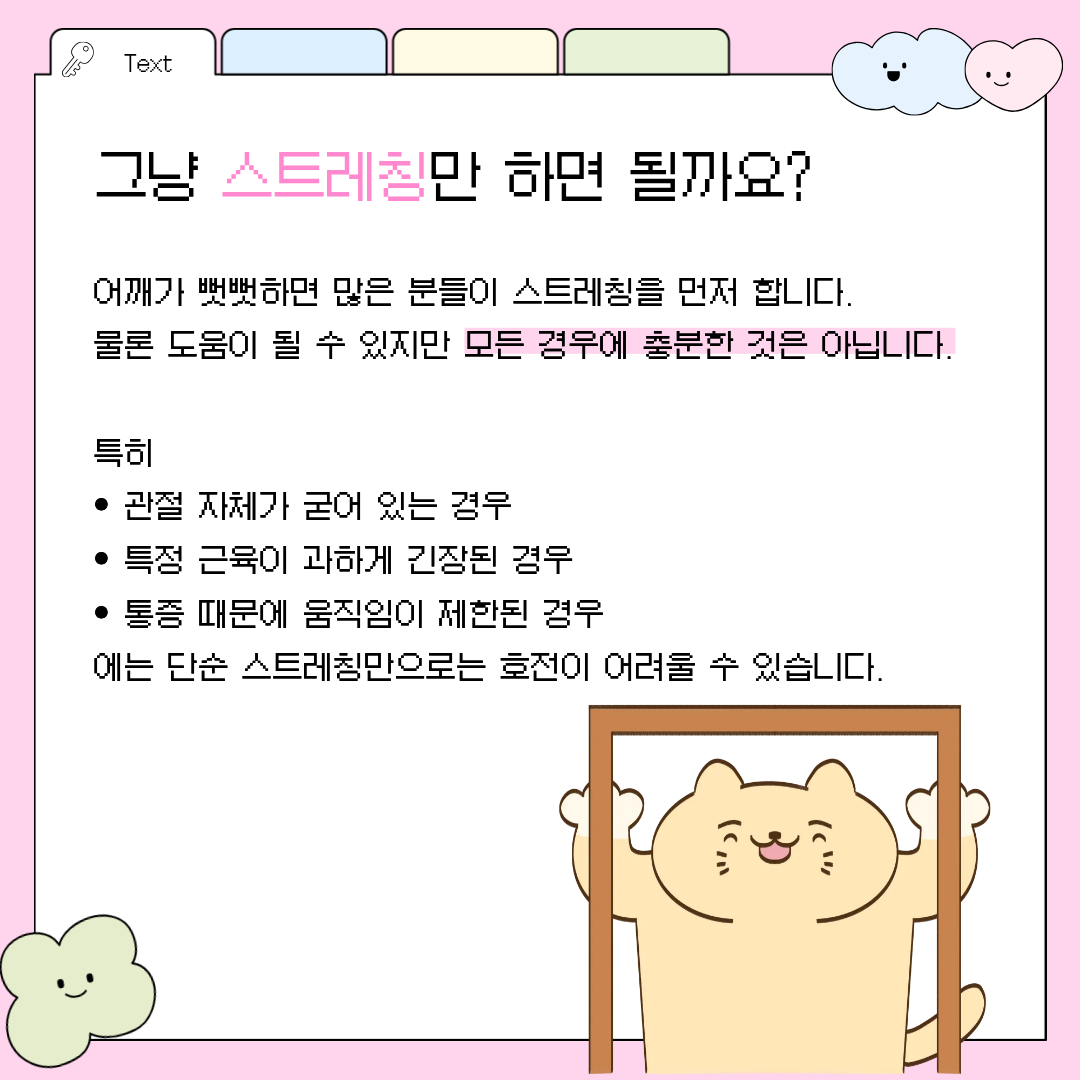
When the shoulder feels stiff, most people start by stretching. It can help, but it isn't enough in every case. If the joint itself has stiffened, certain muscles are excessively tense, or pain is blocking movement, stretching alone may bring slow improvement.
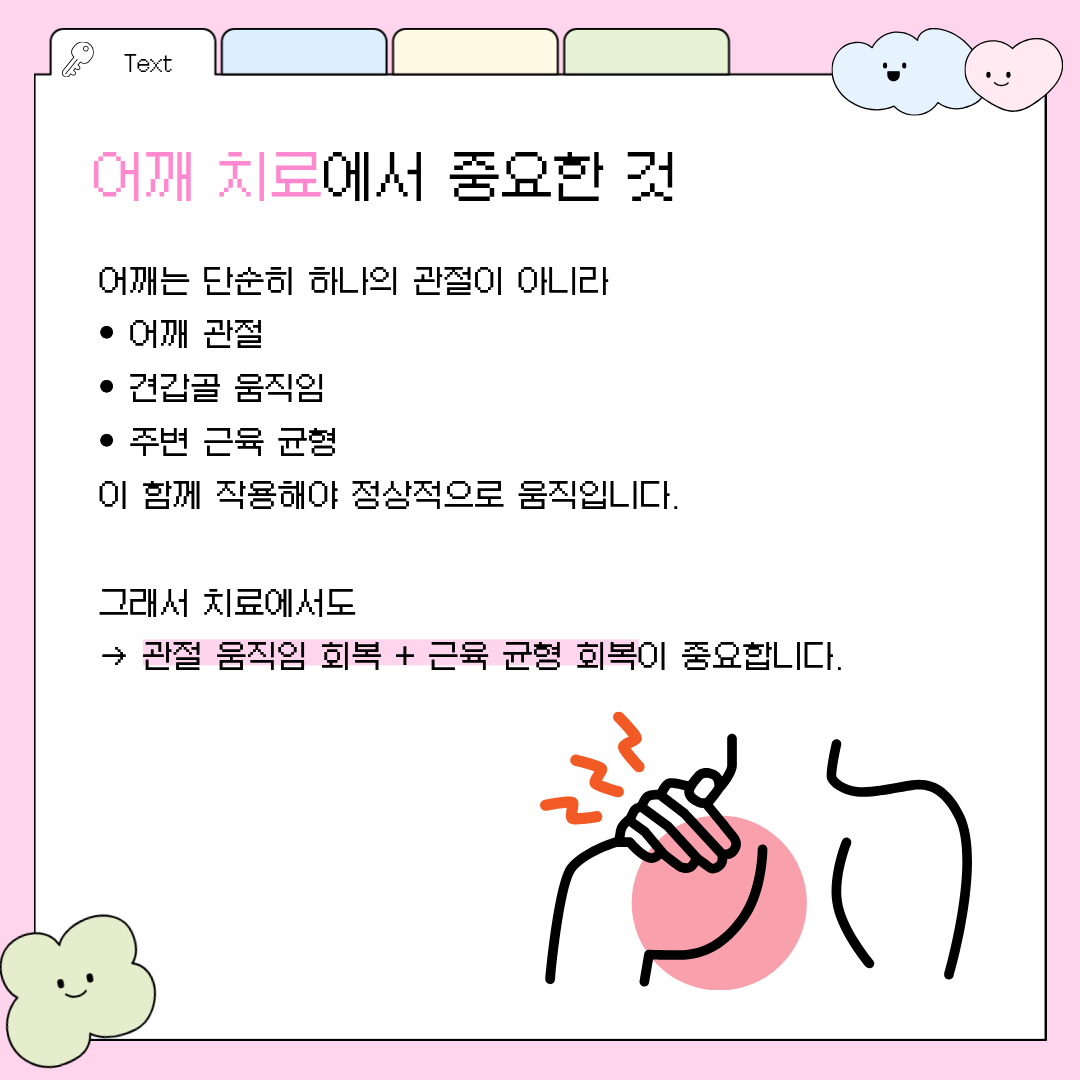
The shoulder moves properly only when the shoulder joint, shoulder blade movement, and balance among the surrounding muscles all work together. That's why treatment needs to address both restoring joint movement and restoring muscle balance.
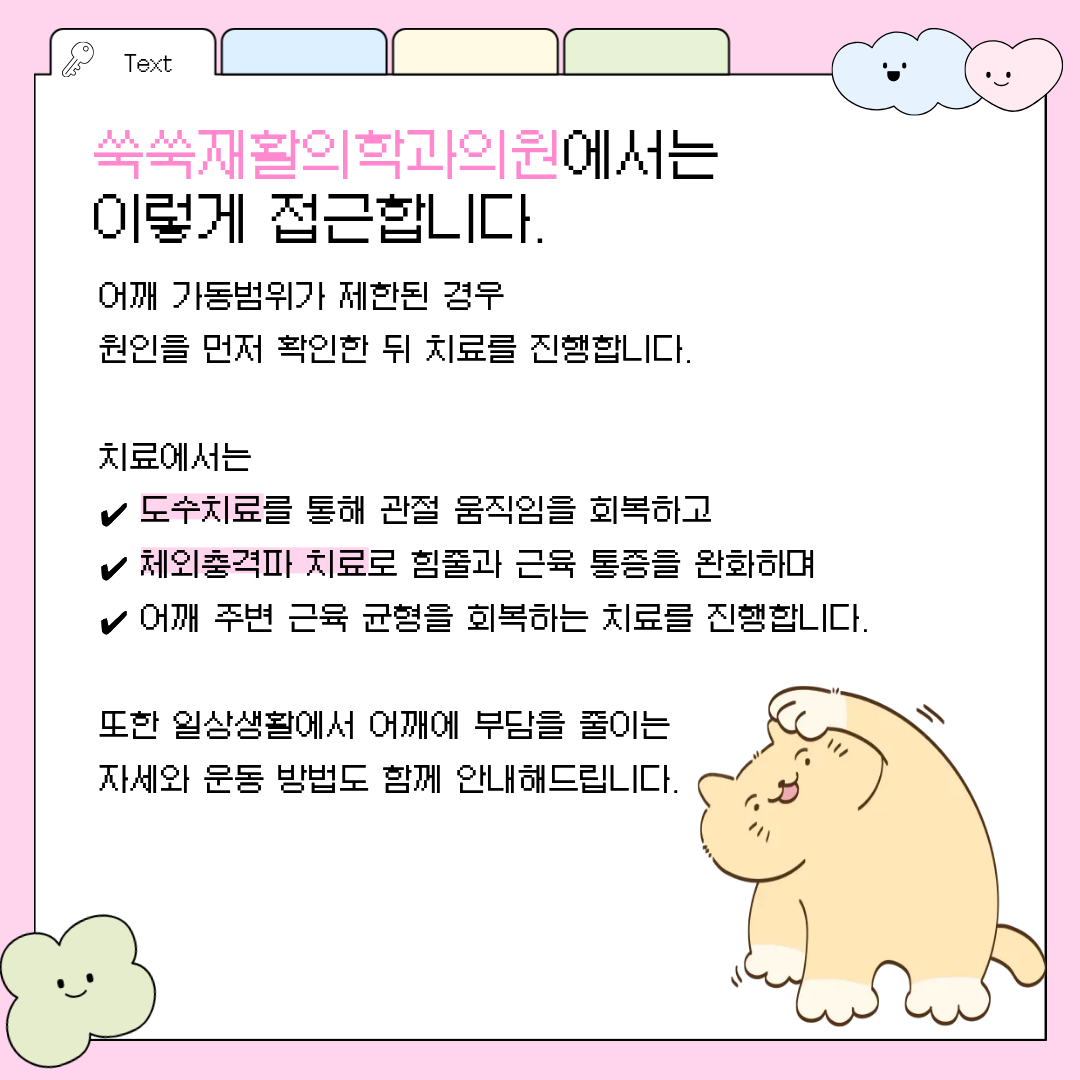
At Ssukssuk Rehabilitation Medicine Clinic, we first identify why your range of motion has decreased. We then use manual therapy to restore joint movement and extracorporeal shockwave therapy (ESWT) to ease tendon and muscle pain, continuing with treatment that restores balance in the muscles around the shoulder. We also guide you on postures and exercises that reduce strain on the shoulder in daily life.
Key Points
- The shoulder is a joint that stiffens more the less you use it.
- The pattern of movement restriction differs by cause, such as frozen shoulder, rotator cuff disorders, or shoulder impingement syndrome.
- If your arm doesn't lift easily or everyday movements have become uncomfortable, it's best to get it checked and managed early.
Last reviewed: 2026-10-07 This article provides general medical information. Individual diagnosis and treatment decisions are made during an in-person consultation.