

Baby Torticollis: When Your Baby's Head Tilts to One Side
Caught early, torticollis can often improve with physical therapy and positioning alone, so early detection and steady care are key.

You turn your baby's head the other way, and before long they're looking to the same side again. While you're still wondering whether they're just sleepy or uncomfortable, noticing that your baby's body isn't symmetrical can be one of the most heart-stopping moments for a parent. Ssukssuk Child Development Center in Seocho, Sadang, and Bangbae walks through newborn torticollis, which can lead to facial asymmetry or plagiocephaly if left alone, in the order parents most often ask about it.
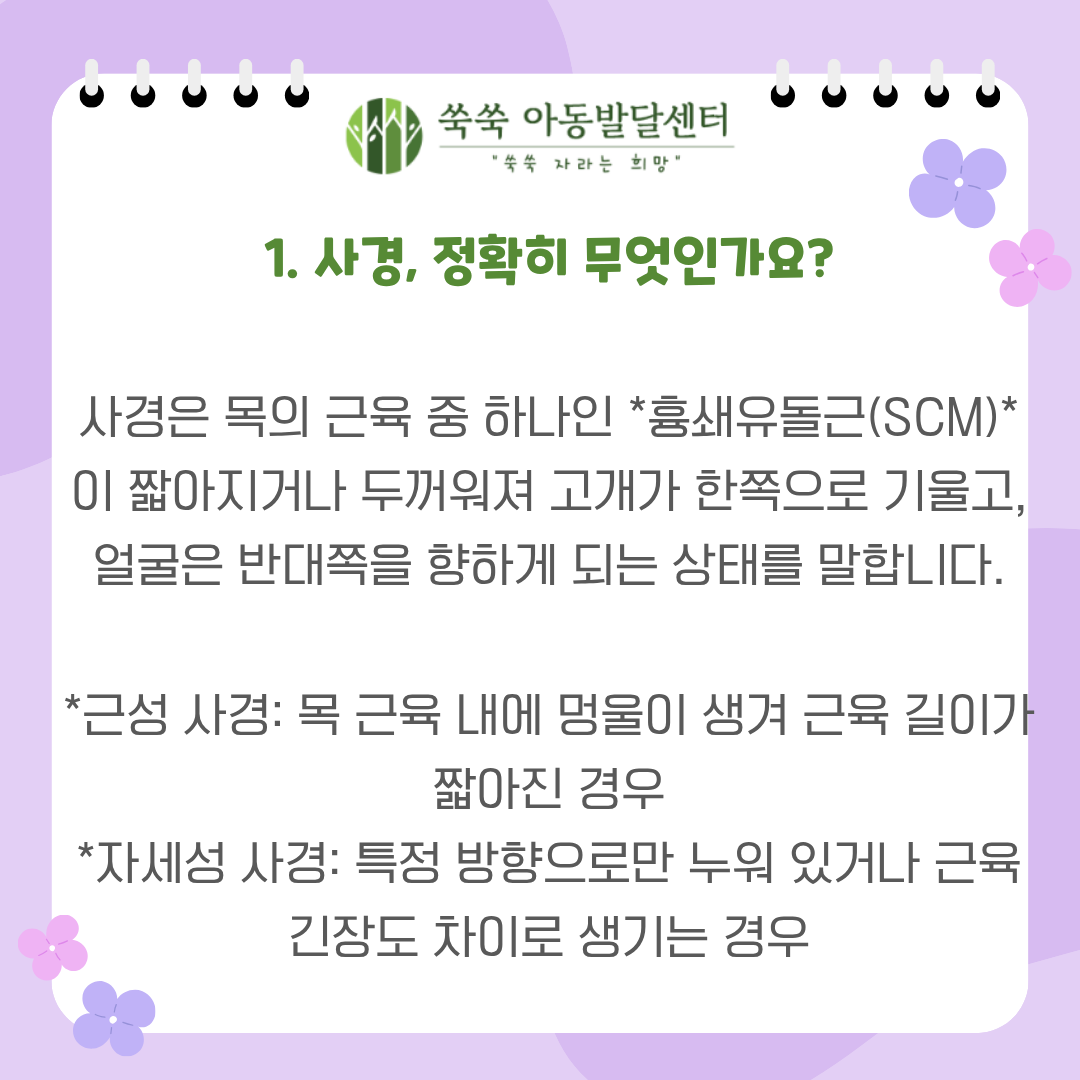
What exactly is torticollis?
Torticollis is when one of the neck muscles, the sternocleidomastoid (SCM), becomes shortened or thickened, so the head tilts to one side while the face turns toward the other. It's divided into two types depending on the cause.
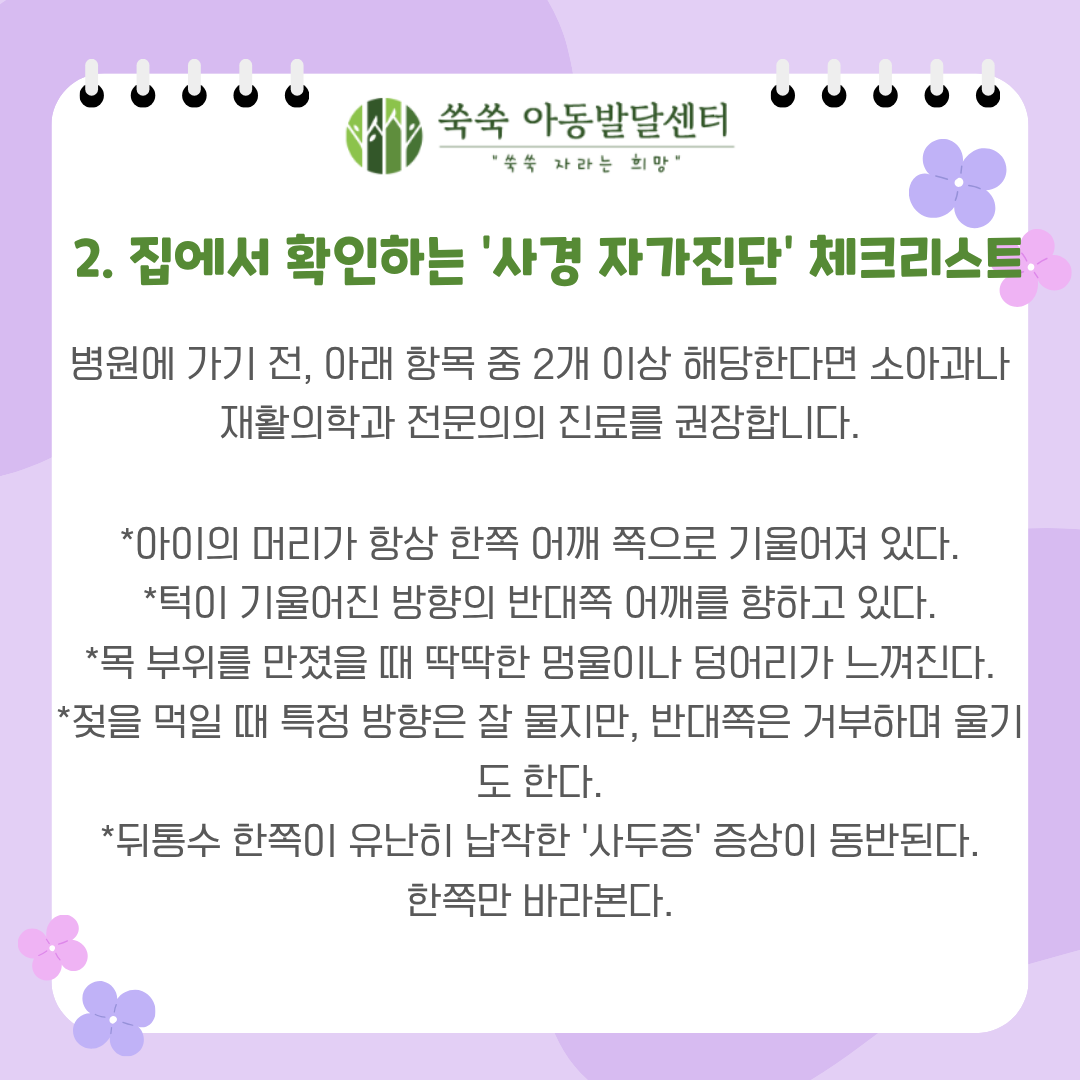
Torticollis checklist to try at home
If two or more of the following apply, we recommend seeing a pediatrician or a rehabilitation medicine specialist.
- Your baby looks to only one side
- Their head is always tilted toward one shoulder
- Their chin points toward the shoulder opposite the tilt
- You can feel a hard lump or mass when you touch the neck
- During feeding, they latch well on one side but refuse and sometimes cry on the other
- One side of the back of the head is noticeably flat (plagiocephaly)
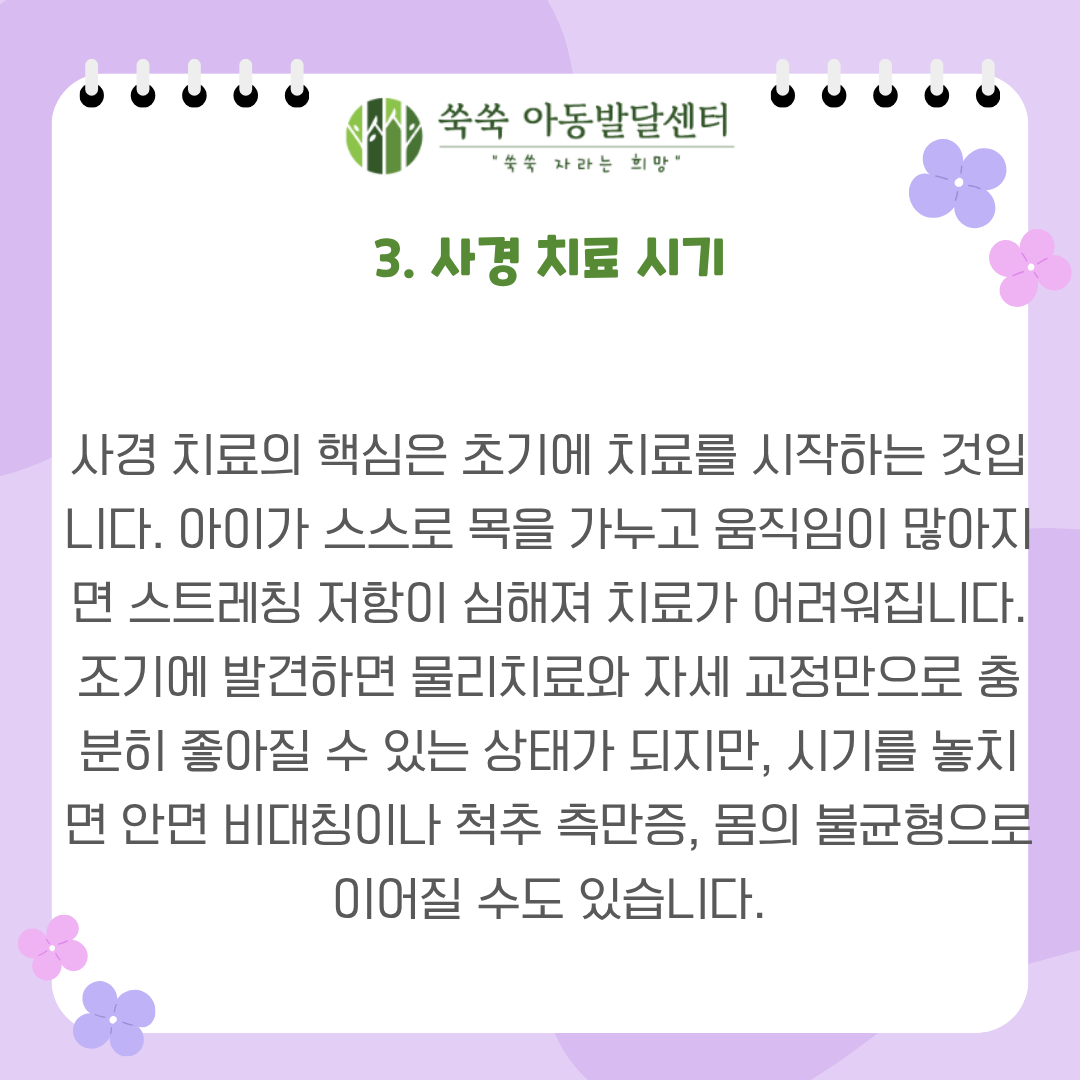
When should torticollis treatment start?
Timing is the key to treating torticollis. As your baby gains head control and moves more, they resist stretching more, making treatment harder. Found early, it can often improve with physical therapy and positioning alone; if the window is missed, it can lead to facial asymmetry, scoliosis, or imbalance in the body.

Daily positioning habits alongside treatment
- Tummy Time : Practicing lying on the tummy while awake is essential for building neck muscles.
- Switch directions : Place toys on the side opposite to where your baby usually looks, or talk to them from that side, so they turn their head on their own.
- Adjust feeding position : Holding your baby the opposite way from usual during feeds gets them using muscles they don't use much.
Did this happen because I didn't take care of myself during pregnancy?
Many parents blame themselves this way. But torticollis commonly develops from a baby's position in the womb or during birth. What matters isn't the past, but the care you give from now on. Consistent stretching and loving attention go a long way in helping a baby's tilted head return to a straight, upright position.
At Ssukssuk Child Development Center, we start by listening closely to your child and to you, getting a clear picture of where your child is right now, and then recommend the right treatment direction based on our center's diagnostic criteria.
Last reviewed: 2026-10-07 This article provides general information. Your child's developmental status and treatment plan are determined through consultation and assessment.