

Knee Popping Sounds: When to Get Checked | Bangbae Station
Knee popping by itself can be normal, but popping with pain, swelling, or catching should be treated as a joint warning sign.
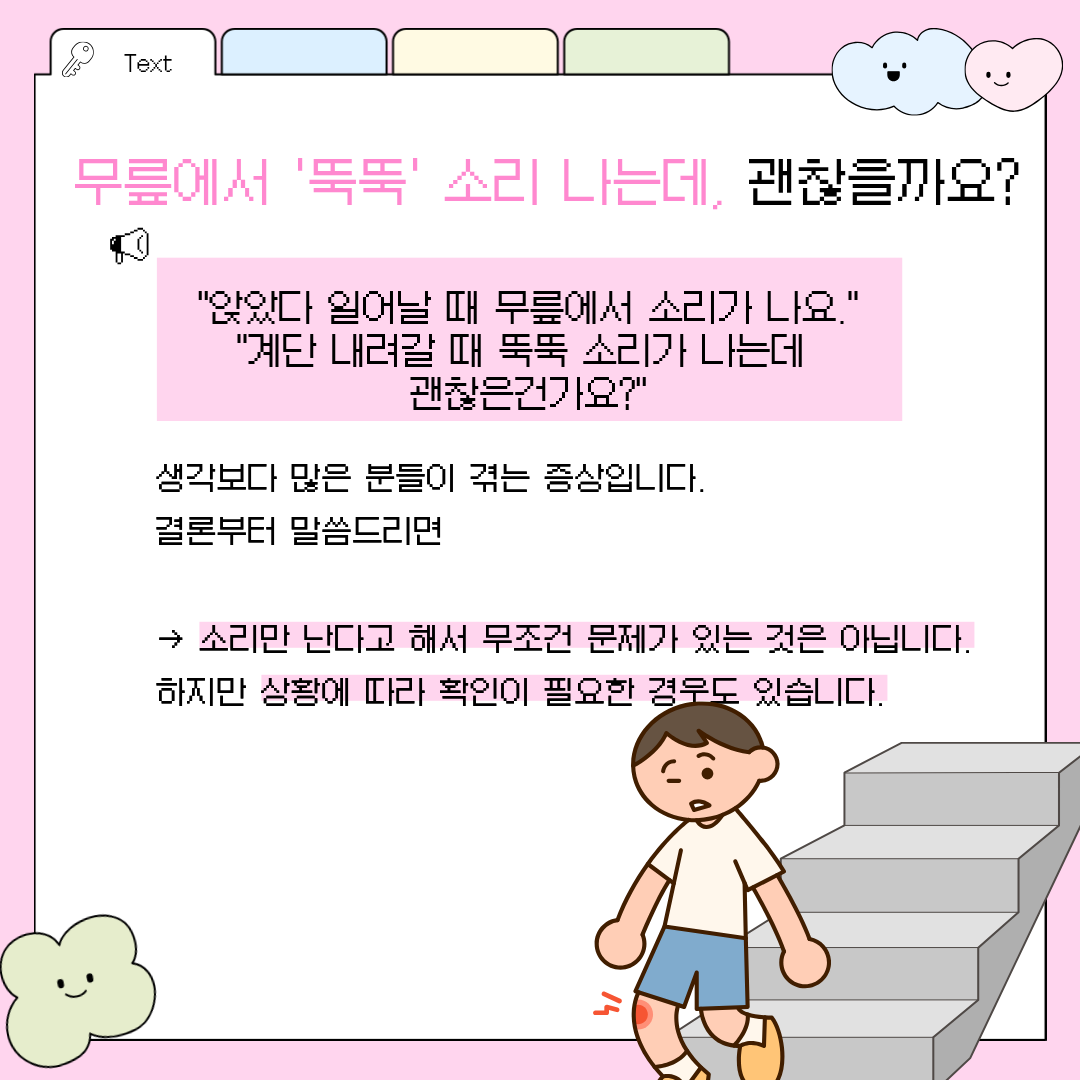
A sound alone doesn't mean something is wrong with your knee. But if it comes with pain or swelling, that's a different story. Many people worry when their knees pop as they stand up from a chair or walk down stairs. If you're dealing with knee pain near Bangbae Station, this guide will help you tell apart the sounds you can simply keep an eye on from the ones that need to be checked.

Why Knees Make Noise
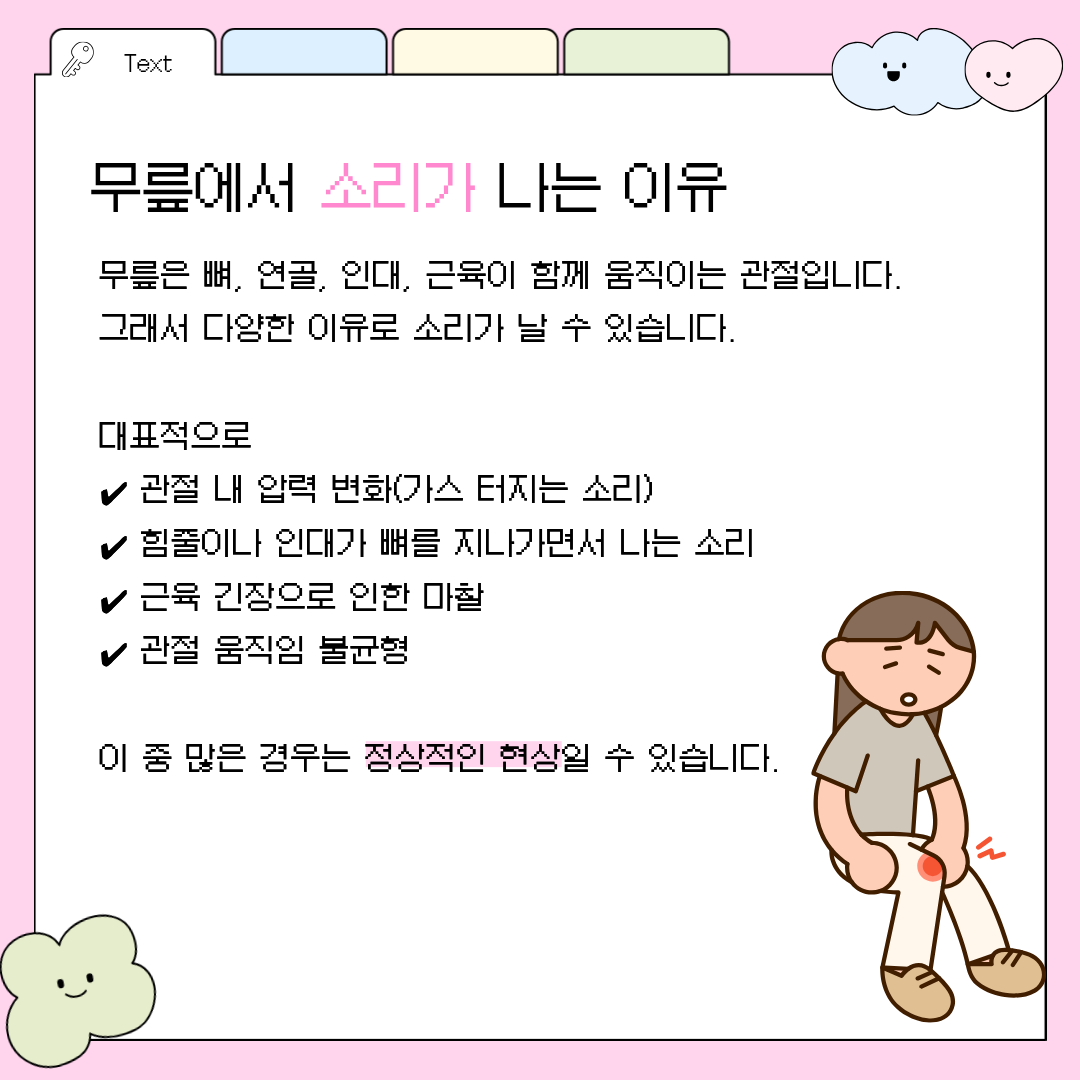
The knee is a joint where bone, cartilage, ligaments, and muscles all move together, so it can make sounds for a variety of reasons.
- Pressure changes inside the joint (gas bubbles popping)
- Tendons or ligaments sliding over bone
- Friction from muscle tension
- Imbalanced joint movement
Many of these can be perfectly normal.
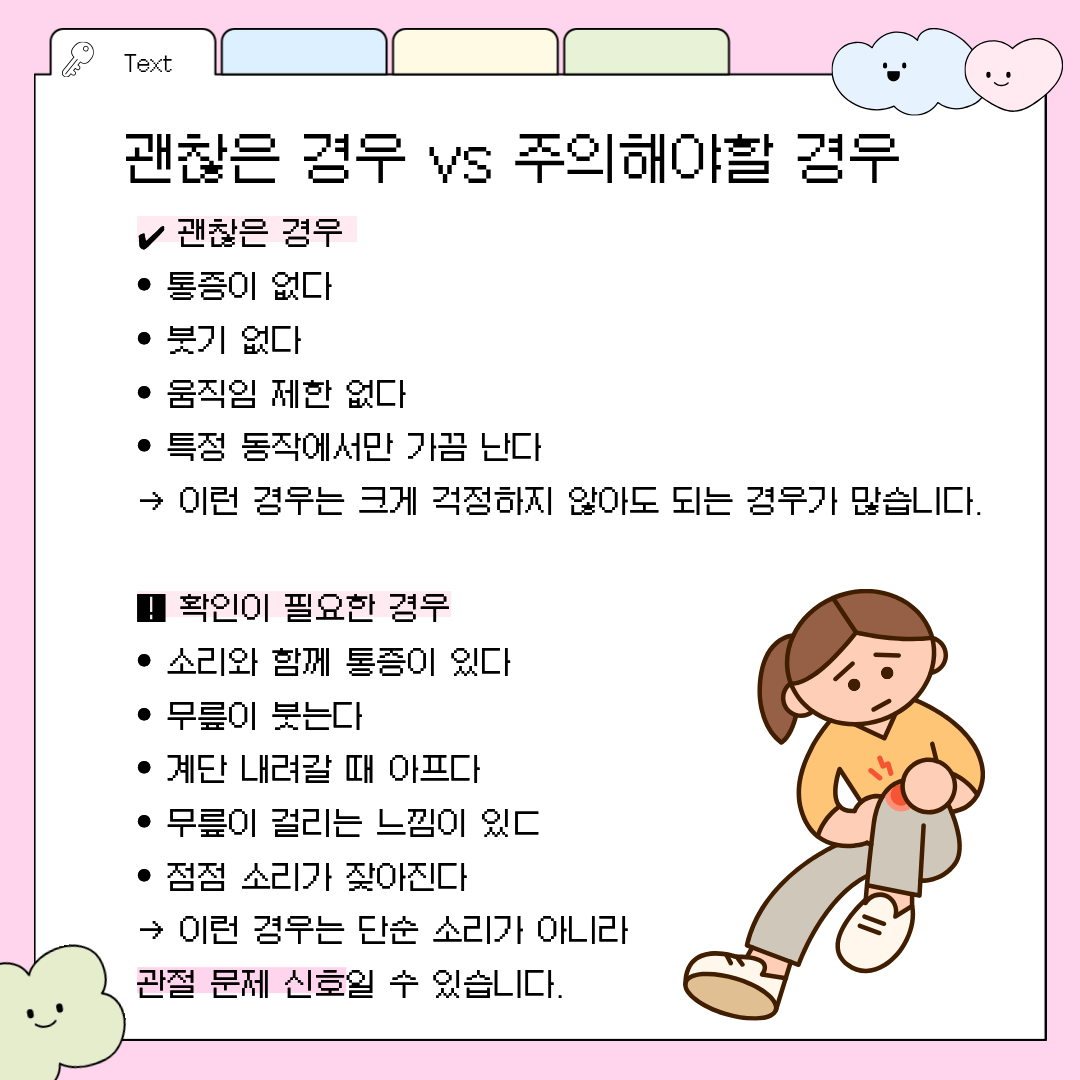
Harmless Sounds vs. Sounds That Need Checking
If the right-hand column sounds familiar, the noise may be a sign of a joint problem rather than just a sound.
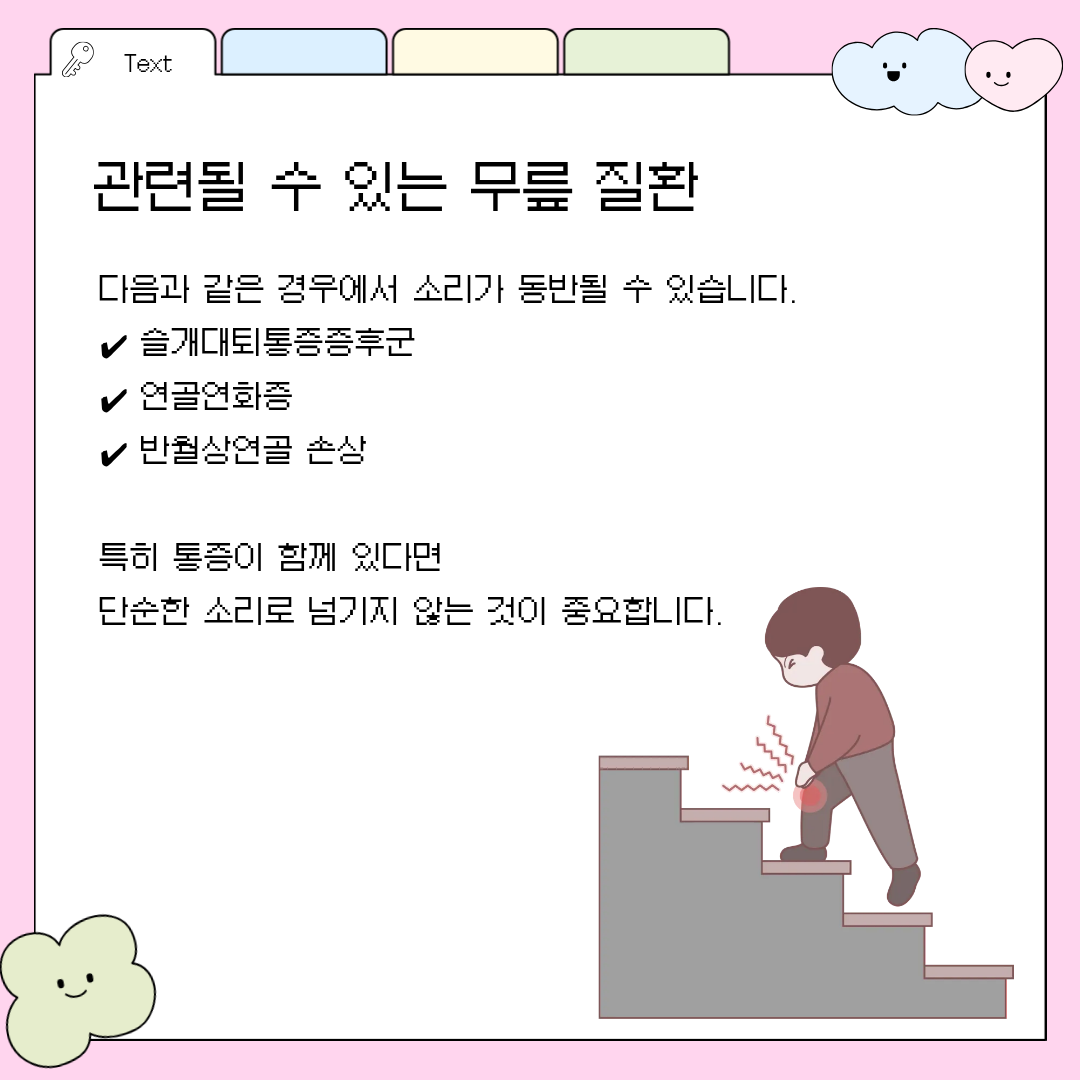
Knee Conditions That Can Come With Popping
Patellofemoral pain syndrome, chondromalacia patella, and meniscus injuries can all be accompanied by knee noises. If there's pain as well, don't dismiss it as just a sound.
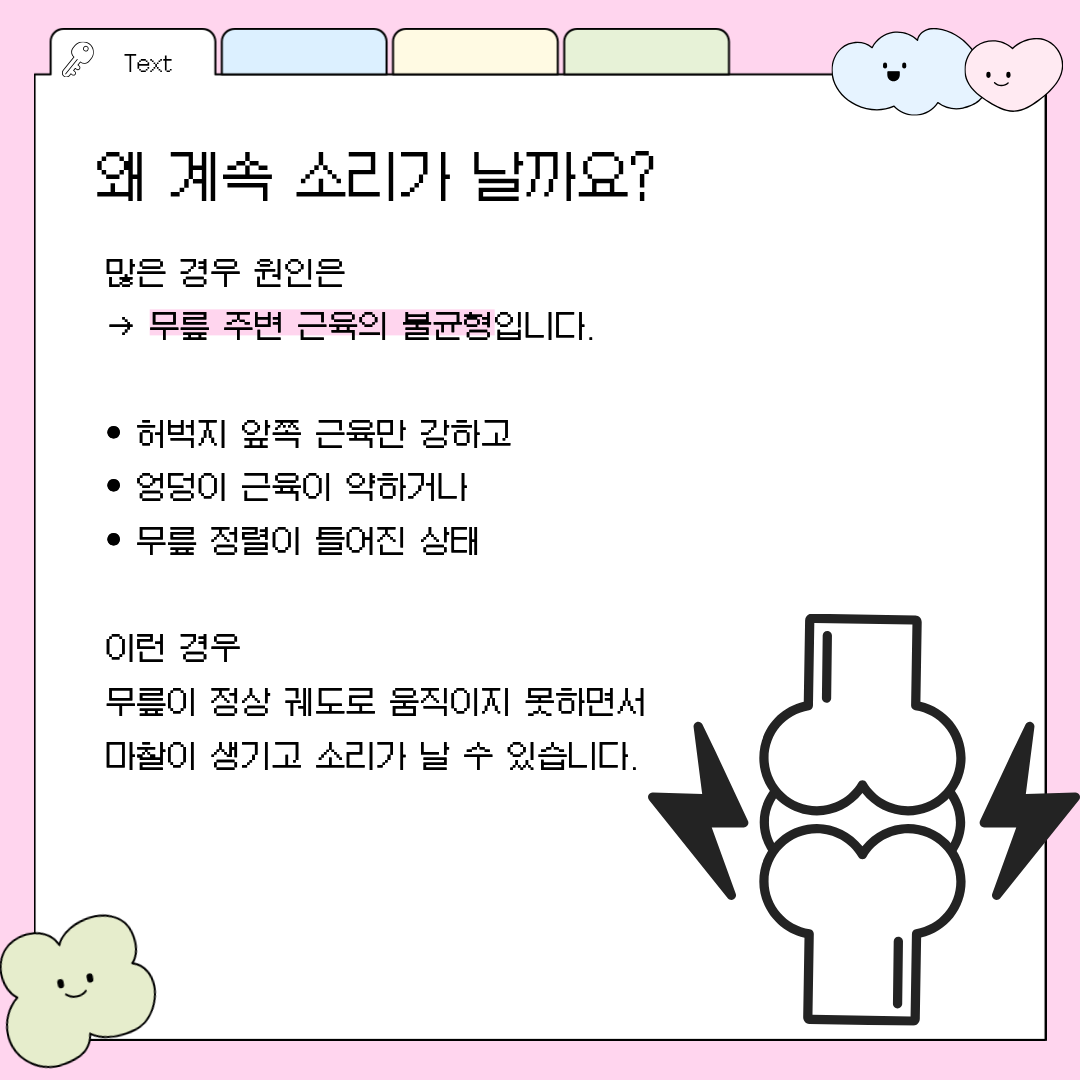
Why Does the Popping Keep Happening?
In many cases, an imbalance in the muscles around the knee is behind it. If the front thigh muscles are strong but the glutes are weak, or the knee is out of alignment, the knee moves off its normal track, creating friction and noise.
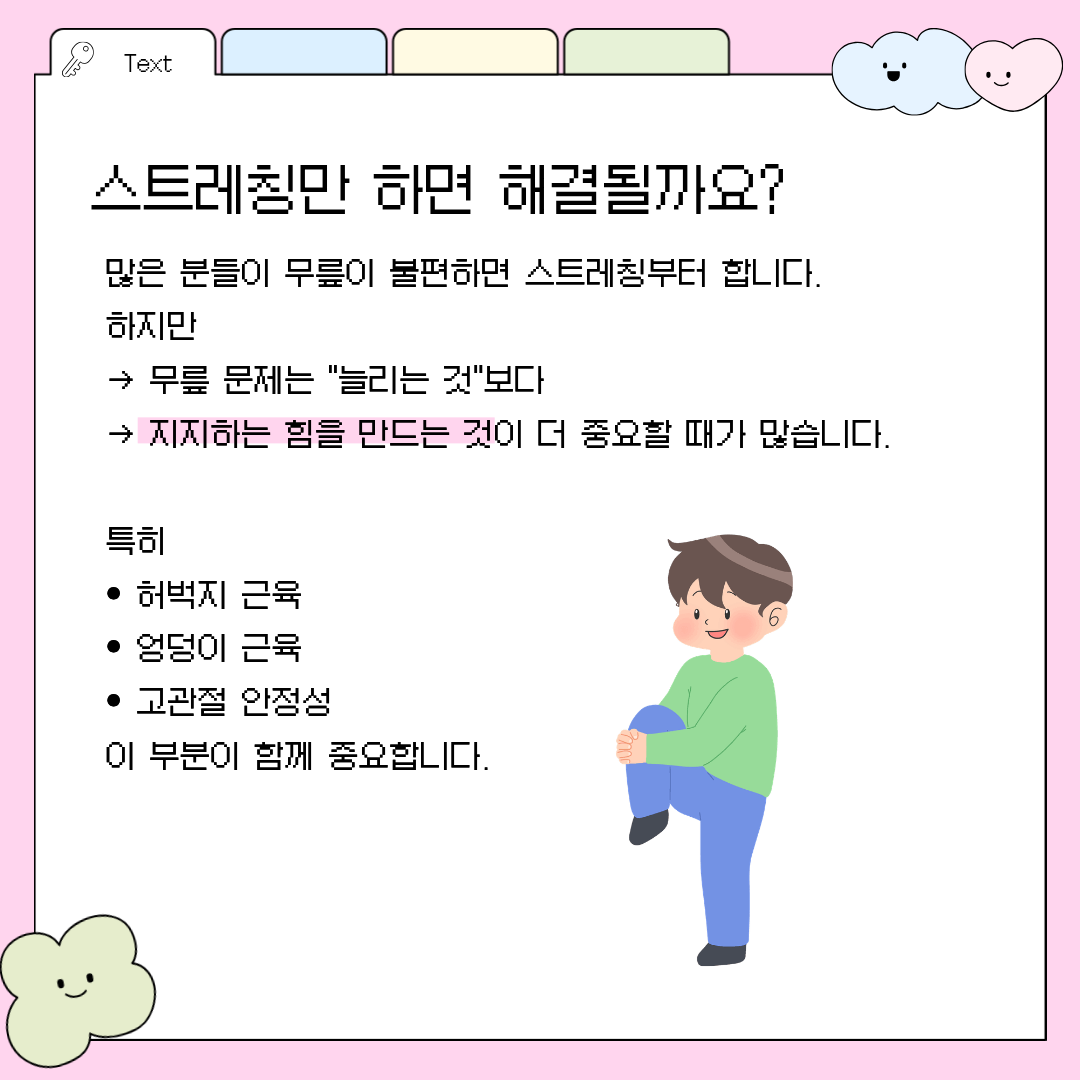
That's why, when your knee feels off, building the strength that supports it is often more important than starting with stretches. The thigh muscles, glutes, and hip stability all need attention together.
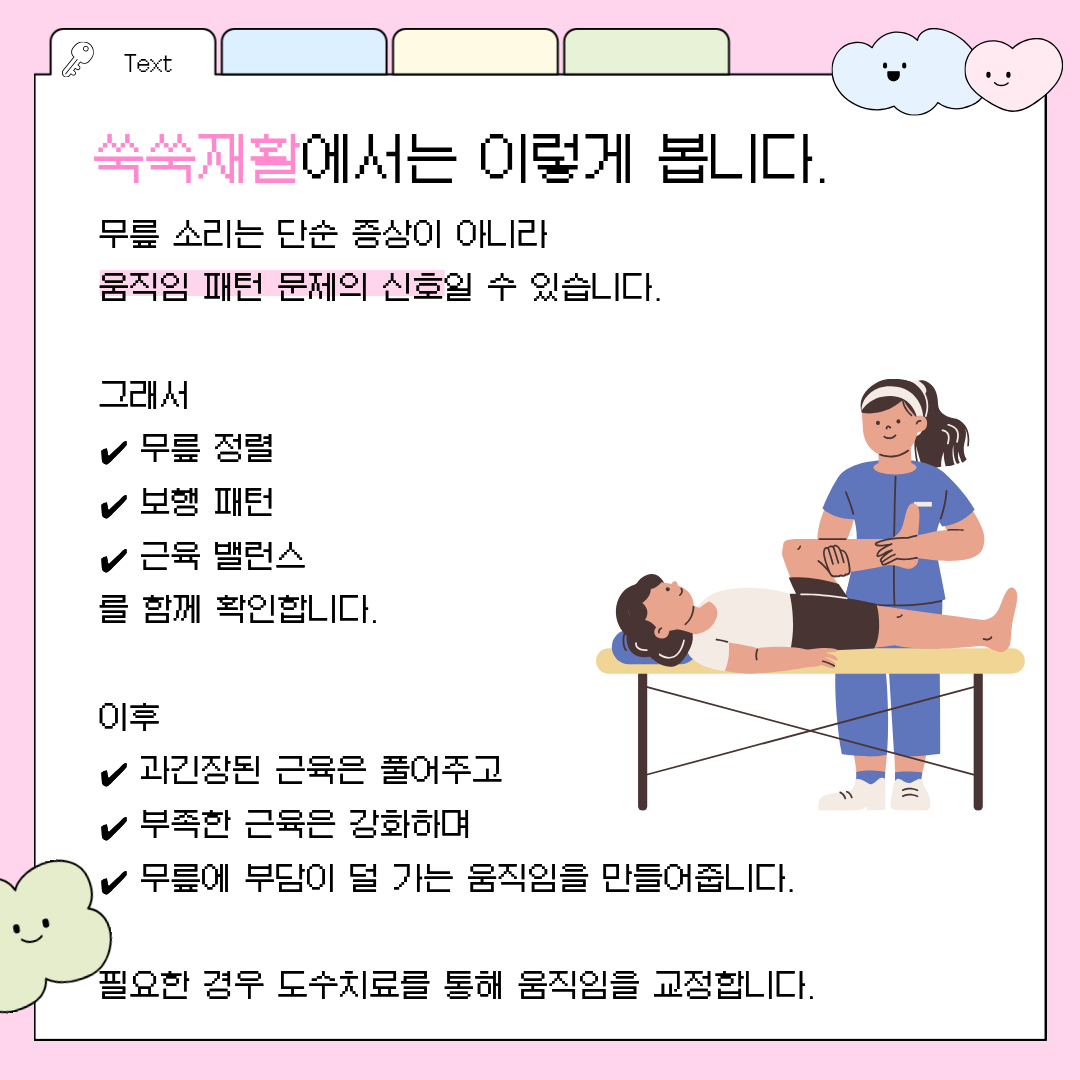
At Ssukssuk Rehabilitation Medicine Clinic, we view knee sounds as a signal of a movement pattern problem and assess knee alignment, gait pattern, and muscle balance together. We release overly tight muscles and strengthen weak ones to create movement that puts less strain on the knee, and when needed, we use manual therapy to correct movement.
Key Takeaway
Knee popping on its own may not be a problem. But if it comes with pain or discomfort, don't brush it off as just a noise. Noticing the small signals your body sends first is the first step in protecting your knees.
Last reviewed: 2026-10-07 This article provides general medical information. Individual diagnosis and treatment decisions are made during an in-person consultation.