
Snapping Hip Syndrome: Why Your Hip Clicks | Bangbae
If hip clicking comes with pain or keeps recurring, it's important to tell simple friction apart from damage inside the joint.
Snapping hip syndrome is a condition in which a tendon, muscle, or structure inside the hip joint slides over a bony prominence as the hip moves, producing a "pop" or "snap." It's easy to ignore when it doesn't hurt, but if pain comes along with it or the sound keeps recurring, it should be checked. If this sound is bothering you as part of hip or pelvic pain in Bangbae, here's an overview of each type and how to manage it.
Three Types, Based on Where the Sound Comes From
Medically, snapping hip syndrome is divided into external, internal, and intra-articular types.
External type — This is the most common type. The iliotibial band on the outside of the thigh or the gluteal tendons snap over the bony prominence on the outside of the femur, producing the sound. It's felt on the outer side of the hip, is common when running or climbing stairs, and the pain may get worse when lying on your side.
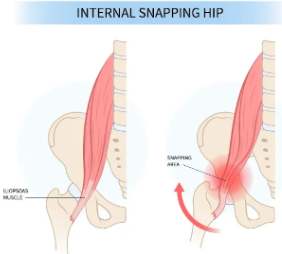
Internal type — The iliopsoas tendon makes a sound as it passes over bony structures at the front of the pelvis. It's heard at the front of the hip and felt as a "pop" when you lift your leg or stand up from sitting.
Intra-articular type — The sound comes from a problem inside the joint. Typical causes include femoroacetabular impingement, labral tears, and cartilage damage, and besides the sound, there may be pain, catching, and limited range of motion.
What Causes Snapping Hip Syndrome?
The main causes are excessive tension in the muscles around the hip, repetitive exercise, pelvic misalignment, muscle imbalance, and overuse.
Whether treatment is needed depends on pain. If there's no pain and no loss of function, treatment may not be necessary. On the other hand, if the pain keeps coming back or is getting worse, a detailed diagnosis is needed to tell whether it's simple friction or damage inside the joint.
Treatment and At-Home Care
At the clinic, the following approaches are combined depending on your condition:
- Stretching and muscle relaxation: stretches for the iliopsoas, glutes, and TFL
- Manual therapy: correcting pelvic alignment and releasing overly tight muscles to reduce friction
- Exercise therapy: hip stability exercises and rehabilitation exercises for the iliopsoas, glutes, and core
- Injection therapy: localized injections may be considered if there's inflammation
- Extracorporeal shockwave therapy (ESWT): for muscle relaxation and recovery from inflammation
At home, the basics are to stretch thoroughly before exercise, do myofascial release afterward, and avoid ramping up exercise intensity suddenly. When it hurts, don't push it.
Signs You Should See a Doctor
- Hip clicking and pain continue together
- You experience catching or a sense of weakness
- The pain increases the more you exercise
- Symptoms last more than 2–3 weeks
At Ssukssuk Rehabilitation Medicine Clinic, we decide on the appropriate treatment among injection therapy, manual therapy, shockwave therapy, rehabilitative exercise therapy, and physical therapy based on your diagnosis.
A Quick Review
Snapping hip syndrome is fairly common, but if it's left untreated while causing pain, it can become chronic. If your hip keeps making noise, consult a specialist to find out whether it's just a sound or a problem inside the joint.
Last reviewed: 2026-10-07 This article provides general medical information. Individual diagnosis and treatment decisions are made during an in-person consultation.