
Outer Wrist Pain and TFCC Injuries | Bangbae
If the pinky side of your wrist feels sharp and weak, suspect a TFCC injury and start by limiting how much you use the wrist.
If you feel a sharp, tingling pain on the pinky side of your wrist while doing push-ups or turning a doorknob, or your grip feels weak when you hold things, you may have a TFCC injury. If you're dealing with outer wrist pain in Bangbae, here's what the TFCC is, why it gets injured, and how it recovers.
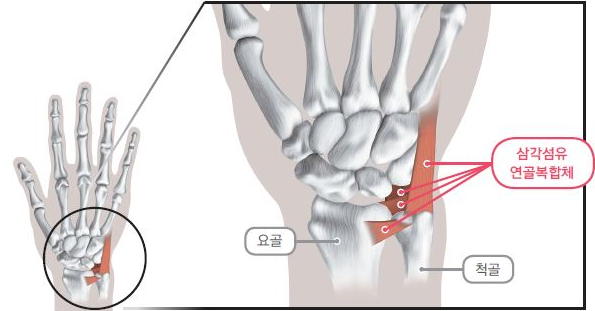
The TFCC: The Structure That Protects the Outer Wrist
TFCC stands for Triangular Fibrocartilage Complex. It sits on the pinky side of the wrist and does the following:
- Keeps the wrist joint stable
- Supports rotation of the wrist
- Absorbs shock to the wrist
- Distributes load between the forearm bones and the wrist bones
It holds the wrist steady when you rotate it or grip something, and injuries to it are relatively common among people who use their wrists a lot.
How Do TFCC Injuries Happen?
Symptoms Beyond Outer Wrist Pain
- Pain on the pinky side of the wrist
- Pain when rotating the wrist
- Weak grip when holding objects
- Pain when bearing weight on the wrist
- A clicking sensation or sound in the wrist
If the pain gets worse especially when you twist the wrist or put weight on it, a TFCC injury should be considered.
Treating and Managing a TFCC Injury
- Limit wrist use — While it's painful, cut back on using the wrist for a while. Avoid weight-bearing movements and forceful twisting.
- Wear a brace — A wrist support or brace limits excessive movement, helping ease inflammation and support recovery.
- Medication and physical therapy — Anti-inflammatory pain relievers can be used to control pain when needed, and manual therapy restores function through pain-relief treatment, wrist stabilization exercises, and strengthening exercises.
- Injection therapy and extracorporeal shockwave therapy (ESWT) — These are considered if the pain persists. In rare cases of severe injury, surgery may be needed.
At Ssukssuk Rehabilitation Medicine Clinic, we choose the right option among injection therapy, manual therapy, shockwave therapy, rehabilitative exercise therapy, and physical therapy based on your diagnosis.
Summary
The TFCC is responsible for wrist stability and shock absorption, and it can be injured through wrist-intensive activities or trauma. Pain on the outer, pinky side of the wrist is the hallmark symptom. If the pain persists or your wrist isn't working comfortably, it's important to get an accurate diagnosis from a specialist and restore wrist function through rehabilitation.
Last reviewed: 2026-10-07 This article provides general medical information. Individual diagnosis and treatment decisions are made during an in-person consultation.