

Calf Pain and Achilles Tendinitis After Running | Bangbae Station
Calf and Achilles pain after running won't linger if you adjust your training load instead of running through it.
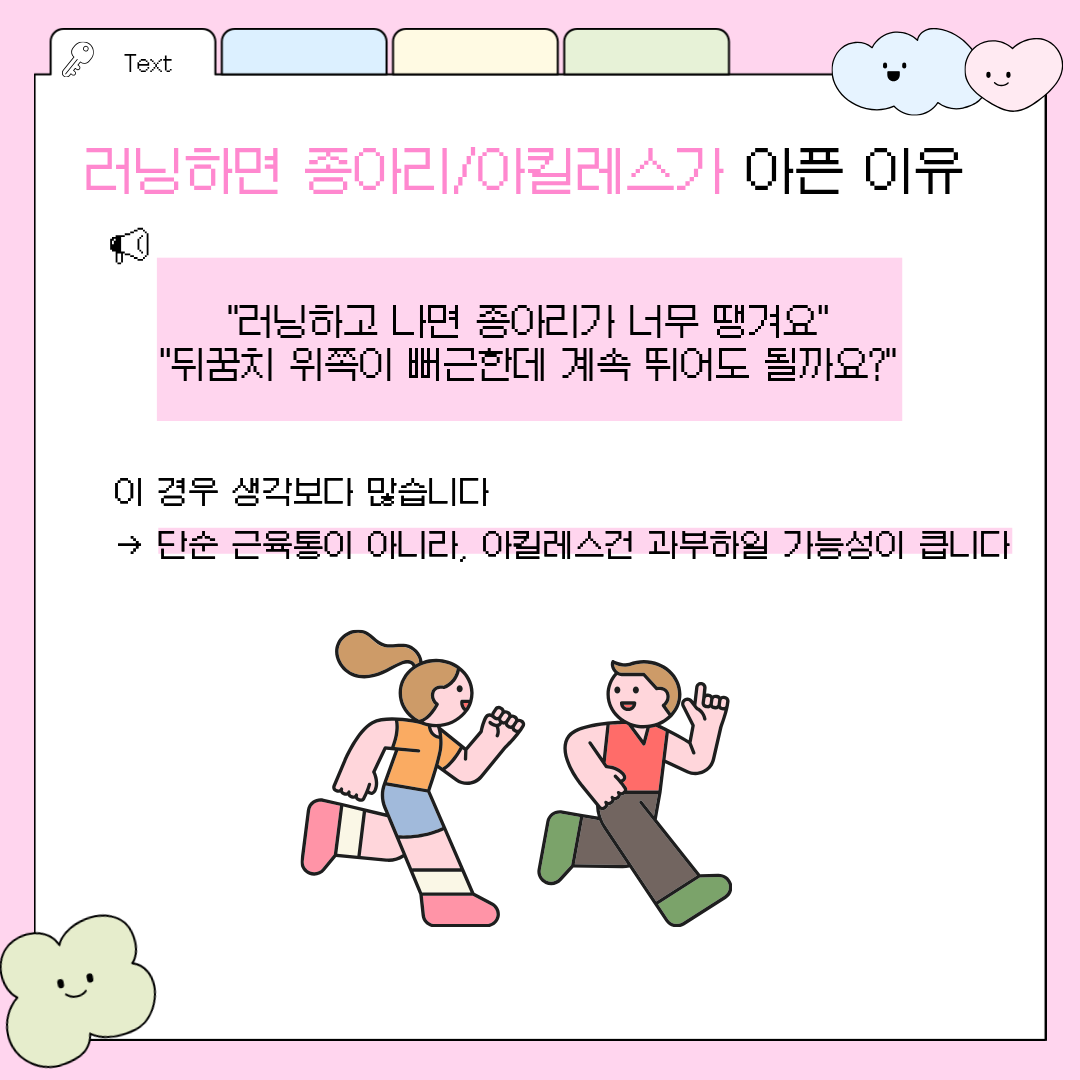
If your calves feel tight and the area just above your heel is stiff after a run, it's a good idea to consider Achilles tendon overload before assuming it's ordinary muscle soreness. This guide is for runners dealing with calf pain or Achilles tendinitis symptoms who want to understand why it hurts and how to adjust their load.

Why running strains the calves and Achilles tendon
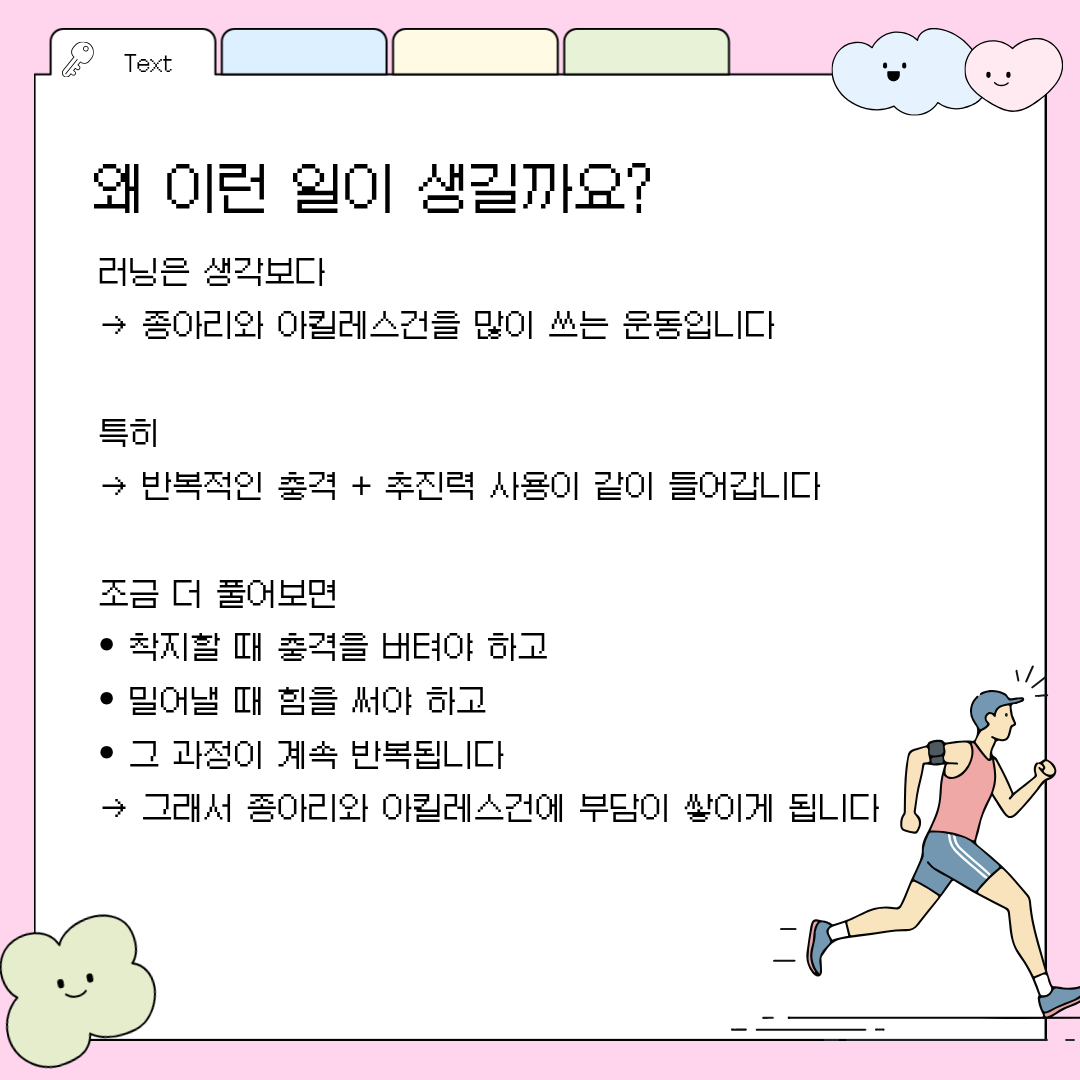
At the moment of landing, your body has to absorb impact, and when you push off, it has to generate propulsion. In running, these two actions repeat with every stride, so your calves and Achilles tendon work much harder than you might think.
As shock absorption and propulsion repeat nonstop, strain builds up little by little and eventually shows up as calf pain or Achilles tendon pain.
Three stages leading to Achilles tendinitis
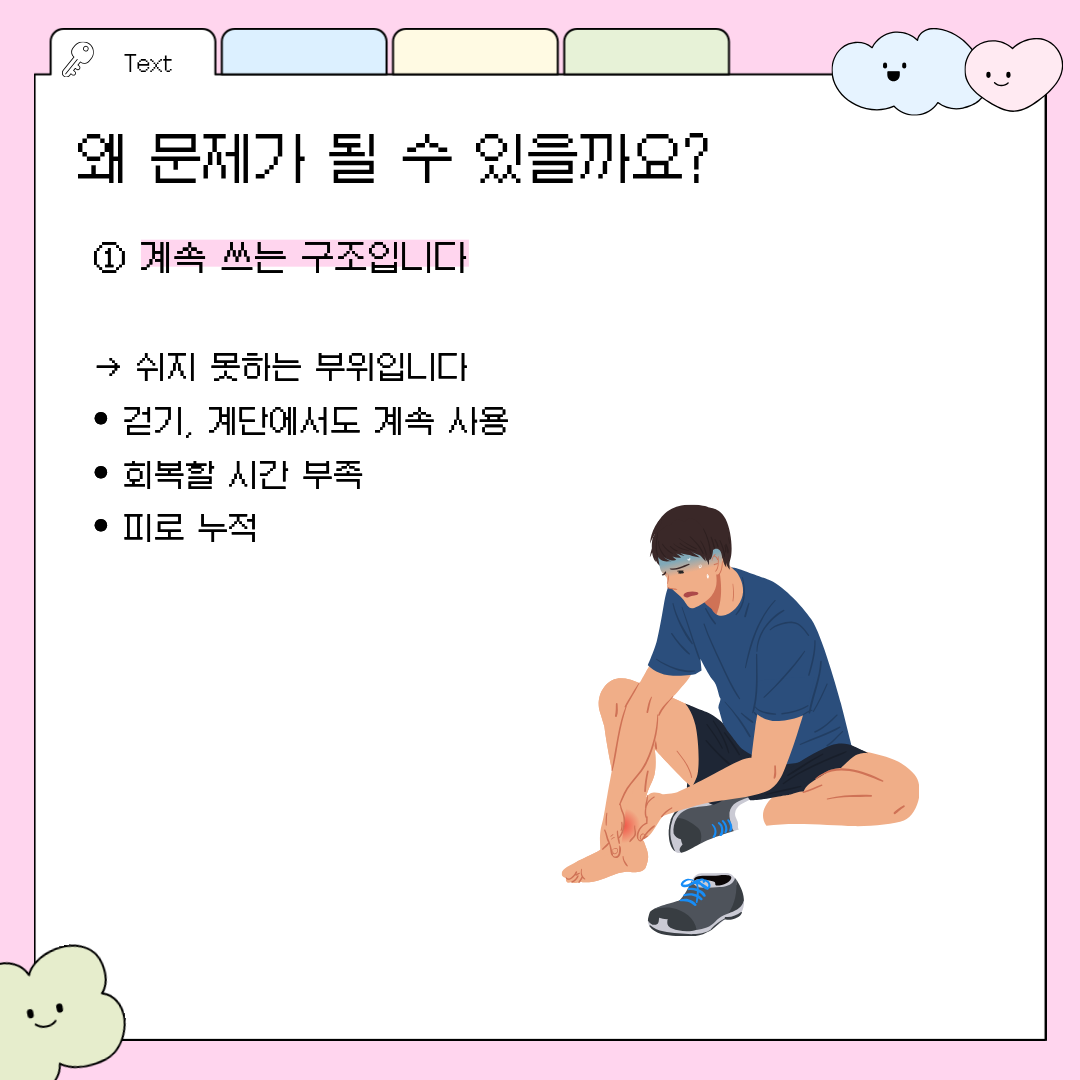
It's an area that never gets to rest. The Achilles tendon and calves work not only when you run but also when you walk or climb stairs. With little time to recover, fatigue builds easily.
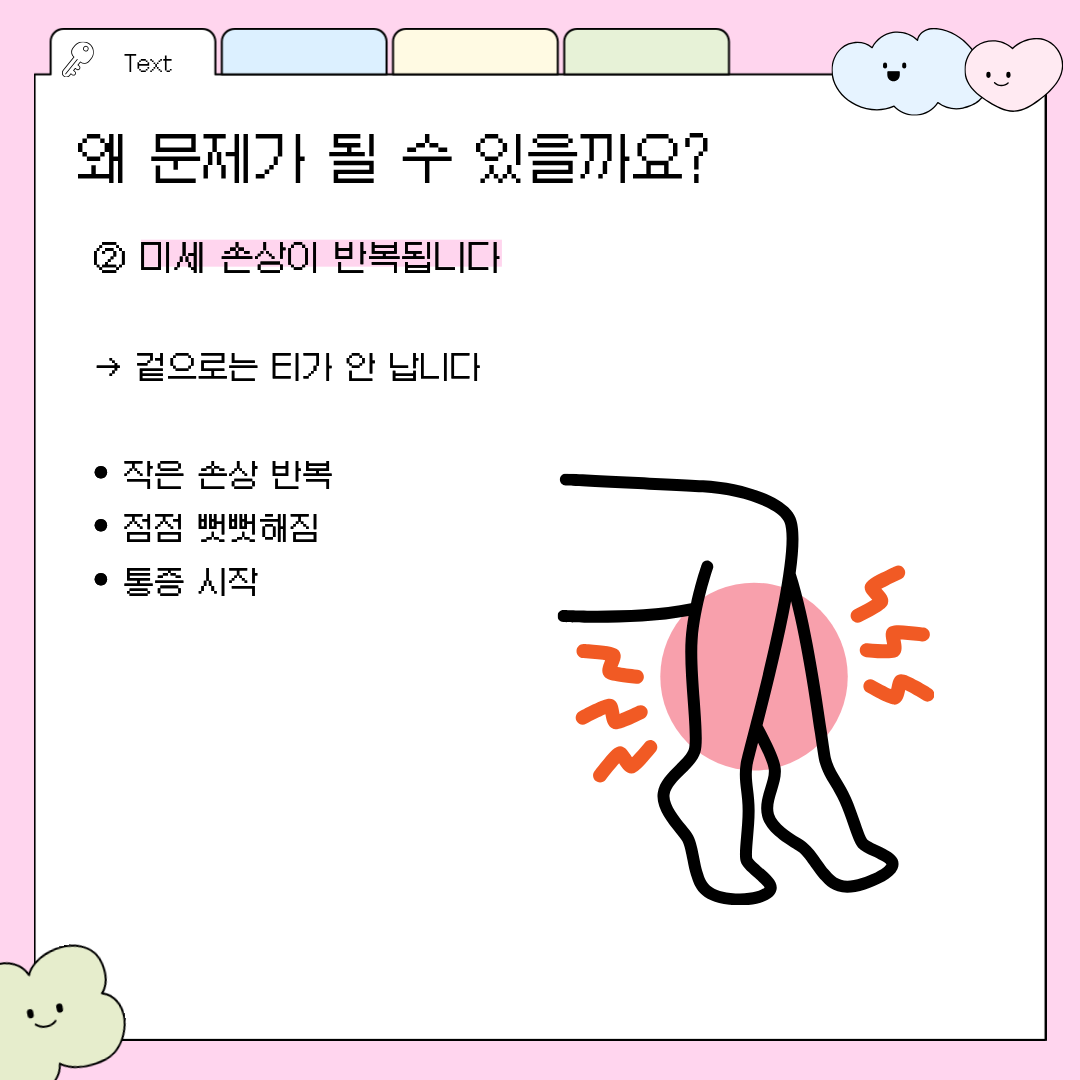
Hidden micro-damage continues. While small injuries keep repeating, there are few obvious signs, until gradual stiffness sets in and pain begins.
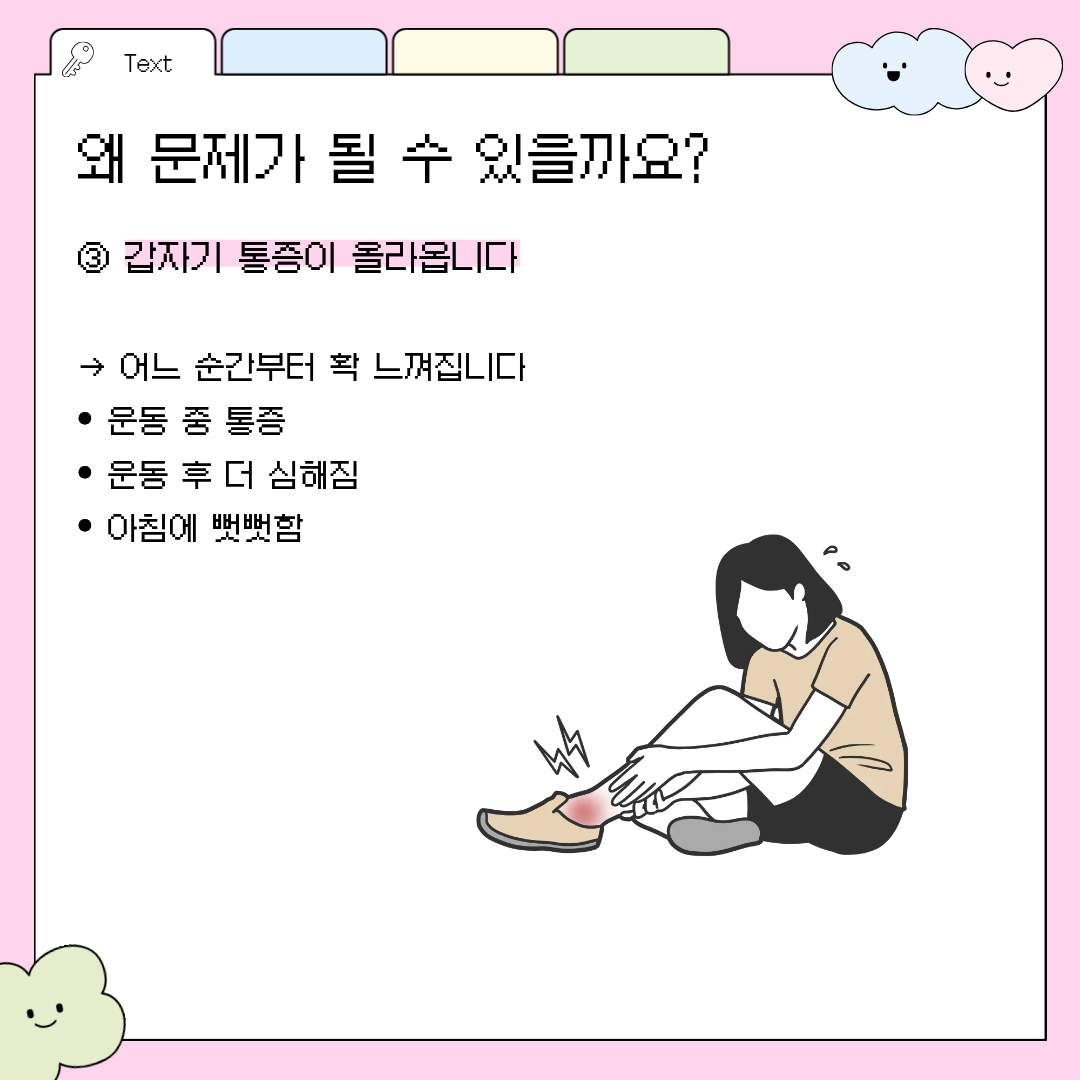
One day, the pain flares up. It hurts during exercise, gets worse afterward, and stiffness lingers in the morning.
Is your calf pain a sign that needs checking?
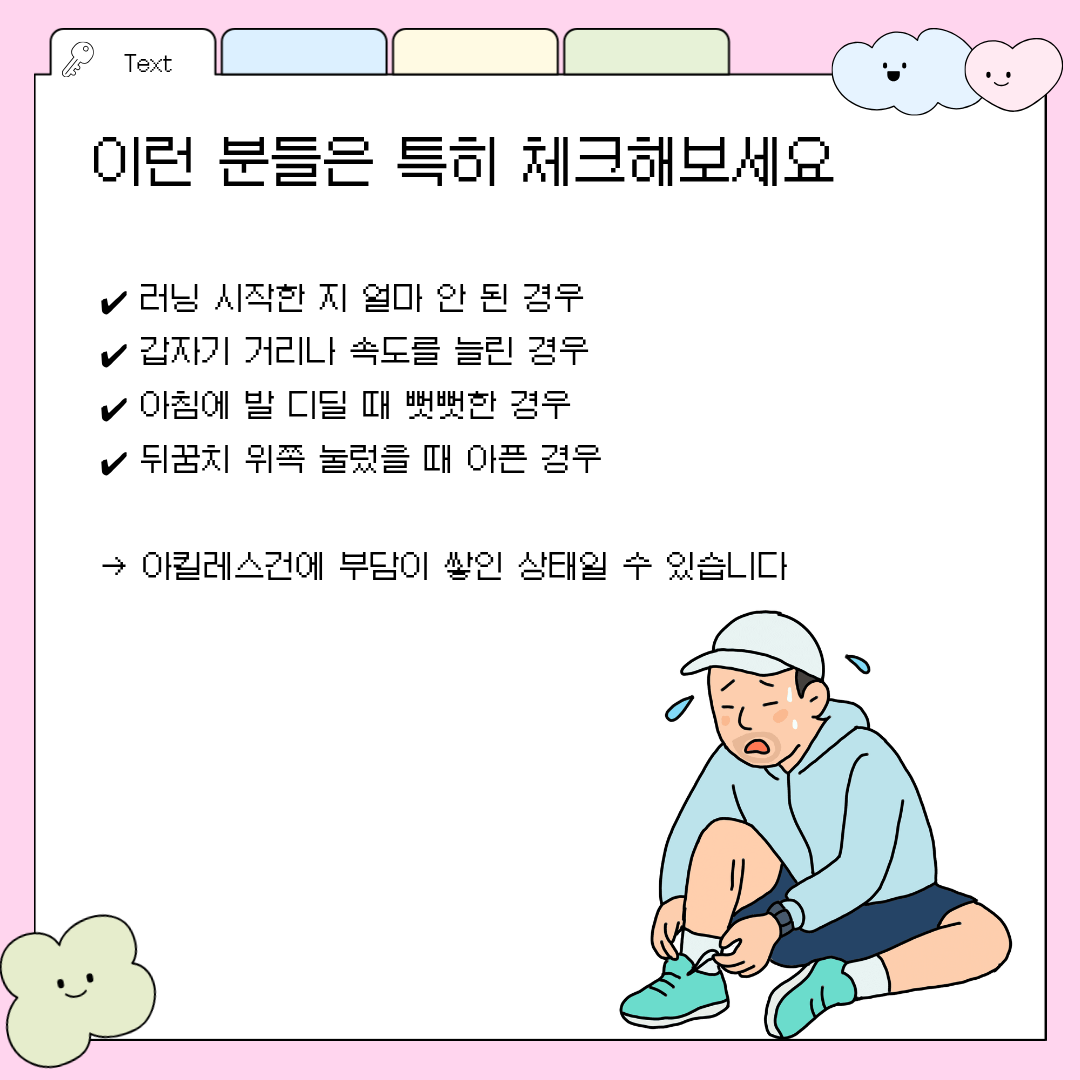
If any of the following apply to you, strain may have built up in your Achilles tendon:
- You started running fairly recently
- You increased your distance or pace all at once
- Your first steps in the morning feel stiff
- The area just above your heel hurts when pressed
Adjust your running load instead of pushing through
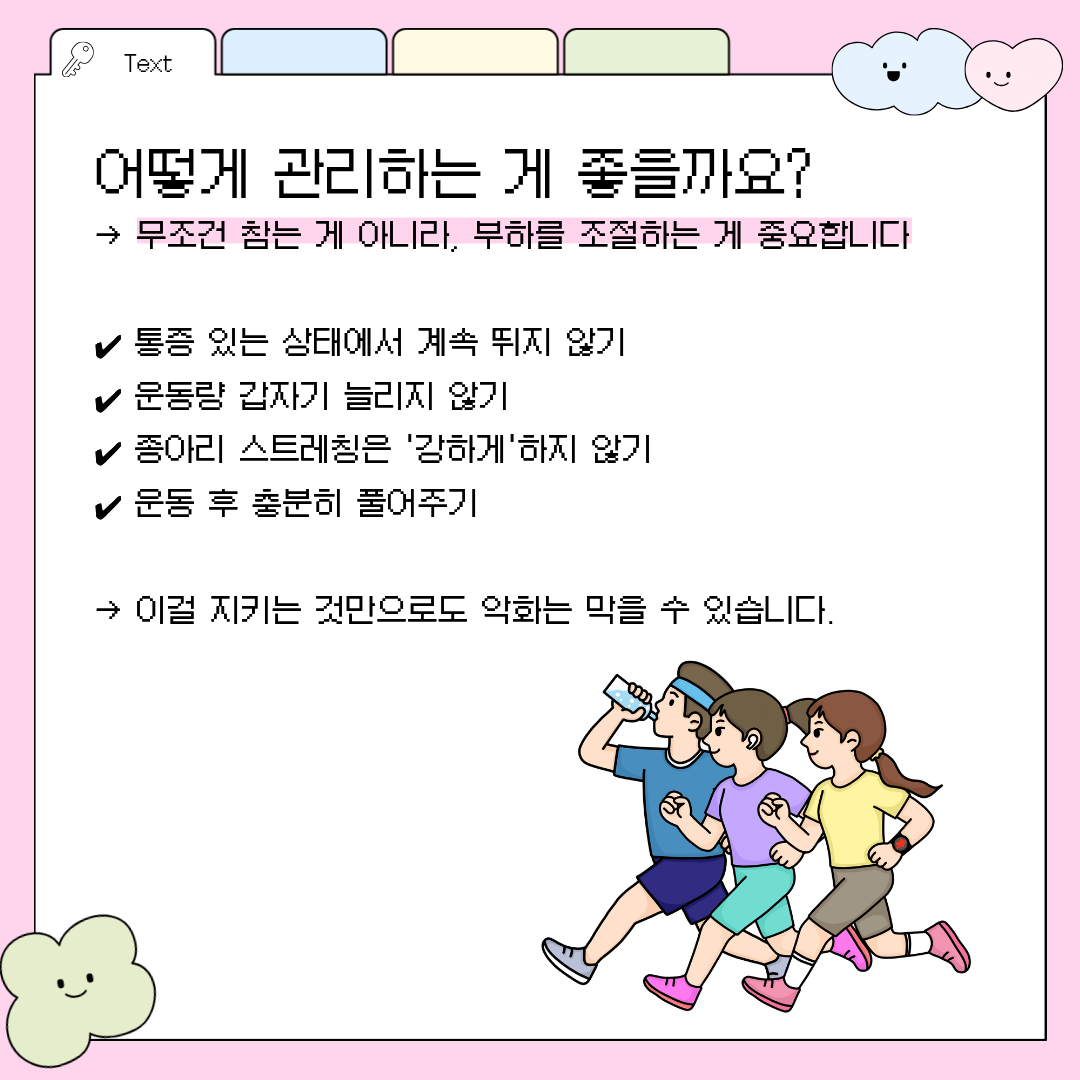
Adjusting your running load matters more than gritting your teeth through the pain.
- Don't keep running while it hurts
- Increase your training volume gradually, not all at once
- Stretch your calves gently, not forcefully
- Loosen up your calves thoroughly after each workout
Following these principles alone can keep Achilles tendinitis from getting worse.
How we approach care at Ssukssuk Rehabilitation Medicine Clinic near Bangbae Station
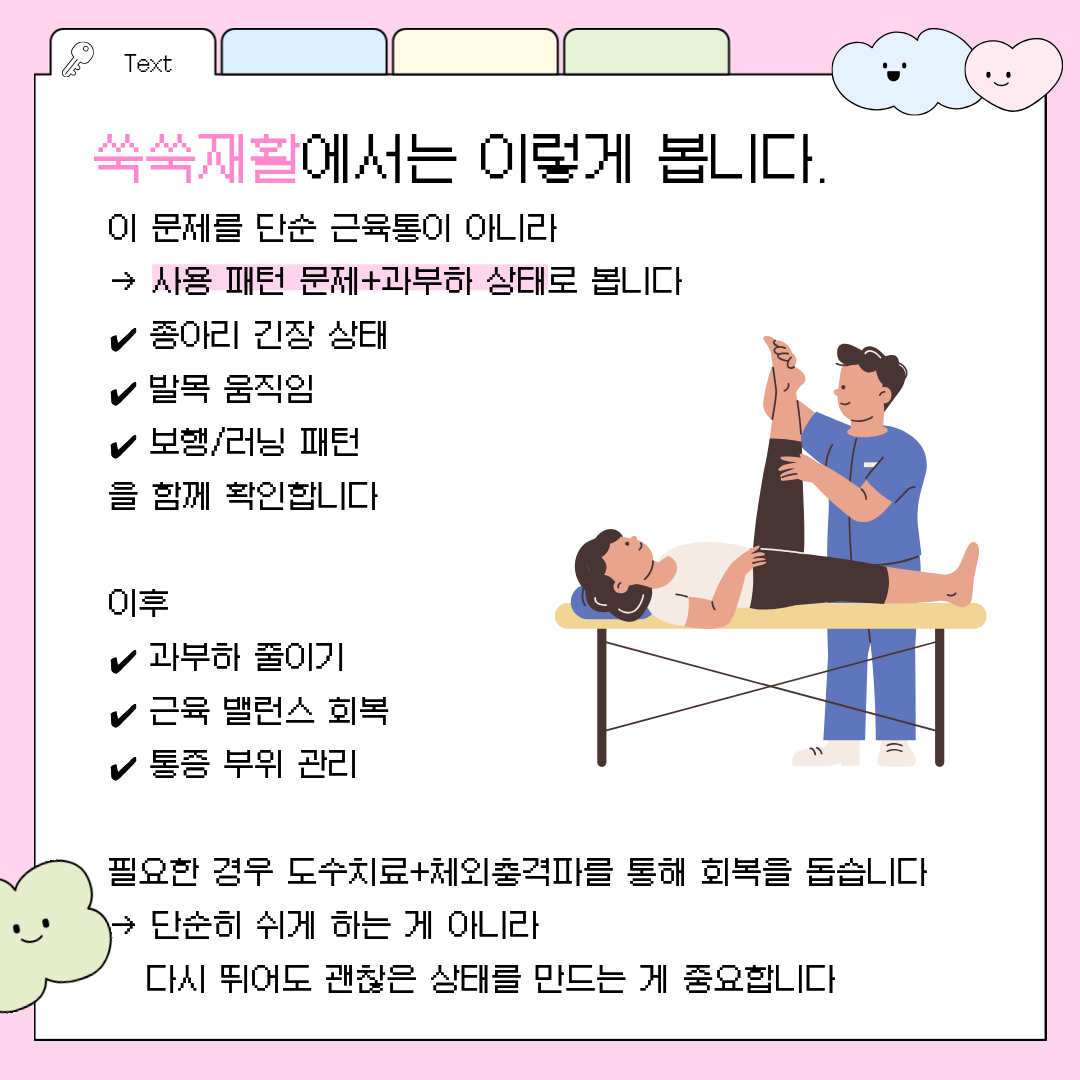
We don't treat calf pain after running as simple muscle soreness; we see it as a combination of usage patterns and overload. That's why we look at calf tension, ankle movement, and your walking and running patterns together.
From there, we reduce overload, restore muscle balance, and manage the painful area, adding manual therapy and extracorporeal shockwave therapy (ESWT) when needed to support recovery. The goal isn't just rest, but getting you to a point where you can run again comfortably.
Summing up
- Calf and Achilles pain after running can be a sign of Achilles tendon overload.
- The worst choice is to keep running through the pain.
- Adjusting your load early leads to quick improvement, but ignoring it makes it linger. If the pain keeps coming back, have your condition checked.
Last reviewed: October 7, 2026 This article provides general medical information. Individual diagnosis and treatment plans are determined through an in-person consultation.