
Levator Scapulae Tension: A Cause of Shoulder Pain and Headaches | Bangbae
If neck-and-shoulder tightness comes with headaches, releasing the levator scapulae and correcting posture is the place to start.
After a day in front of a monitor, the area between your neck and shoulder can feel heavy, and the back of your head may start to throb. It's easy to blame fatigue, but if this tightness keeps up, the levator scapulae may be the problem, and tension or knots in this muscle can even trigger headaches. This guide is for anyone dealing with both shoulder pain and headaches who wants to understand the cause and how to manage it.
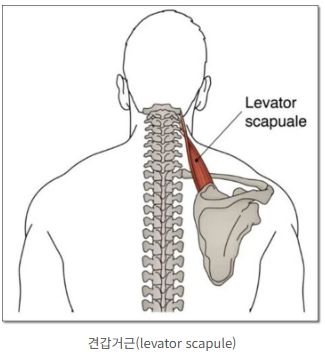
The levator scapulae connects the neck and shoulder
The levator scapulae originates from the transverse processes of the first through fourth cervical vertebrae (origin) and attaches to the superior angle of the shoulder blade (insertion). Its jobs are elevating the shoulder blade (shrugging), rotating the shoulder blade downward, and assisting with side-bending and rotating the neck. Think of it as a muscle that does a lot of the work when you tilt your head to the side or lift your shoulders.
Why the levator scapulae gets tight
Because it's easily overused in daily life, the muscle can stay contracted when the following habits pile up, leading to shoulder pain:
- Looking down at a smartphone for long periods
- Working at a computer with poor posture
- Carrying a bag on only one shoulder
- Muscle tension raised by stress
- Sudden neck movements (a "crick" in the neck)
From shoulder pain to headaches: what symptoms appear?
Levator scapulae tension often goes beyond simple shoulder pain:
- Pain running from the back of the neck to the top of the shoulder
- Tender spots that are especially painful when pressed
- Pain that worsens when turning or bending the head
- Discomfort when raising the shoulder
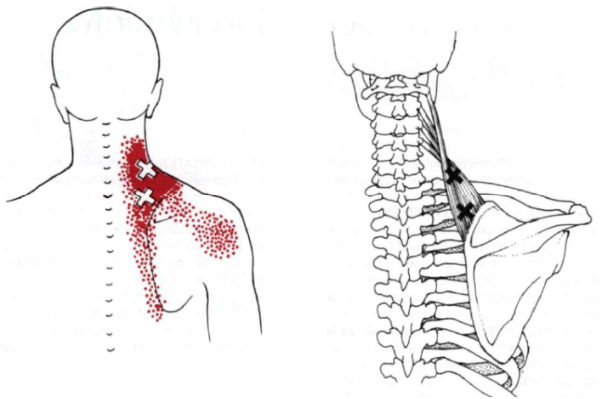
Trigger points in the levator scapulae can also lead to tension headaches. Typical patterns include pain at the back of the head (occipital area), headaches rising from behind the ear or the back of the neck, and one-sided headaches. This can be seen as a form of myofascial pain syndrome, in which muscle tension irritates nearby nerves.
Treatment starts with conservative methods
Levator scapulae pain often improves with conservative treatment alone.
Levator scapulae stretch to do at home
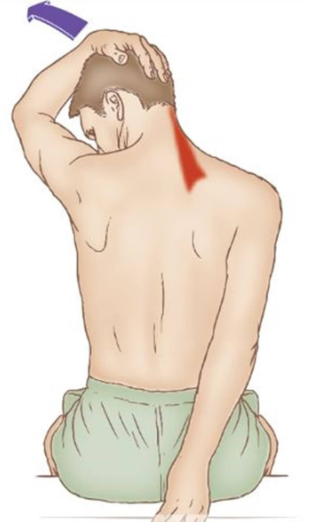
- Hold your head with one hand and slowly pull it toward the opposite side.
- With your head tilted slightly downward, hold the stretched position.
- Hold for 15–30 seconds, then alternate sides and repeat.
Only pull within a pain-free range.
Wrapping up with prevention habits
- Keep your monitor at eye level.
- Don't bend your head down when looking at your smartphone.
- If you sit for long periods, stretch every hour.
- Carry bags evenly on both shoulders.
Levator scapulae pain is common, but if left untreated it can easily become chronic and even trigger headaches. If shoulder pain with headaches keeps recurring, don't dismiss it as simple muscle pain; get evaluated by a rehabilitation medicine specialist. At Ssukssuk Rehabilitation Medicine Clinic in Bangbae, after an exam we choose the treatment that fits your condition from among injection therapy, manual therapy, shockwave therapy, rehabilitative exercise therapy, and physical therapy.
Last reviewed: October 7, 2026 This article provides general medical information. Individual diagnosis and treatment plans are determined through an in-person consultation.