
Hamstring Tear vs. Ordinary Muscle Soreness | Bangbae
Back-of-thigh pain after a 'pop' may be a hamstring tear, and stage-appropriate rehab is key to preventing re-injury.
If you felt a sudden "pop" in the back of your thigh during exercise followed by pain, is it just a strained muscle? It's easy to dismiss as ordinary soreness, but there's a real chance it's a hamstring tear. This area is prone to re-injury if left untreated, so early care matters. Here's how to tell a hamstring tear from muscle soreness and how the grades differ.
What is a hamstring tear?
The hamstrings are the three muscles in the back of the thigh, and they play a key role in running, jumping, and changing direction. When these muscles are overstretched or hit with a sudden, large force, the muscle fibers can tear. This is called a hamstring tear.
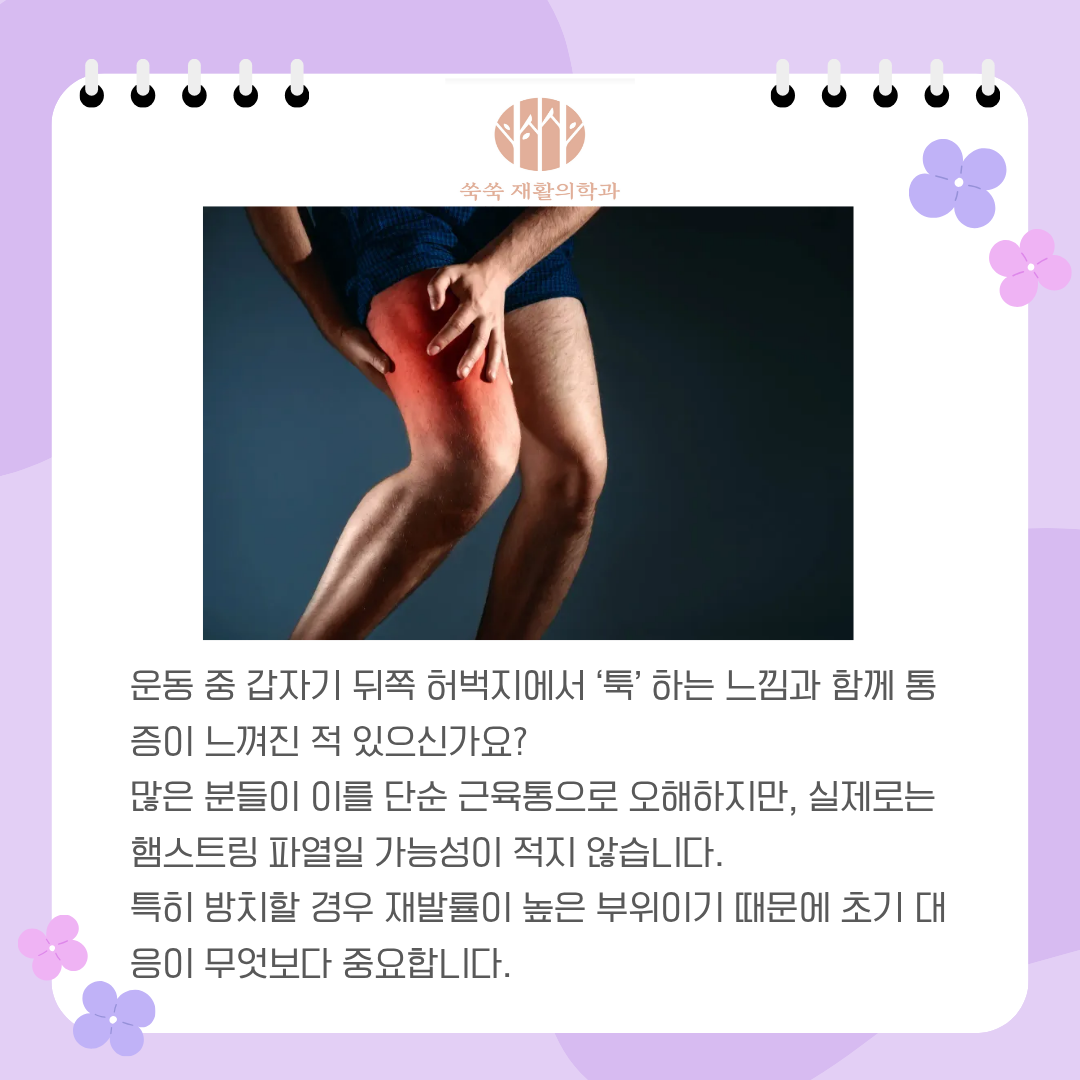
Signs that set it apart from soreness that fades with time
It's tempting to wait it out, but a hamstring tear is clearly different from ordinary muscle soreness:
- Sharp pain that comes on suddenly
- Discomfort even when walking or sitting
- Bruising
- Pain that returns with certain movements
These symptoms may signal an injury, not just fatigue.
Hamstring tears compared by grade
Why does it recur so often?
The hamstring is one of the areas with the highest re-injury rates. Common reasons include returning to exercise before fully recovering, not stretching enough, muscle strength imbalances, and poor exercise habits. Less pain doesn't mean recovery is complete, so rehabilitation is essential.
Treatment by recovery stage, and what to avoid
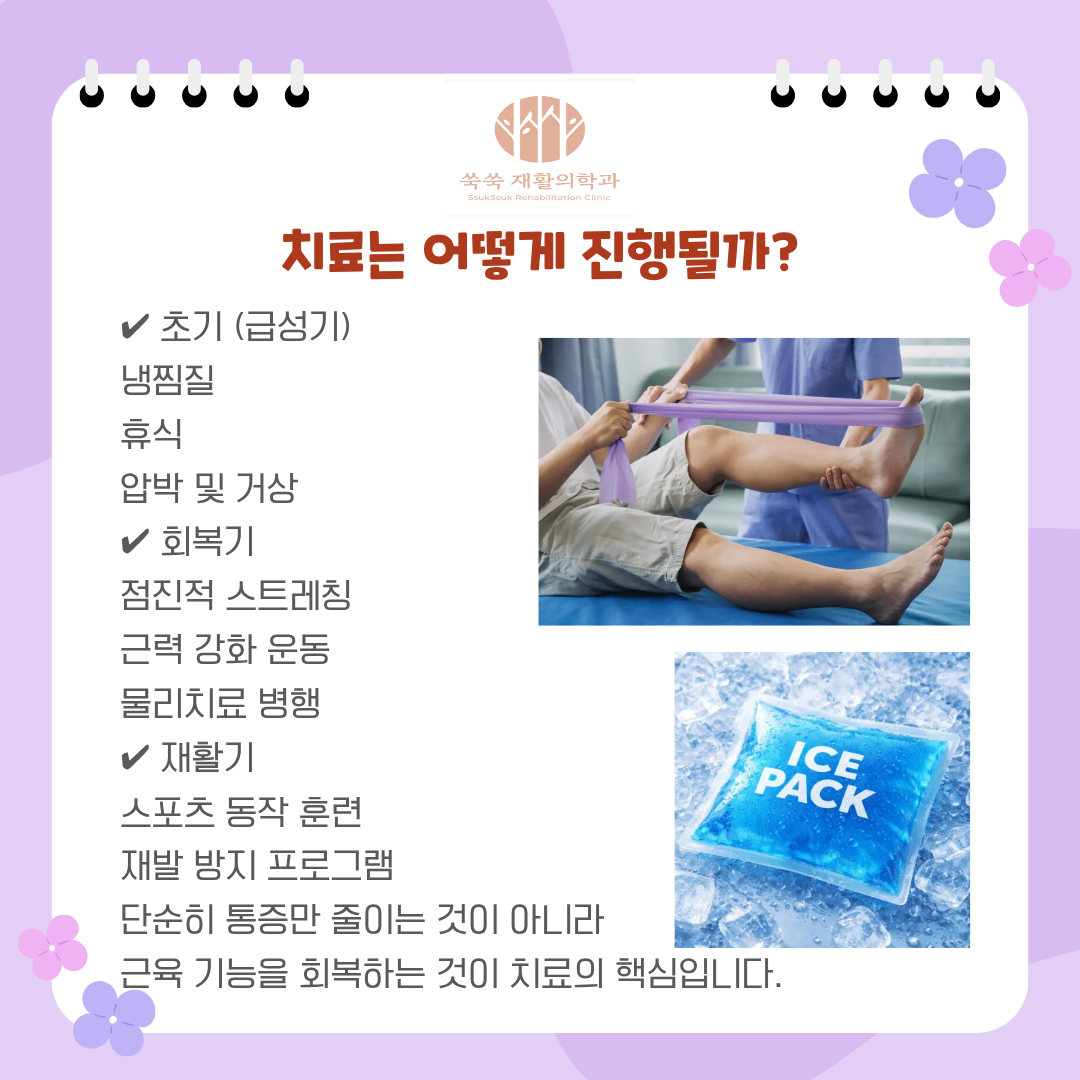
The key to treatment is not just reducing pain but restoring muscle function.
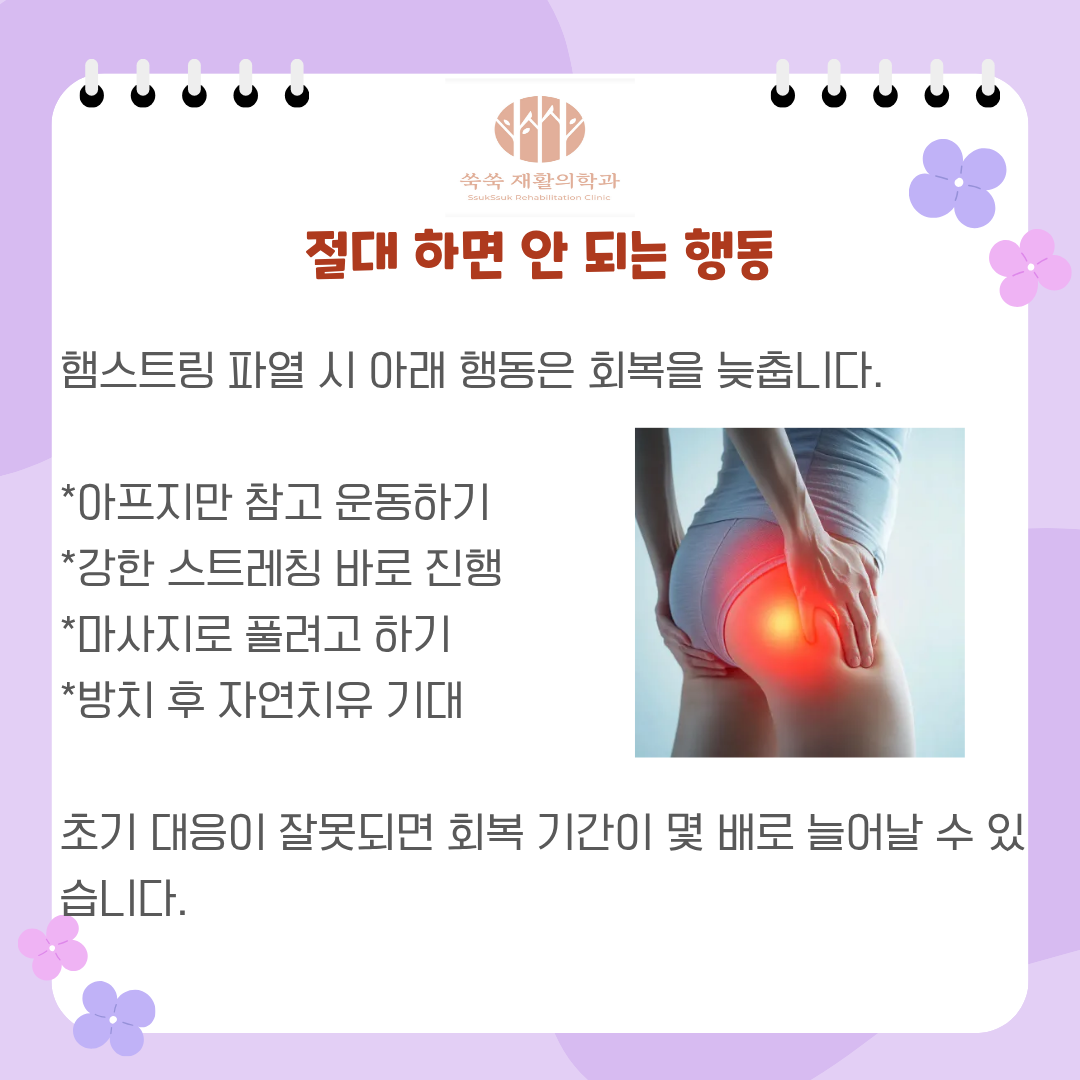
On the other hand, exercising through the pain, jumping straight into intense stretching, trying to massage it out, or leaving it alone and waiting for it to heal on its own will slow recovery. A misstep early on can make the recovery period several times longer.
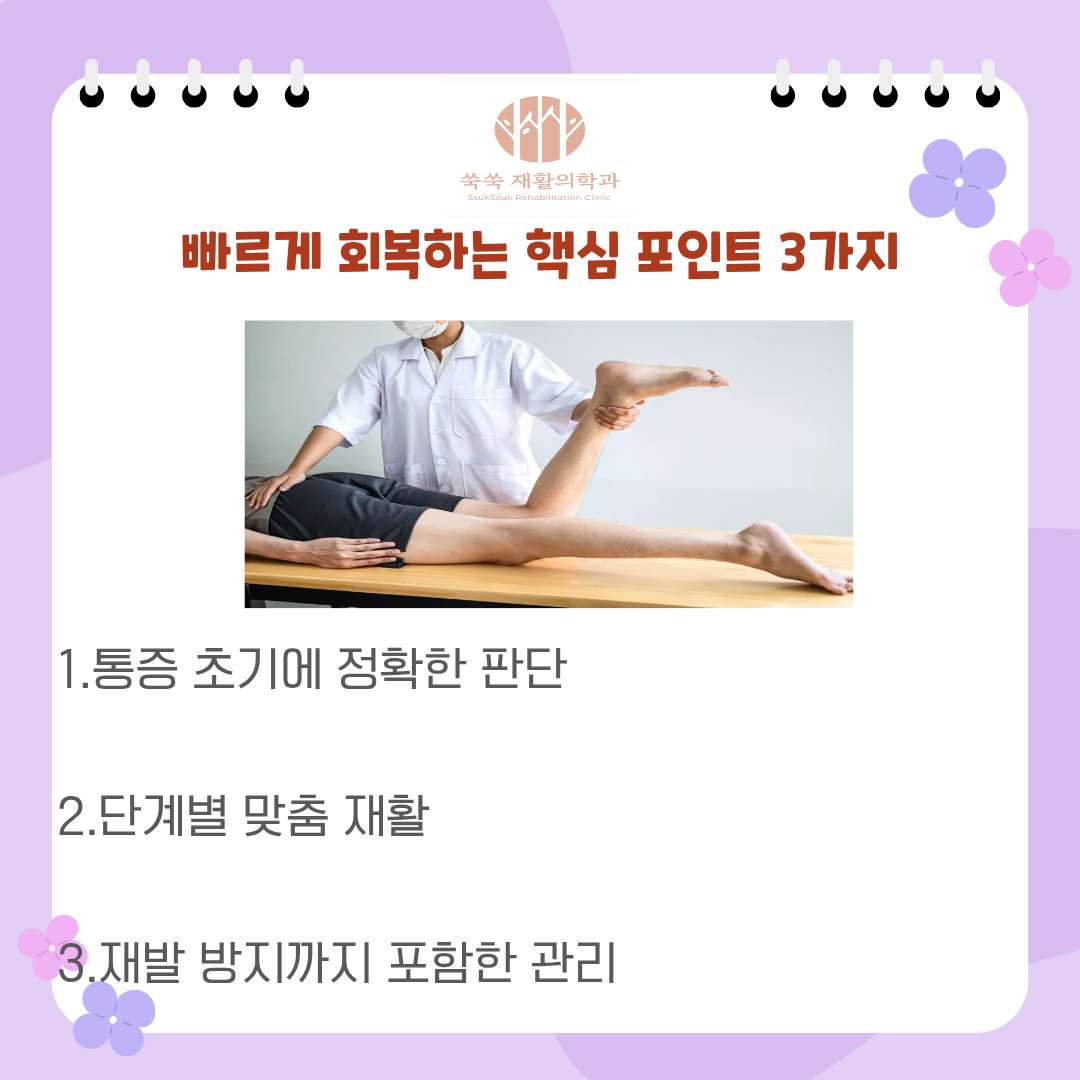
Three keys to a faster recovery
- Get an accurate assessment as soon as pain starts
- Follow rehab matched to the injury stage
- Include re-injury prevention in your care
If you had sudden pain during exercise, checking your condition now is the fastest path, rather than assuming it will be fine. At Ssukssuk Rehabilitation Medicine Clinic in Bangbae, after an exam we decide which treatments you need from among injection therapy, manual therapy, shockwave therapy, rehabilitative exercise therapy, and physical therapy.
Last reviewed: October 7, 2026 This article provides general medical information. Individual diagnosis and treatment plans are determined through an in-person consultation.