
Knee Pain After Running and the TFL Muscle | Bangbae
Outer knee pain after running often comes from an overly tight TFL — wake up your glutes and increase your distance gradually.
When people start running or increase their mileage, more of them report a sharp or aching pain on the outside of the knee. If knee pain appears after you've started running or stepped up your training, it's worth looking at the tensor fasciae latae (TFL) before dismissing it as ordinary muscle soreness. Here's a brief overview of how TFL tightness can lead to knee pain in long-distance runners and others who use their lower body repetitively, and what to do about it.
What Is the Tensor Fasciae Latae (TFL)?
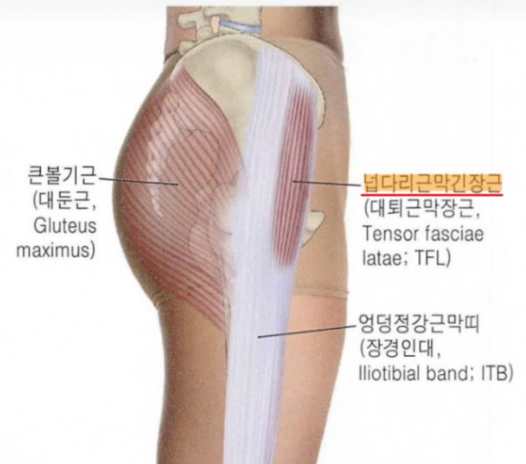
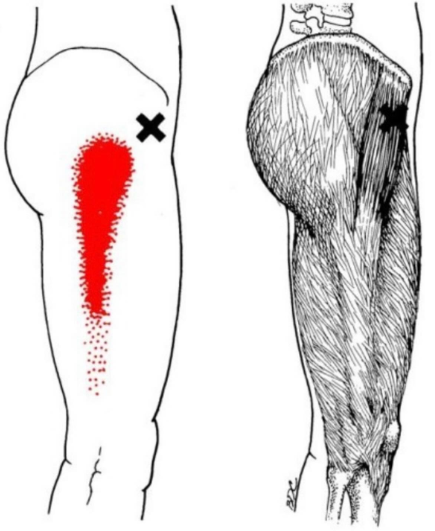
It's a small muscle connecting the pelvis and thigh, but it plays a big role. It starts at the anterior superior iliac spine (ASIS) and attaches to the iliotibial band (IT band). It helps flex, abduct, and internally rotate the hip, and it tightens the IT band to stabilize the outside of the knee. It's a key muscle for pelvic stability and knee alignment.
How Running Leads to Knee Pain
The IT band, which connects to the TFL, runs down the outside of the thigh to the knee and can create repeated friction while you run.
- Causes : Increasing running distance or intensity too quickly, repeatedly running on hard surfaces, poor hip stability from weak glutes, faulty running form, insufficient stretching
- Progression : TFL tightness → increased IT band tension → friction on the outside of the knee → inflammation and pain
This sequence commonly leads to iliotibial band friction syndrome (IT band syndrome).
Suspect It If You Notice These Patterns
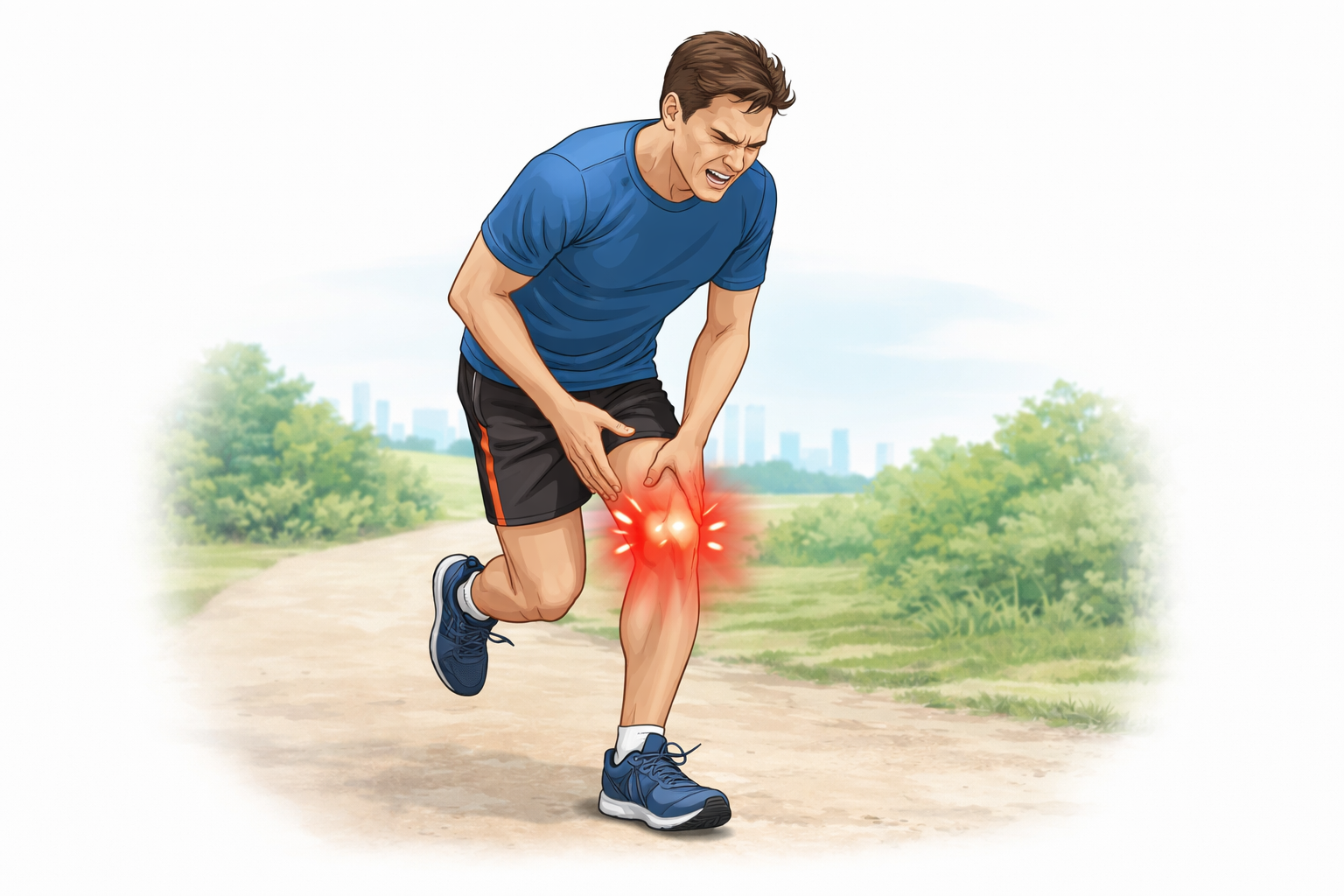
- Pain on the outside of the knee during or right after running
- Pain that shows up every time you pass a certain distance
- More pain when going down stairs
- Tightness along the outer thigh and discomfort on the outside of the hip
A hallmark is feeling fine at first, then having the pain worsen after a certain amount of time.
Conservative Treatment, with the Glutes at the Core
Most TFL- and IT band–related pain improves with conservative treatment.
The key is to rely less on the TFL and wake up the glutes.
Summary: Prevention Habits Before You Run
Stretch thoroughly before exercising, increase distance and pace little by little, wear well-cushioned running shoes, run on flat surfaces when possible, and add glute-strengthening exercises. At Ssukssuk Rehabilitation Medicine Clinic in Bangbae, we manage post-running knee pain by combining, as your condition calls for, Exbody posture assessment, injection therapy performed by the physician, one-on-one manual therapy and exercise therapy with a physical therapist, and physical therapy equipment such as HILT laser and shockwave therapy.
Last reviewed : 2026-10-07 This article provides general medical information. Individual diagnosis and treatment plans are determined through an in-person consultation.