
Shoulder Pain and the Trapezius: Balancing Massage and Strengthening
The trapezius isn't just a muscle to loosen; it supports the shoulder. Combining release with strengthening brings balance to shoulder pain care.
"A knotted trapezius needs to be loosened" is only half right. Before it's a muscle that tightens easily, the trapezius is a key muscle for neck and shoulder stability, so relying only on massage and stretching makes shoulder pain care one-sided. This guide helps people with recurring neck and shoulder pain understand what the trapezius does and how to approach its care.
The trapezius has three parts
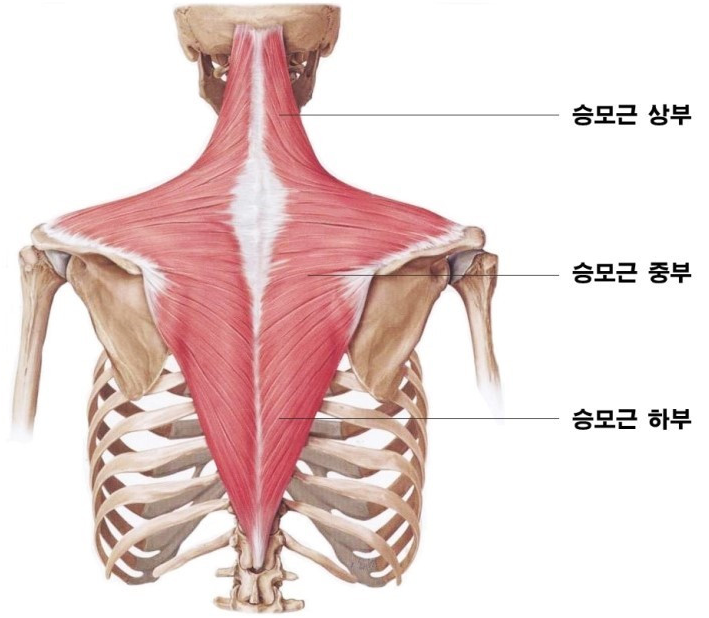
The trapezius is a large muscle that starts at the back of the neck and spreads across the shoulders and upper back. It's divided into three parts by location and role.
When all three parts work together, shoulder movement and posture are stable.
Three functions of the trapezius
Shoulder stability — The trapezius is the central muscle that holds the scapula (shoulder blade) in place. The shoulder blade has to be firmly positioned for the shoulder joint to move properly when you raise your arm or lift something; when trapezius function declines, movement becomes unsteady and shoulder pain can develop.
Raising the arm — To lift your arm overhead, the shoulder blade has to rotate along with the shoulder joint. The trapezius works with the serratus anterior to rotate the shoulder blade upward, so a weak trapezius raises the risk of shoulder impingement syndrome or pain.
Maintaining good posture — Forward head posture, rounded shoulders, and shoulder pain, all common with long hours on computers and smartphones, are closely tied to trapezius imbalance or weakness.
Why does the trapezius always feel tight?
It's easy to assume it's from overuse, but in reality several causes overlap.
- Holding the same posture for long periods
- Overusing the upper trapezius
- Weak middle and lower trapezius
- Insufficient shoulder blade stability
When the middle and lower trapezius are weak, the upper trapezius takes on their share of the work, which easily leads to tension and pain.
Release-only care vs. balanced care
Stopping at massage only fills in the first row of the table. Balancing release of tight muscles with strengthening of weak ones is at the heart of trapezius care. At Ssukssuk Rehabilitation Medicine Clinic, we measure postural imbalance and left-right muscle asymmetry with Exbody, then combine release and strengthening through manual therapy and exercise therapy.
Key points again
- Before it's a muscle that gets tight, the trapezius supports neck and shoulder movement and posture.
- Massage alone isn't enough; shoulder blade stabilization exercises and posture care need to go with it.
- If shoulder pain keeps coming back, ask about rehabilitation exercises that take trapezius function into account.
Last reviewed: 2026-10-07
This article provides general medical information. Individual diagnosis and treatment plans are determined through an in-person consultation.