

The Role of Manual Therapy After ACL Surgery
Manual therapy in the first 4–8 weeks after ACL surgery sets the course for regaining knee range of motion and walking.
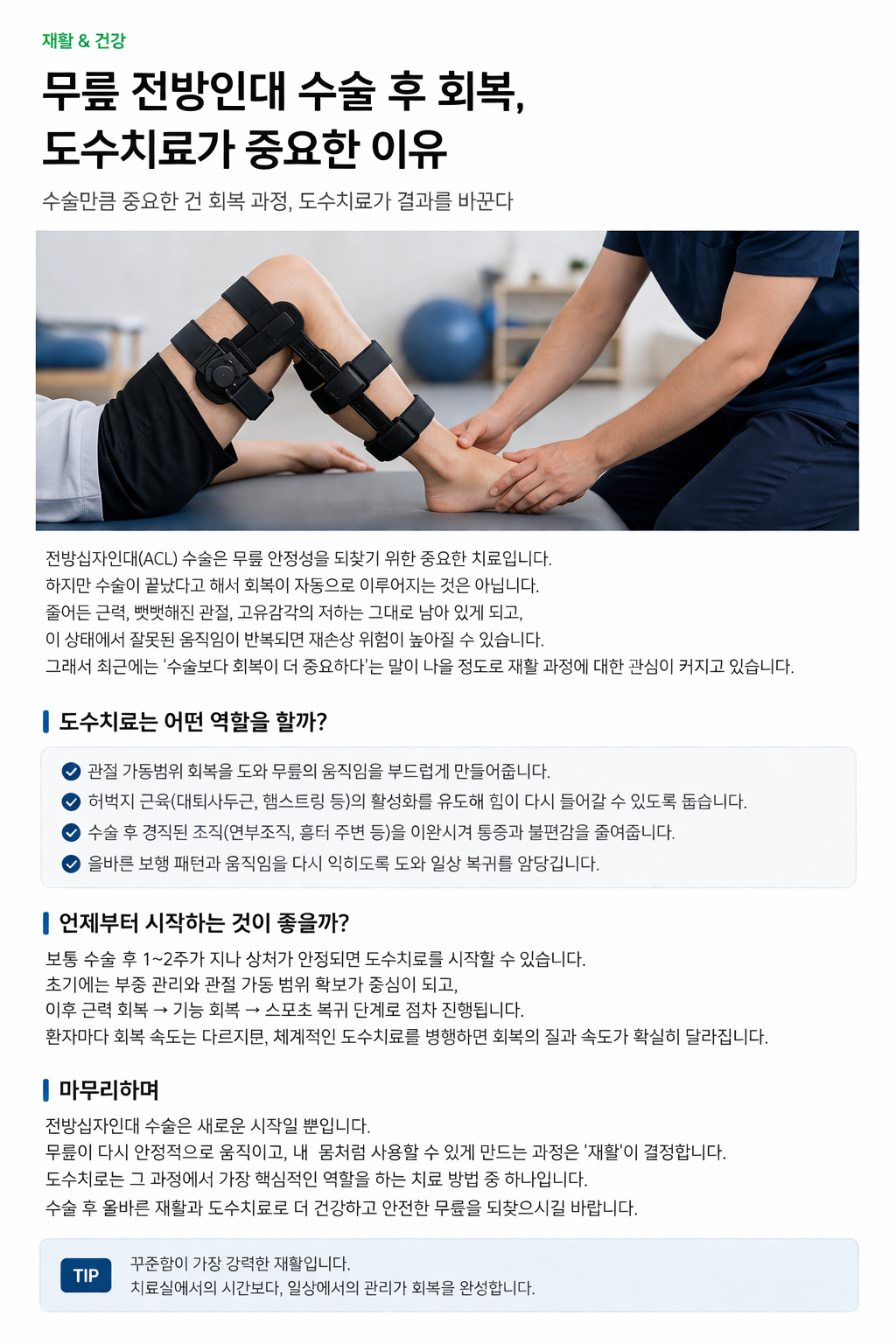
Anterior cruciate ligament (ACL) surgery restores the damaged ligament structure; getting that knee working properly again is the job of the rehabilitation that follows. That's why manual therapy is considered one of the factors that shapes the direction and pace of recovery after surgery. This guide explains the role of manual therapy for people in rehab after ACL surgery.

Will my knee come back on its own with time?
Contrary to the hope that "it'll get better if I wait," a knee that doesn't get the right stimulation and movement gradually stiffens. Strength drops quickly, and even your walking pattern can break down. Manual therapy is central to preventing these changes and helping the knee regain normal function.
Three intertwined problems after knee surgery
A knee after surgery is hard to see as simply "weakened." Restricted joint movement, muscle imbalance, and protective reactions to avoid pain are all tangled together, and manual therapy works to untangle them one by one.
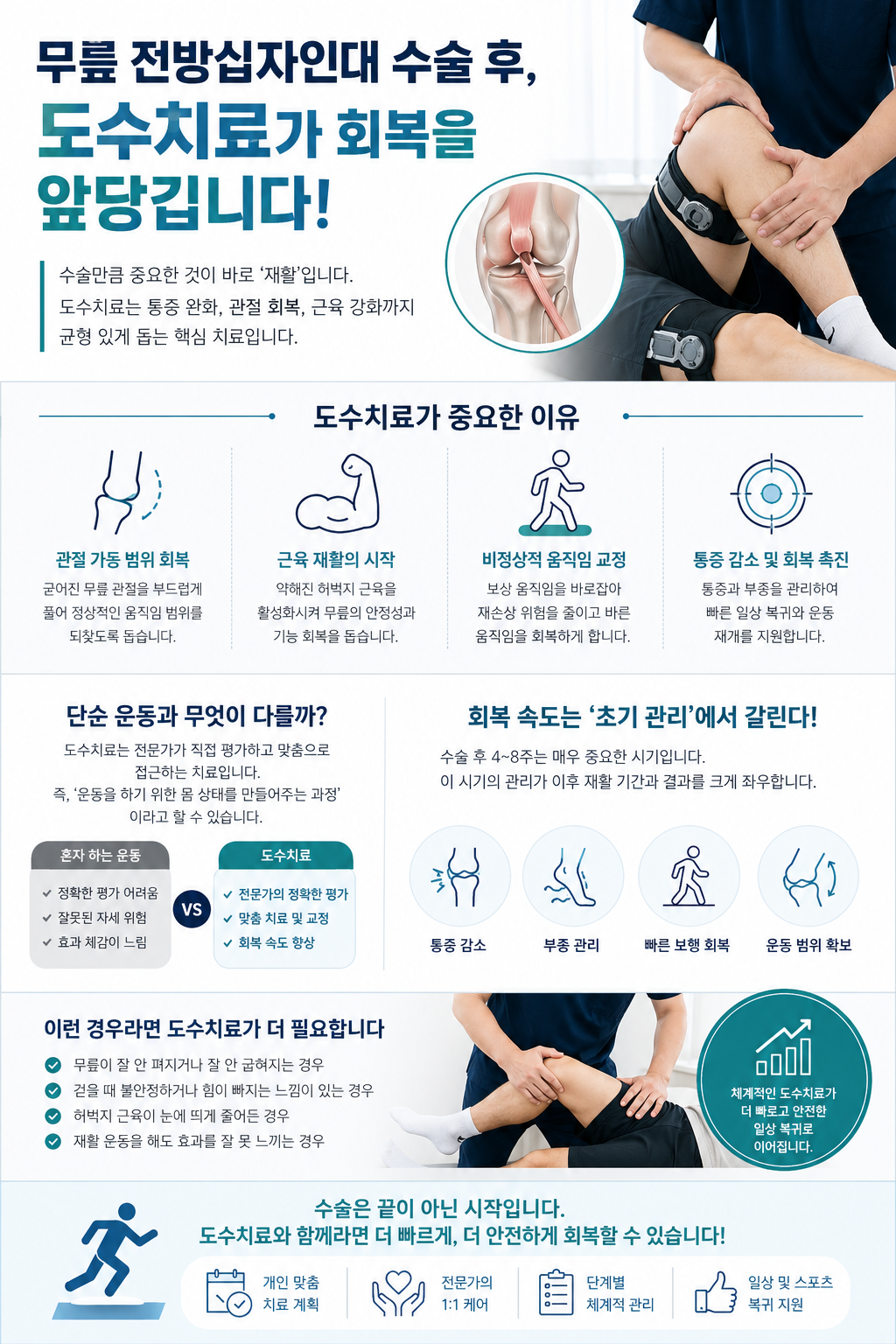
- Restoring joint range of motion: Gently moving a knee joint that tends to stiffen, helping it regain normal range.
- The starting point of muscle rehab: Waking up weakened thigh muscles, especially the quadriceps, so they get back to work.
- Correcting abnormal movement: Compensatory movements developed to protect the knee raise the risk of reinjury if left alone, so they are corrected.
Exercising on your own vs. manual rehabilitation therapy
Exercising on your own is essential, but it has clear limits early after surgery, because it's hard to judge for yourself which muscles to use, when, and how. Manual rehabilitation therapy is treatment in which a specialist directly assesses your joints and muscles and tailors the approach accordingly; its purpose is different from massage. It's most accurate to think of it as the stage that first gets your body ready to do the exercises.
Recovery speed is decided in weeks 4–8 after surgery
The 4–8 weeks after ACL surgery are an especially important period. If the joint stiffens or muscle activation is delayed during this time, later rehab can take longer and become more difficult. Adding manual therapy during this period can make a difference in the following areas:
- Pain reduction
- Swelling control
- Walking recovery
- Securing range of motion
Signs it's time to reset your course
- The knee won't fully straighten, or it's hard to bend
- The knee feels unstable or gives way when you walk
- Your thigh muscles have visibly shrunk
- You keep doing your rehab exercises but don't feel much benefit
In these situations, it's a good idea to use manual therapy to check your current stage of recovery and reset your rehab plan.
In summary
- ACL surgery isn't the end; it's the starting point of rehabilitation.
- Recovery after surgery depends on how systematically it's managed, and manual therapy is a key part of returning the knee to normal.
- Rather than leaving it to time, knowing and managing your current stage of recovery makes your return to daily life faster and safer.
Last reviewed: 2026-10-07
This article provides general medical information. Individual diagnosis and treatment plans are determined through an in-person consultation.