
Why Ignored Pain Stiffens: Manual Therapy and Shockwave Therapy
The longer you push through pain, the more your body adapts to faulty movement and stiffens. Rehabilitation medicine finds the cause and restores movement.
The bottom line: pain usually doesn't go away just because you endure it. Recovery is more likely when the cause is identified and movement is corrected. For anyone who has been blaming neck, shoulder, back, or knee pain on fatigue, here's why the body stiffens the longer you push through pain, and what roles manual therapy and shockwave therapy play in rehabilitation medicine.
What we often hear in the exam room
Many people who come to a rehabilitation medicine clinic say similar things: they thought rest would fix it, it was only a little stiff at first, or they assumed time would take care of it.
Early pain tends to recover relatively quickly, but pain that's been left alone often takes longer to recover from. Living with restricted movement can shift the strain to other areas, so neck pain turns into back pain, or knee pain leads to pelvic imbalance.
Why the body stiffens the longer you put up with pain
A stiff neck after a day at a desk, a knee that aches on the stairs, back pain that keeps you tossing at bedtime — these are now part of everyday life. Musculoskeletal pain may seem like it will heal on its own, but if the cause remains, movement itself becomes distorted and the pain easily becomes chronic.
Neck, shoulder, back, and knee pain often isn't a problem of just one area. Behind low back pain there may be a pelvic balance issue, or certain muscles held tight by long-standing postural habits. Shoulder pain, too, frequently stems from rotator cuff problems or restricted joint movement.
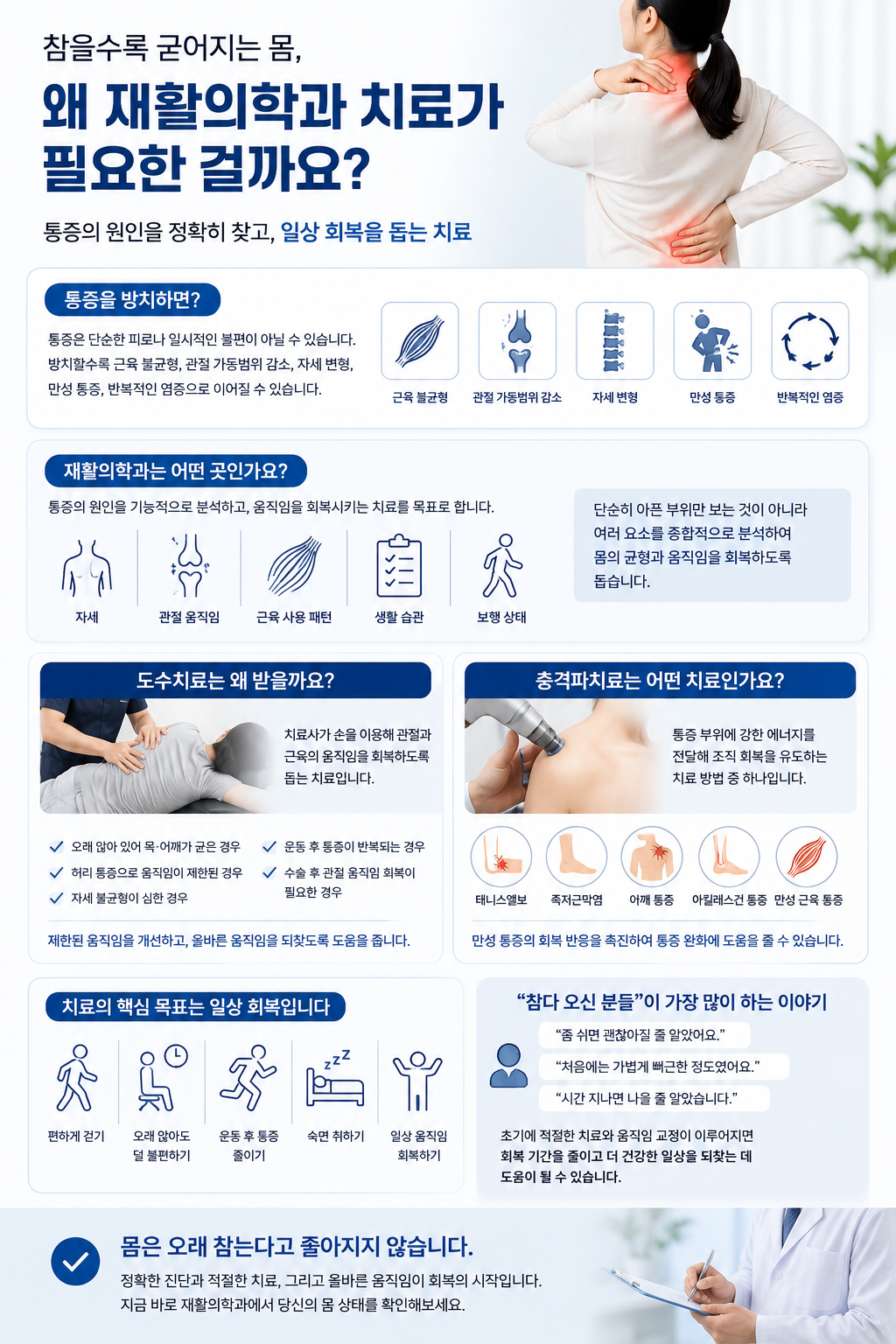
The longer you live with pain, the more your body adapts by stiffening around abnormal movement. Problems that can result include:
- Muscle imbalance
- Reduced joint range of motion
- Postural deformity
- Chronic pain
- Recurring inflammation
What rehabilitation medicine looks at
Rehabilitation medicine doesn't stop at physical therapy. It analyzes the cause of pain functionally and aims to restore movement, examining not only the painful area but also posture, joint movement, muscle use patterns, daily habits, and gait. For recurring pain, figuring out why it keeps coming back matters more than temporarily dulling it.
The roles of manual therapy and shockwave therapy
Manual therapy is different from a simple massage. When long-term poor posture leaves some muscles overly tense and others barely used, you need an approach that restores movement rather than just rest. Shockwave therapy isn't simply about going as hard as possible either; the intensity and number of sessions are adjusted based on your pain and tissue condition.
The goal of treatment is getting your daily life back
Rehabilitation medicine focuses on your life more than a pain score. The goals are walking comfortably, sitting for long periods with less discomfort, less pain after exercise, sound sleep, and regaining everyday movement.
Final thoughts
- The longer you put up with pain, the more likely your body is to adapt to abnormal movement and stiffen.
- Rehabilitation medicine identifies the cause of pain functionally and uses manual therapy and shockwave therapy to help restore movement.
- If ongoing pain is getting in the way of daily life, get your current condition checked instead of toughing it out.
Last reviewed: 2026-10-07
This article provides general medical information. Individual diagnosis and treatment plans are determined through an in-person consultation.