

Neck Pain and Pillow Height: Choosing the Right Pillow
A pillow should support your neck, not just your head, to keep the cervical spine's natural C-curve. The right height depends on your build and sleep position.
If you wake up with a stiff neck, tight shoulders, and a heavy head, check your pillow height before looking for other causes. When these symptoms keep recurring, pillow height is one of the everyday factors that shapes neck health. Here are guidelines to help people dealing with neck pain choose the right pillow height.

Why pillow height matters for your neck
Your neck is most comfortable when it keeps its natural C-shaped curve. If your pillow height is wrong while you sleep, that curve breaks down and unnecessary strain builds up in the muscles and joints around the neck.
Pillows that are too high vs. too low
Sleeping on a high pillow resembles the posture of staring down at a smartphone for hours and can make forward head posture (tech neck) worse. Lying on your back on a low pillow leaves the cervical spine under-supported, so fatigue builds up.
How do I choose the right pillow height?
There's no single right answer; it depends on your build and sleep position.
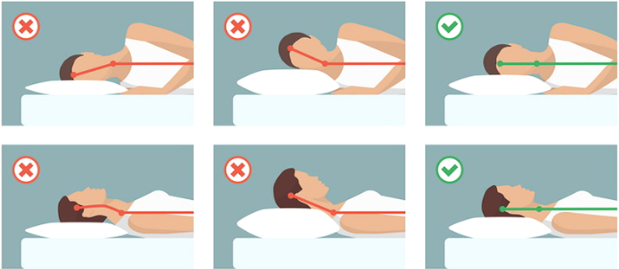
- Back sleepers: a height that keeps the neck's C-curve natural, with your chin neither lifted nor tucked
- Side sleepers: a height that accounts for shoulder width so your head and spine form a straight line
Avoid pillows that sink in too much, pillows that are too firm, and flat pillows that don't support the neck. When choosing, look for a contoured shape that supports the neck, adjustable height, and a fit for your sleep position. Keeping the cervical spine aligned matters more than a soft feel.
A self-check you can do lying down
- Chin lifts up → pillow is too high
- Chin pulls toward your chest → pillow is too low
- A gap opens behind your neck → not enough support
The ideal is when your neck and shoulders feel naturally connected as you lie comfortably.
Signs your pillow isn't right
- Neck pain every morning
- Waking up still tired
- Tossing and turning a lot during sleep
- Stiff shoulders and headaches
If these signs keep recurring, it's hard to call it simple fatigue; it may be related to forward head posture syndrome or a cervical herniated disc. Feeling worse after sleeping is not normal.
In a few lines
- A pillow is more than bedding; it affects neck health, and the key is how well it supports your neck rather than your head.
- The right pillow height depends on whether you sleep on your back or your side.
- If neck pain continues, review your posture and daily habits along with your pillow, and get a diagnosis to discuss treatment options such as injection therapy, manual therapy, and therapeutic exercise.
Last reviewed: 2026-10-07
This article provides general medical information. Individual diagnosis and treatment plans are determined through an in-person consultation.