
Sharp Neck Pain When Turning Your Head: Manual Therapy and Shockwave
If sharp neck pain keeps coming back when you turn your head, suspect reduced muscle and joint function rather than a simple crick, and address it early.
You figured you just slept wrong, but if a sharp twinge keeps hitting every time you turn your head, it's hard to dismiss as a simple crick in the neck. The neck holds up the weight of your head all day, so even minor tension can easily become chronic pain if it lasts. This Q&A helps people who spend long hours on computers and smartphones understand the causes of neck pain and the direction of treatment.
Why does neck pain keep coming back?
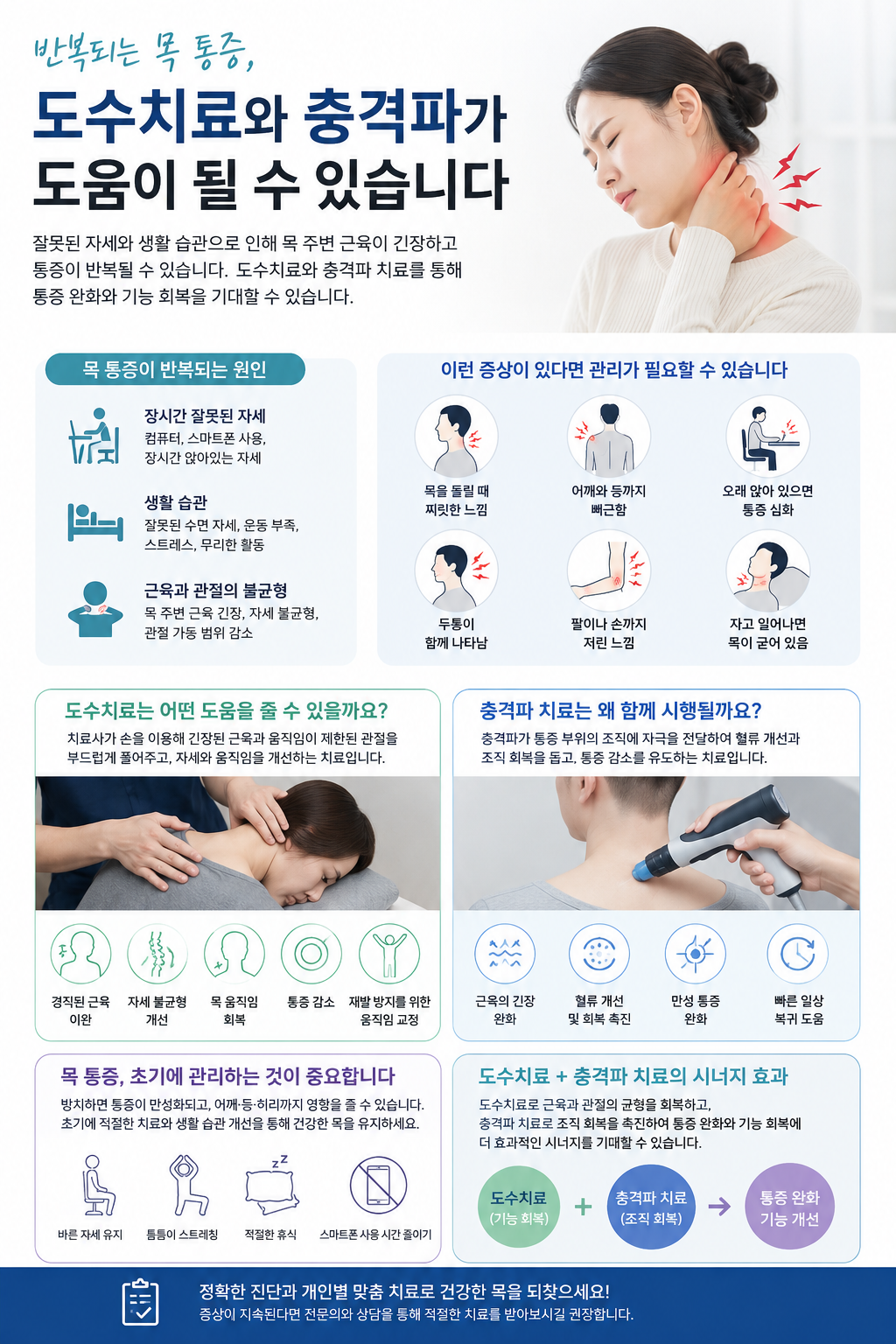
Even if it started as muscle fatigue, the same pain returns unless your habits change. Common contributors include:
- Long hours of computer work
- Looking down at a smartphone for long periods
- Poor sleeping posture
- Spending a lot of time driving
- Muscle tension from stress
- Postural imbalance from lack of exercise
When these continue, the muscles around the neck stiffen and joint movement decreases, so the pain keeps recurring. It may start out mild, but it often spreads into shoulder stiffness, headaches, and arm numbness.
Which symptoms call for care?
If you have several of the symptoms below, consider that your muscle and joint function may be declining.
- A sharp, zinging sensation when you turn your head
- Stiffness extending into the shoulders and upper back
- More pain the longer you sit
- Headaches along with the neck pain
- Numbness in the arm or hand
- A stiff neck when you wake up in the morning
At this stage, rather than getting by on massage alone, it's better to have your current condition assessed and plan treatment accordingly.
How is manual therapy used for neck pain?
In manual therapy, a therapist uses their hands to gently release tight muscles and joints with reduced movement. People with neck pain are often affected not just in the neck but in the shoulders, upper back, and overall posture, so treatment reduces tension while also addressing faulty movement patterns.
- Releasing stiff neck and shoulder muscles
- Improving postural imbalance
- Restoring neck movement
- Reducing pain
- Correcting movement to prevent recurrence
It's commonly used for office workers who sit for long hours and for people whose poor posture has become ingrained over time.
Why shockwave therapy is added
When the muscles around the neck stay tense for a long time, certain spots become hard and knotted and are tender to the touch. Shockwave therapy delivers physical stimulation to these areas to support tissue recovery and reduce pain. It's considered when the neck and shoulders are tightly knotted, when pressing a specific point is very painful, or when chronic muscle tension or myofascial pain keeps returning. It's sometimes combined with manual therapy to address tension relief and movement recovery at the same time.
Why early care matters
If you leave recurring neck pain alone, trusting it to get better on its own, it can harden into restricted movement or chronic pain. And when pain causes your posture to break down, the strain can spread in turn to the shoulders, upper back, and lower back.
Summary
- Sharp neck pain when you turn your head may not be a simple crick, but a muscle and joint problem created by daily habits.
- Manual therapy releases muscles and corrects movement, while shockwave therapy manages pain in knotted areas.
- If your neck often feels stiff and turning your head is uncomfortable, get your current condition checked and talk about a treatment plan.
Last reviewed: 2026-10-07
This article provides general medical information. Individual diagnosis and treatment plans are determined through an in-person consultation.