

Rehab After Knee Replacement: A Stage-by-Stage Recovery Guide
Knee replacement changes the joint, not how you move. Stage-by-stage rehabilitation that rebuilds movement patterns makes the difference in recovery.
Knee replacement surgery relieves pain by replacing a worn-out joint. But natural movement doesn't automatically return the moment surgery is over. This guide explains how stage-by-stage rehabilitation works for anyone whose recovery after knee replacement feels slow.

The awkwardness that lingers after surgery
People who've had the surgery often describe the same problems: the knee is new, but walking feels off, the leg doesn't feel strong going down stairs, and the knee won't fully straighten and feels stiff. Rather than resolving on their own with time, these problems are often closely tied to the rehabilitation process after surgery.
Why rehab matters after knee replacement
People who lived with knee pain for a long time have often changed the way they move without realizing it.
- Shifting more weight onto one leg
- A limping gait
- Weak thigh muscles
- A knee that won't fully straighten
Surgery changes the joint structure, but these movement patterns can stay. That's why, after knee replacement, you need to relearn how to move properly — in other words, rehabilitation.
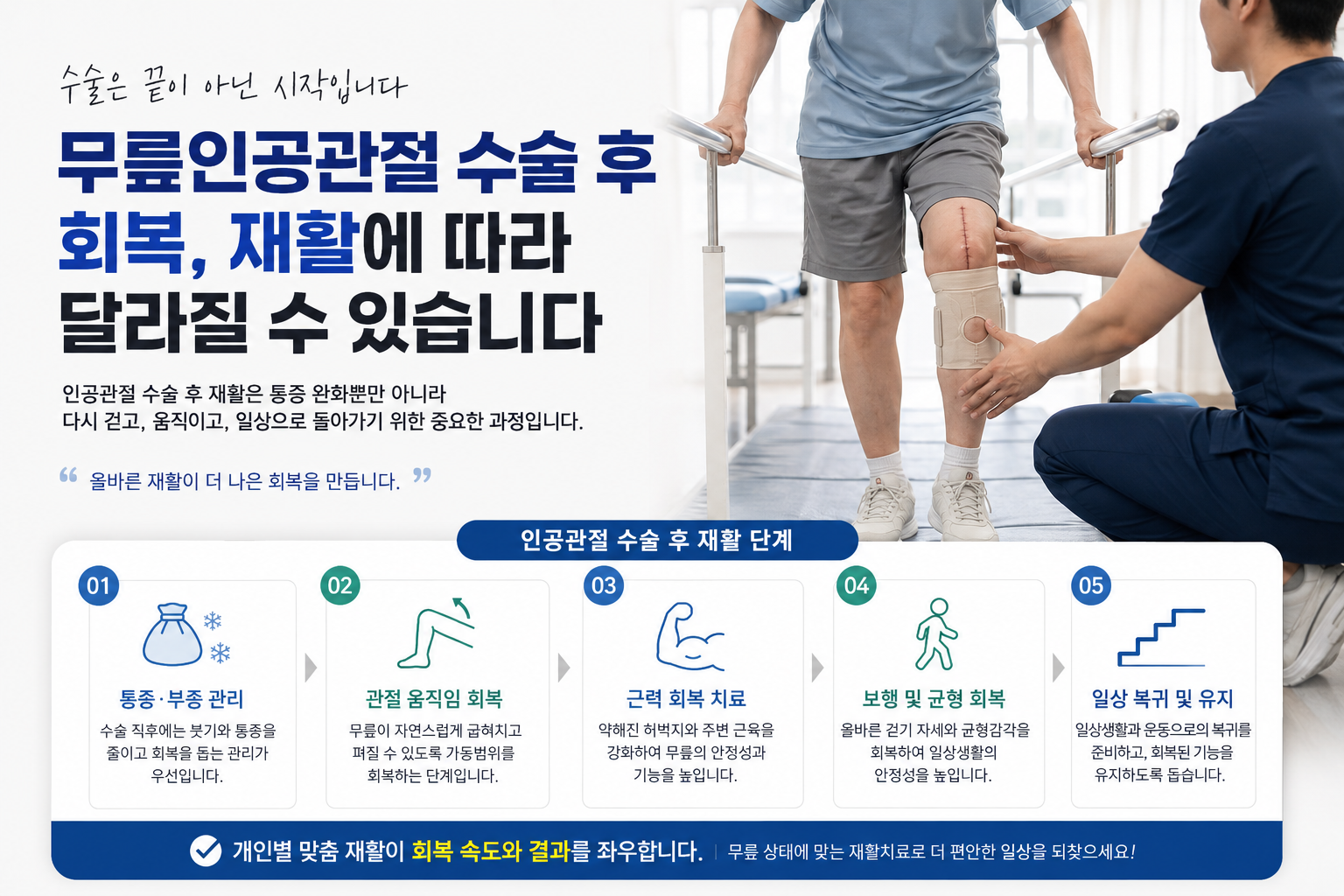
Rehab through the stages of recovery
Rehabilitation isn't about pushing hard no matter what; it progresses with your stage of recovery.
If the knee doesn't straighten enough, weight lands awkwardly when you walk; if bending is limited, stairs and getting up from a chair become uncomfortable. If thigh strength doesn't come back, long walks are hard, stairs are uncomfortable, you tire easily, and your balance while walking can become unsteady.
When manual therapy is added
After knee replacement, the surrounding muscles and tissues can become tight or limit movement. In these cases, manual therapy is added to improve mobility in stiff tissue, release tension around the joint, restore movement patterns, and reduce imbalance when walking. It's especially likely to be part of rehab when there are restrictions that stretching alone doesn't resolve.
Should rehab exercise differ from person to person?
Even after the same surgery, recovery speed varies with age, strength, pain level, walking habits, and activity level before surgery. Exercise that's too aggressive adds strain, while too little movement slows recovery, so rehab progresses step by step based on the current condition of your knee.
Signs your rehab needs a check-in
- The operated knee stays stiff
- Going up and down stairs is difficult
- You still limp when walking
- The knee won't fully straighten
- Pain gets worse when you stand for a long time
- Thigh strength isn't coming back
Summary
- The goal of knee replacement goes beyond reducing pain: it's to walk again and live comfortably.
- Stage-by-stage rehab, moving from pain and swelling control to joint motion and then strength, makes the difference in recovery.
- If movement is still uncomfortable some time after surgery, look into a rehab plan that fits your knee's current condition.
Last reviewed: 2026-10-07
This article provides general medical information. Individual diagnosis and treatment plans are determined through an in-person consultation.