

Shoulder Clicking When You Rotate Your Arm: Causes and Treatment
Painless shoulder sounds are usually normal, but if shoulder pain comes with them, early diagnosis to check for rotator cuff problems or impingement is needed.
Shoulder sounds themselves are rarely a problem. What matters is whether shoulder pain comes with them. If your shoulder makes a "click," "pop," or "grinding" sound when you rotate it or raise your arm, this guide breaks down the causes and treatments so you can tell which sounds are worth worrying about and which aren't.

Painless sounds vs. sounds with pain
Why does it make noise if there's no pain?
Gas bubbles in the joint — The joint contains a lubricating fluid called synovial fluid. When you move your shoulder suddenly, the pressure inside the joint changes, small bubbles burst, and you hear a sound. It's the same principle as cracking your knuckles, and if it doesn't hurt, it's usually normal.
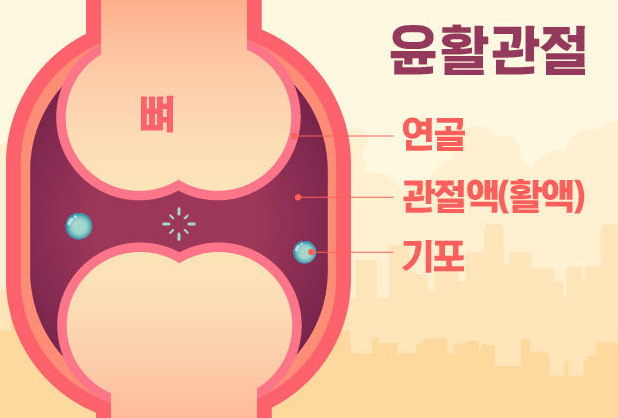
Friction from tendons and muscles — The shoulder is a structurally complex joint, so when you move your arm, tendons or muscles can pass over bony prominences and make a rubbing sound. This is common with postural imbalance, long hours at the computer, rounded shoulders, and muscle tension or weakness. Even if it doesn't hurt at first, if it keeps happening it can progress to inflammation.
If there's shoulder pain too, what conditions should you suspect?
Rotator cuff disease — When the rotator cuff tendons become inflamed or partially torn, movement produces a catching sensation along with sound. It's accompanied by pain when raising your arm, pain that worsens at night, and weakness at certain angles.
Impingement syndrome — A condition in which the space between the shoulder blade and the upper arm bone (humerus) narrows and the tendons are repeatedly pinched, causing a catching sensation and sound when you raise your arm.
Arthritis or cartilage damage — When degenerative changes roughen the joint surfaces, a grinding sound develops; this is common in middle-aged and older adults.
When to see a doctor
- Pain continues along with the sound
- It's hard to raise your arm
- Your shoulder has become weaker
- There's swelling or warmth
Even if it starts as mild inflammation, leaving it untreated can lead to a tear.
How to reduce shoulder sounds
- Posture correction — Sitting for long periods rounds the shoulders and pushes the head forward, so stay mindful of your posture and correct it often.
- Stretching and strengthening — Loosen the area around the shoulder and strengthen weak muscles.
- Conservative treatment — Options include physical therapy, injection therapy, manual therapy, shockwave therapy, and exercise therapy.
Summing up
- If your shoulder makes noise but doesn't hurt, it's usually not a serious problem.
- If shoulder pain comes with it, early diagnosis to check for rotator cuff disease or impingement syndrome is important.
- Shoulder conditions often improve without surgery when managed early, so if the sounds and discomfort keep coming back, get it checked.
Last reviewed: 2026-10-07
This article provides general medical information. Individual diagnosis and treatment plans are determined through an in-person consultation.