
Tennis Elbow: Elbow Pain, Shockwave Therapy, and Manual Therapy
Tennis elbow is repeated tendon damage that tends to return with rest alone, so pain and function should be managed together with shockwave and manual therapy.
If the outside of your elbow aches and feels weak during everyday movements like lifting a cup or turning a doorknob, tennis elbow may be the cause. Despite the name, it's also common among office workers who use a computer a lot, people who do a lot of housework, and those in jobs that involve heavy wrist use. Here we walk through, question by question, why tennis elbow lingers and how it's treated.
What is tennis elbow?
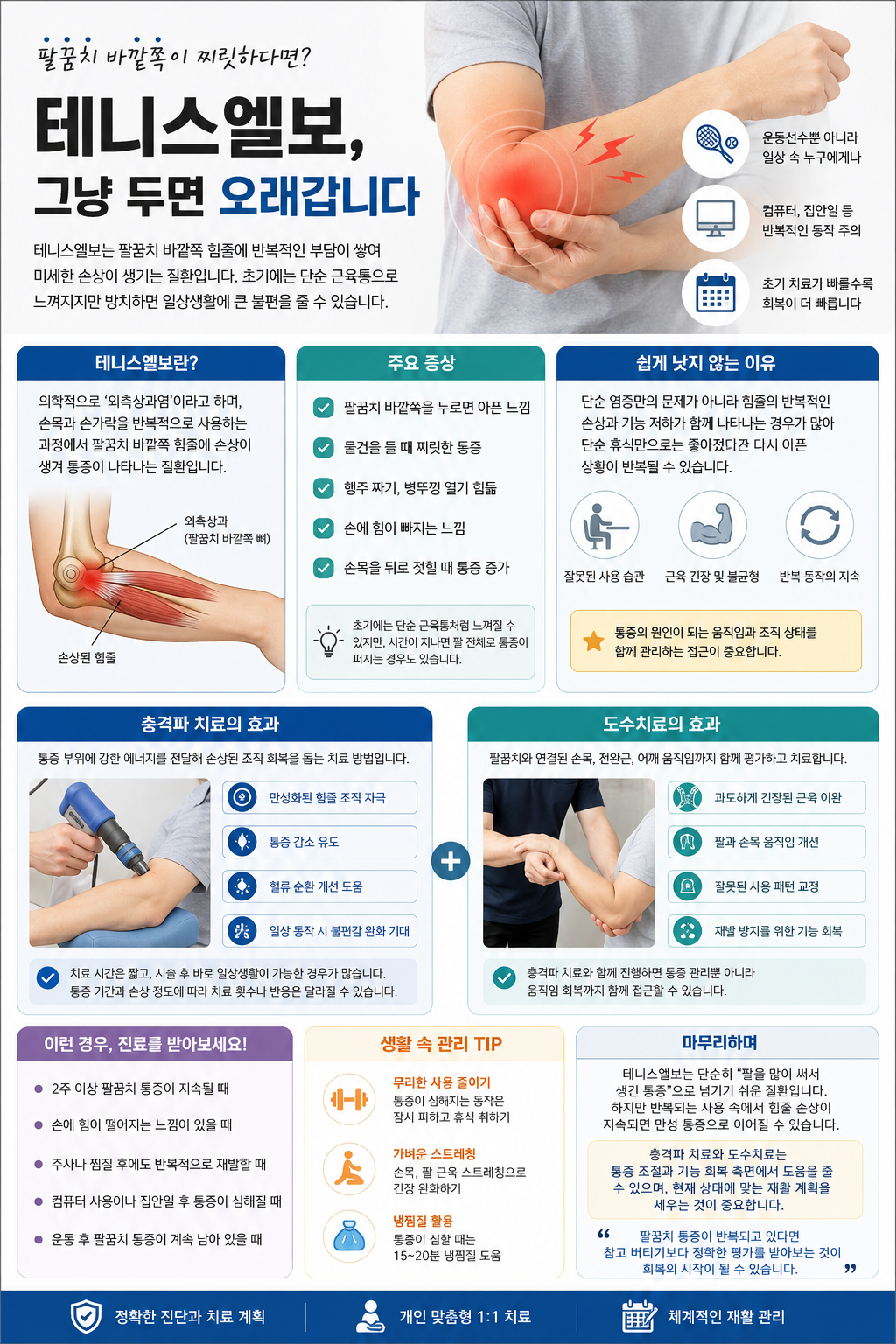
Tennis elbow is a condition in which repeated strain builds up on the tendon on the outside of the elbow, causing micro-damage. Medically, it's called lateral epicondylitis, and it often develops from repeatedly using the wrist and fingers.
- The outside of your elbow hurts when pressed
- You feel a sharp twinge when lifting objects
- Wringing out a towel or opening a jar lid is difficult
- Your grip feels weak
- Pain increases when you bend your wrist backward
At first it may feel like muscle soreness, but over time the pain can spread to the whole arm. If you push through the early pain and keep using the arm, the affected area widens and recovery takes longer.
Why doesn't it heal with rest?
Tennis elbow often isn't just a matter of inflammation—it's a combination of repeated tendon damage and reduced function. If tension in the muscles around the wrist and elbow, poor usage habits, and repetitive motions remain, it improves while you rest and then hurts again. That's why both the movements that cause pain and the condition of the tissue need to be addressed.
How does shockwave therapy help?
Extracorporeal shockwave therapy (ESWT) delivers strong energy to the painful area to help damaged tissue recover. In tennis elbow, shockwave is considered to stimulate chronically affected tendon tissue, reduce pain, improve blood circulation, and ease discomfort in everyday movements. It's often used alongside rehabilitation when elbow pain is long-standing or keeps coming back. Sessions are relatively short and many people return to their daily routine right afterward, but the number of sessions and response vary with how long the pain has lasted and the degree of damage.
Why combine it with manual therapy?
Manual therapy doesn't focus only on the painful spot; it evaluates movement of the wrist, forearm muscles, and shoulder connected to the elbow. People with tennis elbow often have wrist-use patterns or high tension throughout the arm, and if that continues, strain keeps building on the elbow tendon. Manual therapy focuses on relaxing overly tight muscles, improving arm and wrist movement, correcting faulty usage patterns, and restoring function to prevent recurrence. Combined with shockwave, it addresses pain control and movement recovery at the same time.
When to get checked
- Elbow pain has lasted more than two weeks
- Your hand feels like it's losing strength
- It keeps coming back even after injections or heat packs
- Pain gets worse after computer work or housework
- Elbow pain lingers after exercise
The earlier it's managed, the faster recovery tends to be; the longer it's left, the longer recovery takes.
Key points
- Tennis elbow is easy to dismiss as simple pain from overusing your arm, but continued tendon damage can make it chronic.
- Shockwave helps with pain control and manual therapy with functional recovery, and a rehabilitation plan matched to your current condition is important.
- If elbow pain keeps coming back, start your recovery with an accurate evaluation rather than putting up with it.
Last reviewed: 2026-10-07
This article provides general medical information. Individual diagnosis and treatment plans are determined through an in-person consultation.