
Knee Pain from the Popliteus Muscle: Causes and Symptoms
If pain deep behind the knee appears only with certain movements, suspect the popliteus rather than the hamstrings, and care for the whole leg chain, not just the knee.
Not all pain behind the knee comes from the hamstrings. When the popliteus, a small muscle deep behind the knee, gets into trouble, it can cause similar knee pain. If the back of your knee feels stiff or sharp when going down stairs or after long walks or runs, this guide will help you identify and manage a popliteus problem.
Check the popliteus if your knee pain looks like this
- The back of the knee feels stiff and sharp
- The back of the knee hurts when going down stairs
- The back of the knee hurts after long walks or runs
- It's uncomfortable to fully straighten or bend the knee
The popliteus: your knee's switch
The popliteus is a small muscle located deep behind the knee, but it has an important job. It "unlocks" the straightened knee so movement can begin, protects knee stability when you walk, and controls rotation of the tibia (shinbone). You can think of it as the switch that starts knee movement.
Why problems develop in the popliteus
Symptoms of a popliteus problem
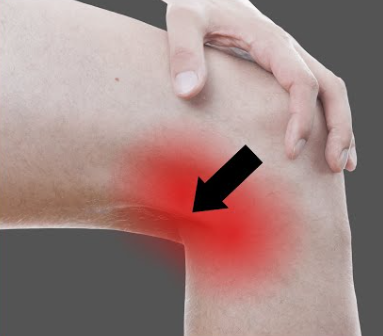
- Pain behind the knee: The key symptom, often felt at the inner back of the knee.
- Pain going down stairs: The popliteus takes on the knee stability needed for descending and becomes overloaded.
- Pain after running: It's irritated by repeatedly rotating and stabilizing the knee.
- Catching sensation: The knee feels as though it won't fully straighten.
Popliteus problems vs. similar conditions
Because the location is similar, it's easy to confuse with a hamstring injury, a meniscus tear, or a Baker's cyst. If the pain is deep and appears only with certain movements, a popliteus problem becomes more likely. An accurate distinction is made through an exam.
Treatment happens in stages
- Early stage — Rest, ice, and anti-inflammatory medication calm inflammation and pain.
- Muscle release (the key step) — Releasing the popliteus and hamstrings, foam rolling and massage. Because it's a deep muscle, it's often hard to release on your own.
- Rehabilitation exercise — Stretch the hamstrings and calves, and add knee stabilization exercises and hip muscle strengthening. The whole leg chain is addressed, not just the knee.
- Gait and posture correction — Correct foot alignment and use insoles if needed.
- Injection therapy (if needed) — If pain persists, a local injection can support recovery.
Left untreated, it can lead to chronic knee pain, pain that returns every time you exercise, and increased strain on other structures such as cartilage and ligaments.
In summary
- Pain behind the knee may come from the popliteus rather than the hamstrings.
- The popliteus is responsible for initiating knee movement, stability, and rotation of the shinbone.
- If knee pain keeps recurring with stairs or running, have the alignment of your whole leg checked as well.
Last reviewed: 2026-10-07
This article provides general medical information. Individual diagnosis and treatment plans are determined through an in-person consultation.