

Sciatica: Why Numbness Runs from Buttock to Leg and How to Treat It
Sciatica is a symptom, not a diagnosis, so the treatment plan depends on finding where the nerve is being irritated—the spine, the pelvis, or the muscles.
You thought it was just back pain, but if a tingling, numb pain runs from your buttock down to your calf and toes, it may be sciatica rather than simple muscle soreness. It's common among office workers who sit for long hours, people who drive a lot, and those who use their back heavily—and many people brush it off, expecting rest to fix it, until it starts to interfere with daily life. Here are answers to frequently asked questions about sciatica.

Is sciatica a diagnosis?
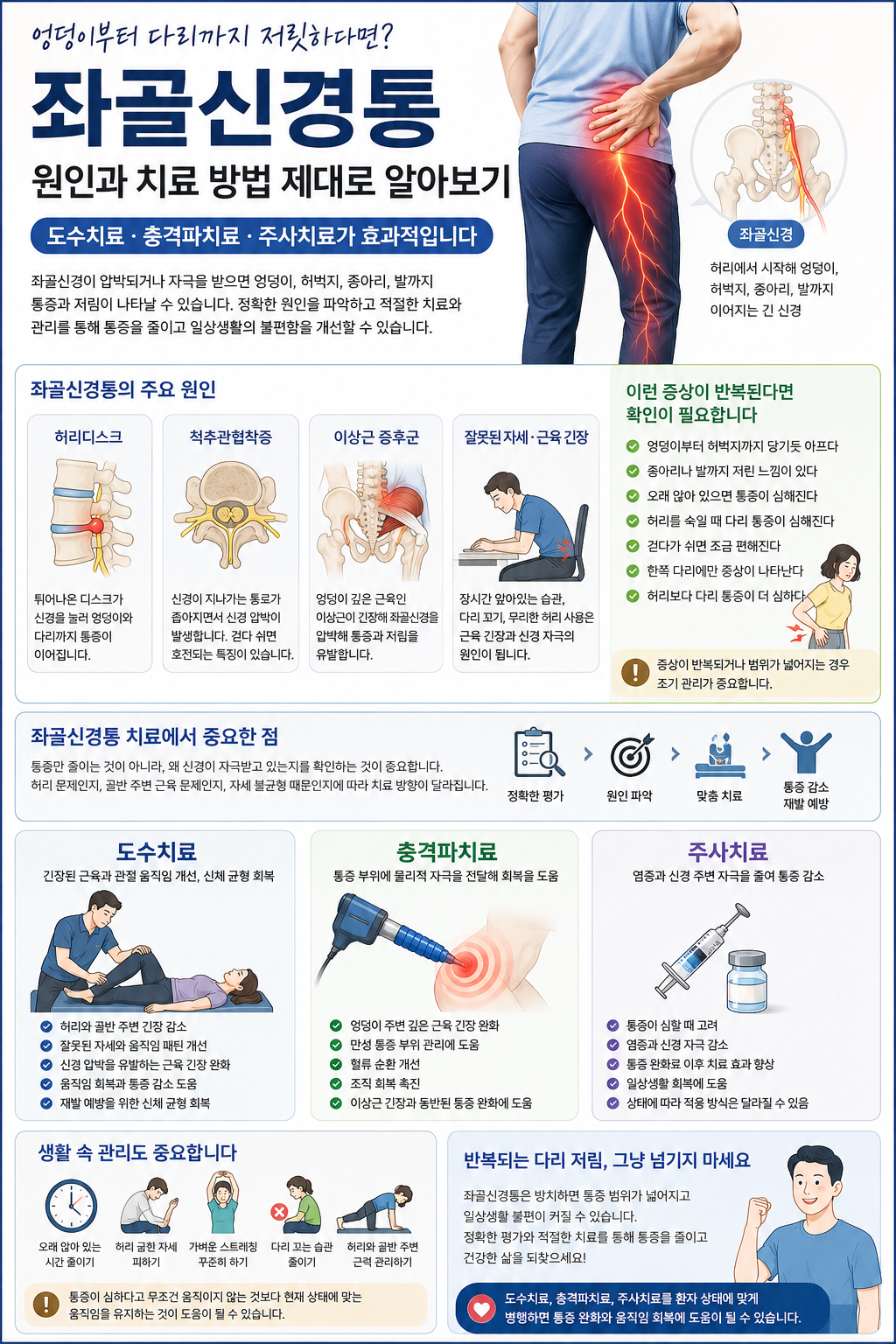
It's more a description of symptoms than a diagnosis. The sciatic nerve exits the lower spine and runs through the buttock, thigh, and calf down to the foot. When this nerve is compressed or irritated, pain and numbness radiate down the leg.
What compresses the sciatic nerve?
Which symptoms should be checked?
- Pulling pain from the buttock toward the thigh
- Numbness reaching the calf or foot
- Worse when sitting for a long time
- Leg pain increases when bending forward
- Some relief when you stop and rest while walking
- Symptoms in only one leg
- Leg pain is worse than back pain
Muscle soreness often settles within a few days, but nerve irritation symptoms tend to recur or spread, so it's best to address them early.
What matters most in treatment?
Before reducing pain, the first step is figuring out why the nerve is being irritated. The approach differs depending on whether the problem lies in the lower back, the muscles around the pelvis, or postural imbalance, so after evaluating your condition, pain control and movement recovery are carried out together.
What role does each treatment play—manual therapy, shockwave, and injections?
Manual therapy — Improves tight muscles and joint movement to help restore body balance. For sciatica, it examines movement not only of the lower back but also of the pelvis, buttocks, and hips. Expected benefits include reduced tension around the lower back and pelvis, better posture and movement patterns, relief of muscle tension pressing on the nerve, and restored balance to help prevent recurrence.
Shockwave therapy — Delivers a physical stimulus to the tissues around the painful area to support tissue recovery and pain relief. It's used to manage tension in the deep muscles around the buttock or areas of chronic pain, and when piriformis tension is also present, it can help relax the muscle.
Injection therapy — Considered when pain is severe enough to make walking or daily life difficult. It reduces inflammation and irritation around the nerve to lower pain, making subsequent exercise and rehabilitation easier. How it's applied depends on the cause and your condition.
Everyday care
- Cut down on time spent sitting
- Avoid slouched, bent-forward postures
- Keep up gentle stretching every day
- Break the habit of crossing your legs
- Build strength around the lower back and pelvis
Rather than avoiding all movement because it hurts, staying active in ways that suit your current condition is more helpful.
Finally
- Sciatica is a symptom caused by irritation of the sciatic nerve, which runs from the lower back down the leg.
- The treatment plan depends on identifying whether the cause is a herniated disc, spinal stenosis, piriformis syndrome, or posture.
- If numbness from your buttock down your leg keeps coming back, don't ignore it—have it checked early.
Last reviewed: 2026-10-07
This article provides general medical information. Individual diagnosis and treatment plans are determined through an in-person consultation.