
Lower Back Pain from Weak Glutes: Causes and Exercises
When your glutes are weak, your lower back, knees, and hips take on their work and start to hurt, so glute-strengthening exercise is at the heart of treatment.
Sometimes the cause of lower back pain isn't in the back at all—it's in the glutes. When the gluteal muscles don't do their job, the lower back, knees, and hips have to pick up the slack, and they end up hurting. If your lower back pain keeps coming back, here's how weak glutes lead to pain and what exercises and treatments can help.
Your glutes keep your body centered
The gluteal muscles aren't just about shape—they're key muscles responsible for your body's center and balance.
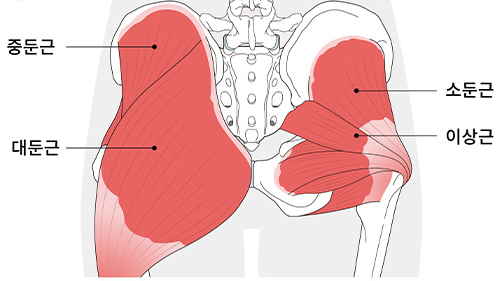
When the glutes weaken, the body compensates with other areas. The pelvis becomes unstable, the load on the lower back increases, knee alignment breaks down, and even the ankles are affected, so pain spreads in a chain reaction.
Five ways weak glutes cause pain
- Reduced pelvic stability — When the gluteus medius is weak, the pelvis tilts to one side and the body sways side to side when walking, causing lower back and hip pain.
- Lower back (lumbar) overload — The lower back muscles take over the work of the glutes and become overly tense, increasing disc pressure and raising the risk of chronic back pain and a herniated disc.
- Knee pain — The thighs and knees collapse inward, which can lead to patellofemoral pain syndrome.
- Faulty movement patterns — You lead with your back when standing up from a chair, and stress concentrates on the knees when climbing stairs, so the same areas are injured again and again.
- Fascia and muscle overuse — The hamstrings, quadratus lumborum, and tensor fasciae latae (TFL) are overworked, leading to myofascial pain syndrome.
Common symptoms include lower back pain, deep pain in the buttock, discomfort on one side of the pelvis, knee pain, difficulty standing for long periods, and swaying when you walk.
Exercise is at the heart of treatment
Glute-strengthening exercises — This is the stage where you relearn how to use your glutes properly.
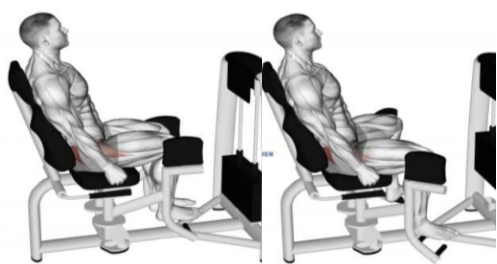
Bridges and hip abductions wake up the gluteus maximus and medius.
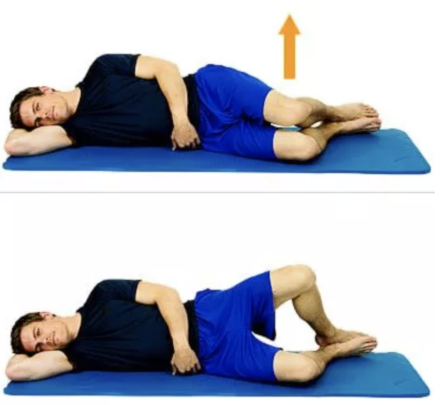
Clamshells and hip hinges train glute-driven movement.
Core stabilization — Planks and dead bugs improve stability of the pelvis and spine.
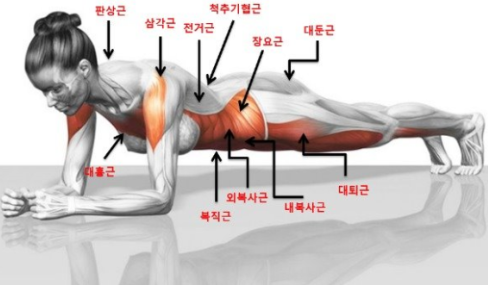
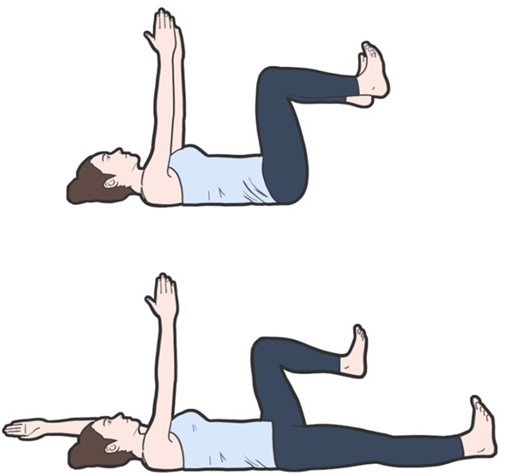
Pattern correction and supporting treatment — Sit-to-stand and walking patterns are retrained, manual therapy corrects muscle imbalances and pelvic alignment, and physical therapy eases pain to support exercise therapy.
Lifestyle habits — Avoid sitting in one position for long periods, don't lean to one side, keep up regular lower-body exercise, and maintain good posture.
What can happen if it's left untreated
Ignoring weak glutes can lead to chronic lower back pain, knee joint problems, hip pain, and reduced athletic performance.
One more time
- Weak glutes aren't just a strength issue—they affect alignment and movement throughout the body.
- When the glutes are weak, other areas like the lower back and knees end up hurting in their place.
- If your lower back pain keeps returning, consider talking with us about rehabilitation centered on glute strengthening and core stabilization.
Last reviewed: 2026-10-07
This article provides general medical information. Individual diagnosis and treatment plans are determined through an in-person consultation.