

Plantar Fasciitis: Causes and Care for First-Step Heel Pain
If your heel hurts most with your first steps in the morning, it may be plantar fasciitis, and combining treatment with lifestyle changes supports recovery.
You get out of bed in the morning, and the moment you take your first step, your heel feels a stabbing pain that eases a little after a few steps. If this keeps happening, it's time to suspect plantar fasciitis. Plantar fasciitis is one of the most common causes of foot pain in adults, and leaving it untreated can make daily life increasingly uncomfortable, so we've organized the most frequently asked questions.

What Is the Plantar Fascia, and Why Does It Become Inflamed?
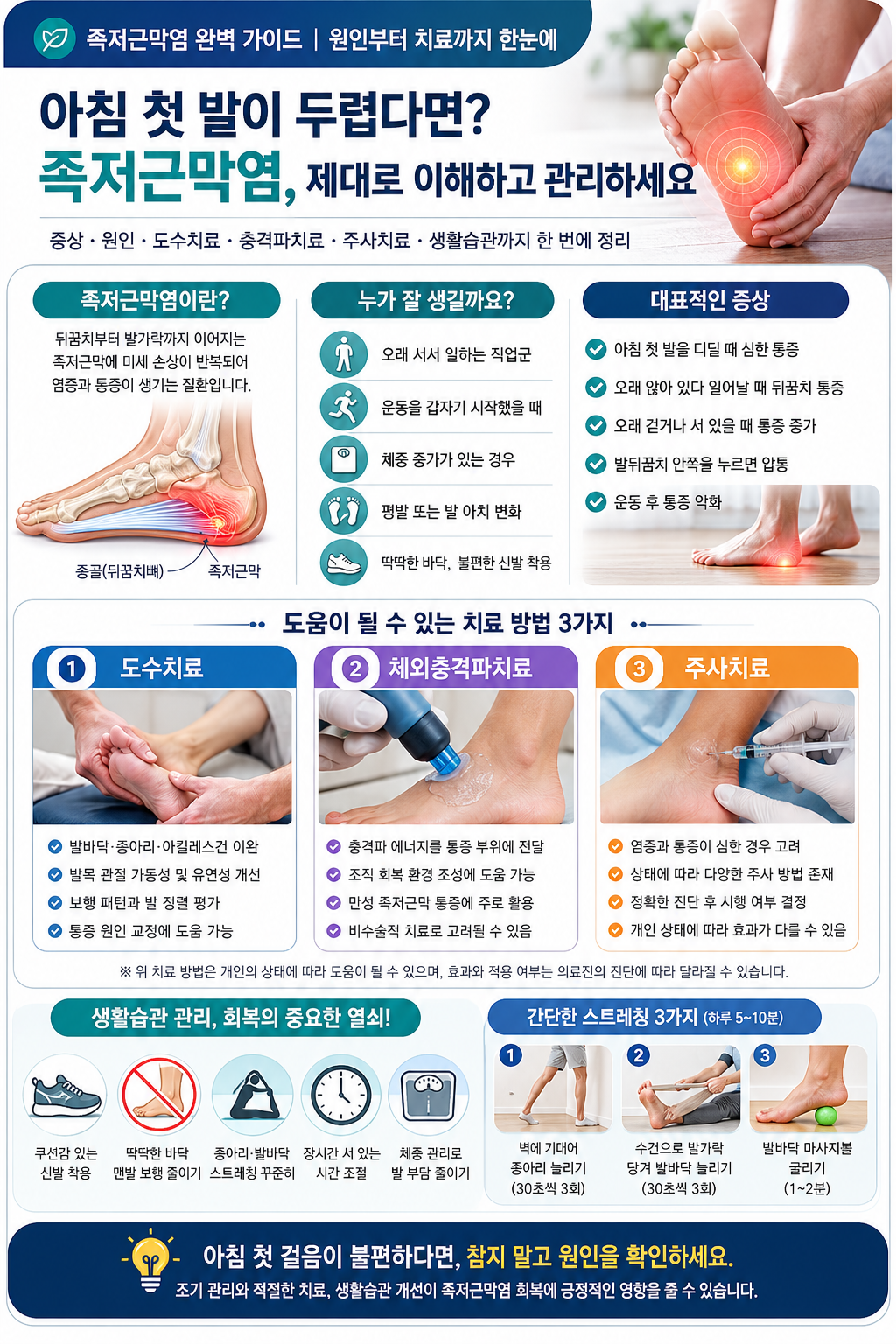
The plantar fascia is a thick band of fibrous tissue that runs from the heel to the toes. It maintains the arch of the foot and supports body weight when you walk. When impact and overload keep building up, tiny injuries develop in the plantar fascia and an inflammatory response follows. This condition is called plantar fasciitis.
Who Tends to Get It?
- People who stand for long periods at work: In jobs such as retail, teaching, health care, and manufacturing, standing for long hours puts constant strain on the soles of the feet.
- People whose activity suddenly increases: The risk rises when you suddenly start high-impact, repetitive activities like running, hiking, or soccer.
- People who have gained weight: The load the soles of the feet must bear increases as well.
- People with foot structure issues: Flat feet or high arches (cavus foot) can increase stress on the plantar fascia.
What Are the Symptoms of Plantar Fasciitis?
The most characteristic symptom is pain with the first steps in the morning. Other common symptoms include heel pain when standing up after sitting for a long time, pain that worsens the longer you walk or stand, tenderness when pressing on the inner side of the heel, and flare-ups after exercise.
It Gets Better Once I Start Walking. Can I Just Leave It?
In the early stages, the pain settles as you walk, so it's easy to shrug off. But as damage keeps accumulating, it can become chronic pain, and changes in the way you walk can bring on knee, hip, or low back pain as well. If the pain persists, you need an evaluation and care.
How Are Treatment and Daily Care Handled?
People with plantar fasciitis often have reduced flexibility not only in the sole of the foot but also in the calf muscles, Achilles tendon, and ankle joint.
- Manual therapy: Used to improve the mobility of tissues around the foot and ankle, relax tense muscles, and evaluate foot alignment and gait patterns to find functional causes.
- Extracorporeal shockwave therapy (ESWT): A nonsurgical treatment that delivers shockwave energy to the painful area. It is used to create an environment that supports tissue healing in chronic plantar fascia pain, and whether it is appropriate depends on the diagnosis.
- Injection therapy: Considered at the medical team's discretion when pain is severe or inflammation persists.
Along with treatment, you can reduce strain on the soles of your feet by spending less time walking barefoot on hard floors, wearing cushioned shoes, stretching your calves consistently, and managing how long you stand and your body weight.
Key Takeaways
If your first steps in the morning are uncomfortable or you keep having days when walking for long is hard, don't just blame fatigue; find out whether it's plantar fasciitis. Choosing manual therapy, ESWT, or injection therapy based on your condition and combining it with a rehabilitation program and daily care helps recovery. At Ssukssuk Rehabilitation Medicine Clinic, serving the Seocho and Bangbae area, we look at both your gait pattern and foot alignment to set the direction of treatment.
Last reviewed: 2026-10-07 This article provides general medical information. Individual diagnosis and treatment plans are determined through an in-person consultation.