
Thoracic Outlet Syndrome: Why Your Arm and Fingertips Go Numb
If your arm keeps going numb even though your neck disc problem isn't severe, check for thoracic outlet syndrome and start managing it along with posture correction.
If you thought you had a neck disc problem but were told after testing that the disc issue isn't severe, you may need to look elsewhere for the cause of your arm numbness. Many people have a stiff neck and shoulders along with arm numbness or reduced sensation in their fingertips, and thoracic outlet syndrome is a condition worth considering in these cases. It is becoming more common among office workers who sit at a computer for long hours and people who use smartphones heavily, so we've organized common questions in Q&A form.
What Is Thoracic Outlet Syndrome?
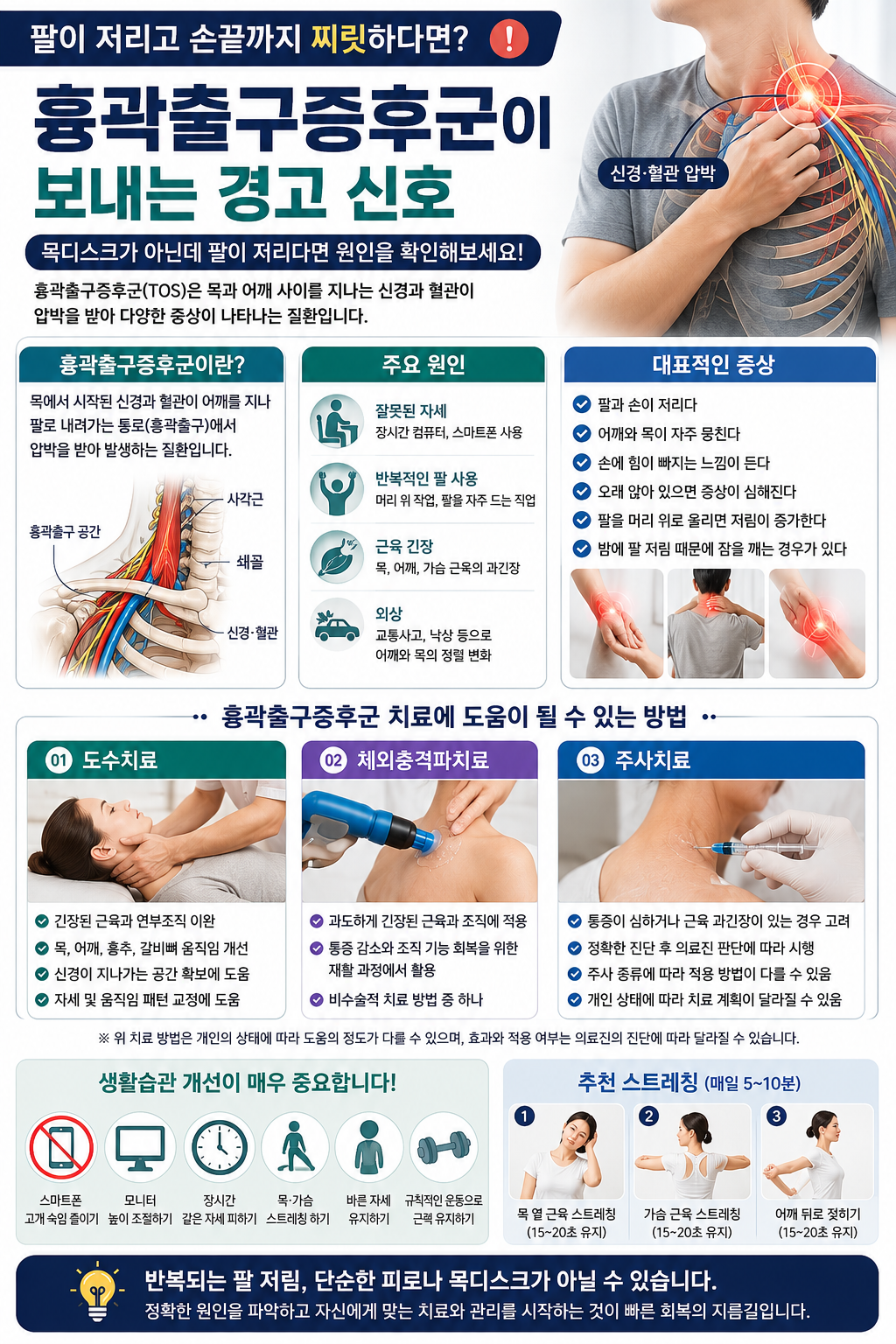
Thoracic outlet syndrome (TOS) is a condition caused by compression of the nerves and blood vessels that leave the neck and travel past the shoulder down to the arm, at a passageway called the thoracic outlet. Various symptoms appear when the nerves or vessels running between the neck and shoulder are squeezed by surrounding muscles, ligaments, or ribs.
Why Does the Space Narrow?
Fingertip numbness starts with narrowing of the thoracic outlet.
- Poor posture: Long hours of computer work and smartphone use roll the shoulders forward and tense the neck muscles, narrowing the thoracic outlet.
- Repetitive arm use: Jobs with a lot of overhead work or frequent arm raising increase the risk of nerve compression.
- Muscle tension: Prolonged tightness in muscles such as the scalenes and pectorals reduces the space where nerves and vessels pass.
- Trauma: It can develop after a car accident or fall, or when the alignment of the shoulder and neck changes.
Which Symptoms Should I Get Checked?
Typical symptoms include numbness in the arm and fingertips, frequent knots in the shoulders and neck, and a feeling of weakness in the hand. Symptoms get worse the longer you sit, numbness increases when you raise your arm overhead, and arm numbness may wake you up at night. Because the symptoms resemble those of a cervical herniated disc, an accurate evaluation is needed to tell them apart.
What Happens If I Leave It Alone?
At first, it's easy to dismiss as muscle pain or fatigue. But if nerve compression continues, abnormal sensations can keep recurring and lead to muscle weakness or chronic pain, while limited shoulder movement and postural imbalance worsen, making daily life more uncomfortable.
How Thoracic Outlet Syndrome Is Managed
In thoracic outlet syndrome, movement in the neck, shoulders, thoracic spine, and ribs is often restricted together.
- Manual therapy: Improves tense muscles and joint movement to open up the space where nerves pass, and evaluates posture and movement patterns to lower the risk of recurrence.
- Extracorporeal shockwave therapy (ESWT): Applied to overly tense muscles and soft tissues around the neck and shoulders to help reduce pain and restore tissue function.
- Injection therapy: Decided by the medical team after diagnosis when pain is severe or excessive tension in a specific muscle is confirmed.
In daily life, it helps to bend your head down less when looking at your smartphone, adjust your monitor height, avoid holding one position for long, and keep up neck and chest stretches and regular exercise.
In Summary
Thoracic outlet syndrome is often mistaken for stiff shoulders or neck pain. If you keep having arm or fingertip numbness, reduced sensation in your hand, or shoulder pain, get evaluated and start care that targets the cause. At Ssukssuk Rehabilitation Medicine Clinic in Seocho and Bangbae, we combine manual therapy, exercise, and posture correction based on a posture assessment.
Last reviewed: 2026-10-07 This article provides general medical information. Individual diagnosis and treatment plans are determined through an in-person consultation.