
Hand Numbness and Thoracic Outlet Syndrome: Causes & Treatment
Hand numbness that gets worse when you raise your arm may be thoracic outlet syndrome; after ruling out a neck disc problem and similar conditions, most cases improve with nonsurgical treatment.
Thoracic outlet syndrome (TOS) is a condition in which the nerves and blood vessels that run past the neck and shoulder down to the arm are compressed, causing pain, numbness, and weakness. When it comes to hand numbness, people tend to think only of a cervical herniated disc or carpal tunnel syndrome, but thoracic outlet syndrome is another possibility worth considering. Here we cover how thoracic outlet syndrome differs from similar conditions, a test you can try at home, and treatment options.
The Thoracic Outlet: A Narrow Passage Between the Neck and Ribs
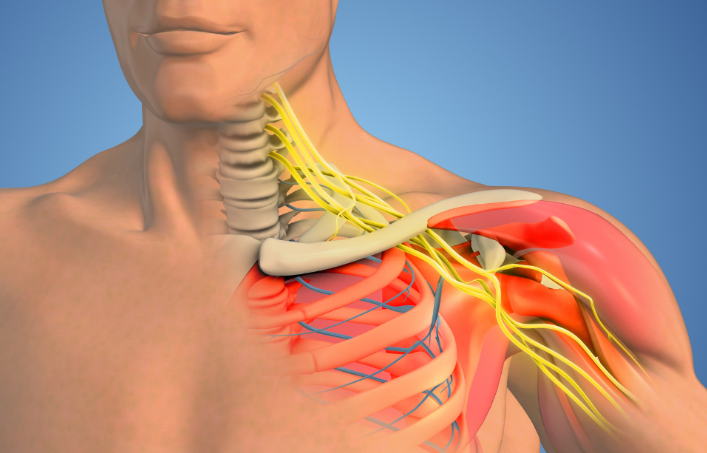
The thoracic outlet is a narrow space between the neck, the collarbone, and the first rib. When the nerves and blood vessels passing through it are compressed, various symptoms appear in the hand.
The cause is often a combination of structural factors and lifestyle habits. Typical examples are posture such as forward head posture or rounded shoulders, long hours on computers and smartphones, repetitive arm use, and excessive tension in the neck and shoulder muscles. It can also occur when the space around the collarbone is narrow from birth, or after trauma such as a car accident or fall.
Symptoms of Thoracic Outlet Syndrome
- Numbness and abnormal sensations in the arm and hand
- Shoulder and neck pain
- Symptoms that get worse when you raise your arm
- A feeling of weakness in the hand
- An arm that swells easily or feels cold
- Skin that turns pale or bluish
- Vascular pain and fatigue
How It Differs from a Neck Disc Problem and Carpal Tunnel Syndrome
For thoracic outlet syndrome, the medical history and physical examination are especially important, because distinguishing it from conditions with overlapping symptoms is the key to diagnosis.

The Roos Test You Can Try at Home
The Roos test is a simple self-check. Raise your arms as shown in the photo and keep opening and closing your fists for 3 minutes. If you can't last 3 minutes, or if symptoms such as hand numbness or weakness become severe along the way, thoracic outlet syndrome may be suspected. A self-check is for reference only; diagnosis is confirmed through a medical visit.
Treatment Options
Most cases can be expected to improve well without surgery.
- Conservative treatment: Physical therapy, manual therapy with posture correction, shockwave therapy, stretching, and exercise therapy
- Lifestyle changes: Maintaining good posture, avoiding staying in one position too long, and releasing tension in the shoulder and neck muscles
If symptoms are severe or vascular compression is clear, additional treatment may be needed at the specialist's discretion.
Final Thoughts
Thoracic outlet syndrome often improves well after treatment, and as with any condition, an accurate early diagnosis matters most. At Ssukssuk Rehabilitation Medicine Clinic in Bangbae, we identify the cause of your hand numbness and then plan manual therapy, exercise therapy, and shockwave therapy to suit your condition.
Last reviewed: 2026-10-07 This article provides general medical information. Individual diagnosis and treatment plans are determined through an in-person consultation.