
Scapular Winging: Why Your Shoulder Blade Sticks Out (Bangbae)
A shoulder blade that lifts away from the back is often a serratus anterior problem, so the key is exercise therapy that restores the strength to hold it against the rib cage.
Scapular winging is a condition in which the scapula (shoulder blade) fails to stay against the rib cage and lifts backward, sticking out. The name "winging" comes from the way the shoulder blade looks like a lifted wing. It may seem like a cosmetic issue, but if it persists it can lead to several kinds of shoulder pain. Here is why scapular winging happens and how it is treated.
Normal Shoulder Blades vs. Scapular Winging
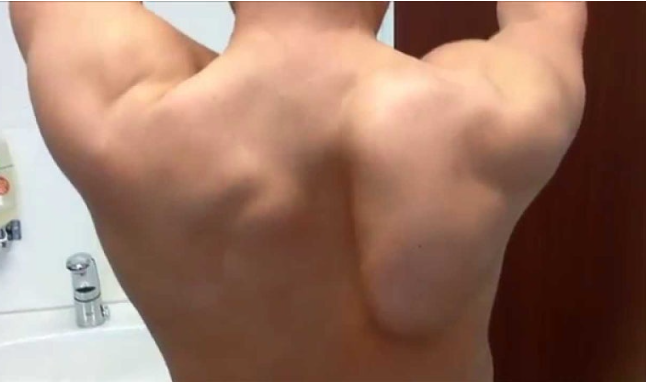
A healthy shoulder blade glides smoothly while staying snug against the rib cage. With scapular winging, the inner edge of the shoulder blade (the medial border) protrudes and the whole blade lifts off, becoming more obvious when you raise your arm.
Muscles make the difference. The serratus anterior, which holds the shoulder blade against the rib cage, matters most, and the trapezius and rhomboids are also involved. Weakness of the serratus anterior or nerve injury is considered the most common cause.
Shoulder Pain and Functional Problems from Scapular Winging
Scapular winging does not stop at a change in appearance. Besides the back of the shoulder looking prominent, your arm may feel weak when you lift it, shoulder pain and fatigue increase, shoulder movement becomes limited, and the shoulder feels unstable during exercise. In severe cases, even raising your arm overhead becomes difficult.
Left untreated, it can progress to shoulder impingement syndrome, rotator cuff injury, or chronic shoulder pain, turning a posture issue into a functional impairment.
Five Causes of a Lifted Shoulder Blade
- Serratus anterior weakness: The most common cause, usually rooted in long-term poor posture.
- Nerve injury: Damage to the long thoracic nerve from trauma, surgery, or repetitive stress.
- Muscle imbalance: The trapezius is overly tight while the serratus anterior is weak.
- Poor exercise habits: Lifting heavy weights without shoulder stability, or using poor form in push-ups and bench presses.
- Posture problems: Rounded shoulders and forward head posture are typical examples.
Exercise Therapy Is the Core of Treatment
The goal of treating scapular winging is to restore the strength that holds the shoulder blade against the rib cage, and exercise therapy, rather than surgery, is central.
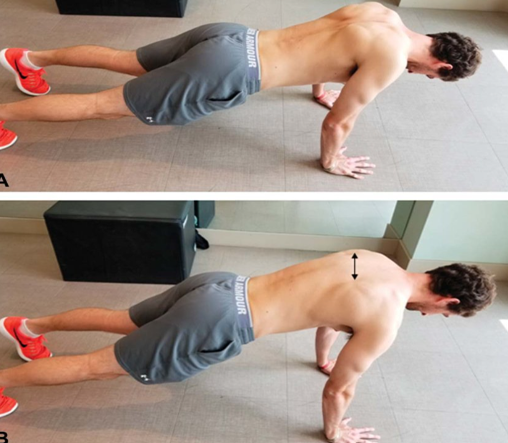
- Serratus anterior strengthening: Build the serratus anterior with wall slides, push-up plus, and punch exercises.
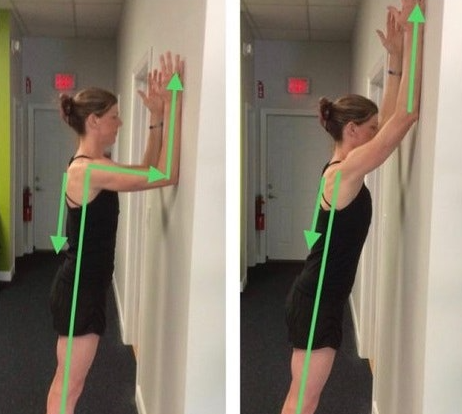
- Scapular stabilization: Rows and T, W, Y exercises keep the shoulder blade from wobbling.
- Manual therapy: Corrects scapular alignment, relaxes muscles, and restores joint mobility.
- Physical therapy: Electrical stimulation and heat therapy to reduce pain and activate muscles
- When nerve injury is the cause: Recovery takes time, and surgery may be considered in severe cases.
Key Points to Remember
If your shoulder blade sticks out when you push against a wall, or your shoulder feels unstable when you lift your arm, scapular winging is a possibility. If your shoulder blade looks prominent, start by checking how the serratus anterior and other muscles around the shoulder are working. At Ssukssuk Rehabilitation Medicine Clinic in Bangbae, we measure left-right asymmetry with Exbody and provide one-on-one manual therapy and exercise therapy.
Last reviewed: 2026-10-07 This article provides general medical information. Individual diagnosis and treatment plans are determined through an in-person consultation.