
Carrying Your Bag on One Shoulder: Problems and a Rehab Perspective
Always carrying your bag on one shoulder may not hurt today, but over time it can lead to neck, shoulder, and back pain and postural imbalance—small adjustments help.
"I heard carrying a bag on one shoulder causes scoliosis—is that true?" On the morning commute or the walk to school, you'll see plenty of people with a crossbody bag, briefcase, or shoulder bag slung over just one shoulder. The short answer: carrying a bag on one side won't directly cause scoliosis, but repeated over a long time, it can contribute to muscle imbalance, postural problems, and pain. Here's a brief look, from a rehabilitation medicine perspective, at how the bag you carry every day affects your body.
Your Body Works to Counter the Uneven Weight
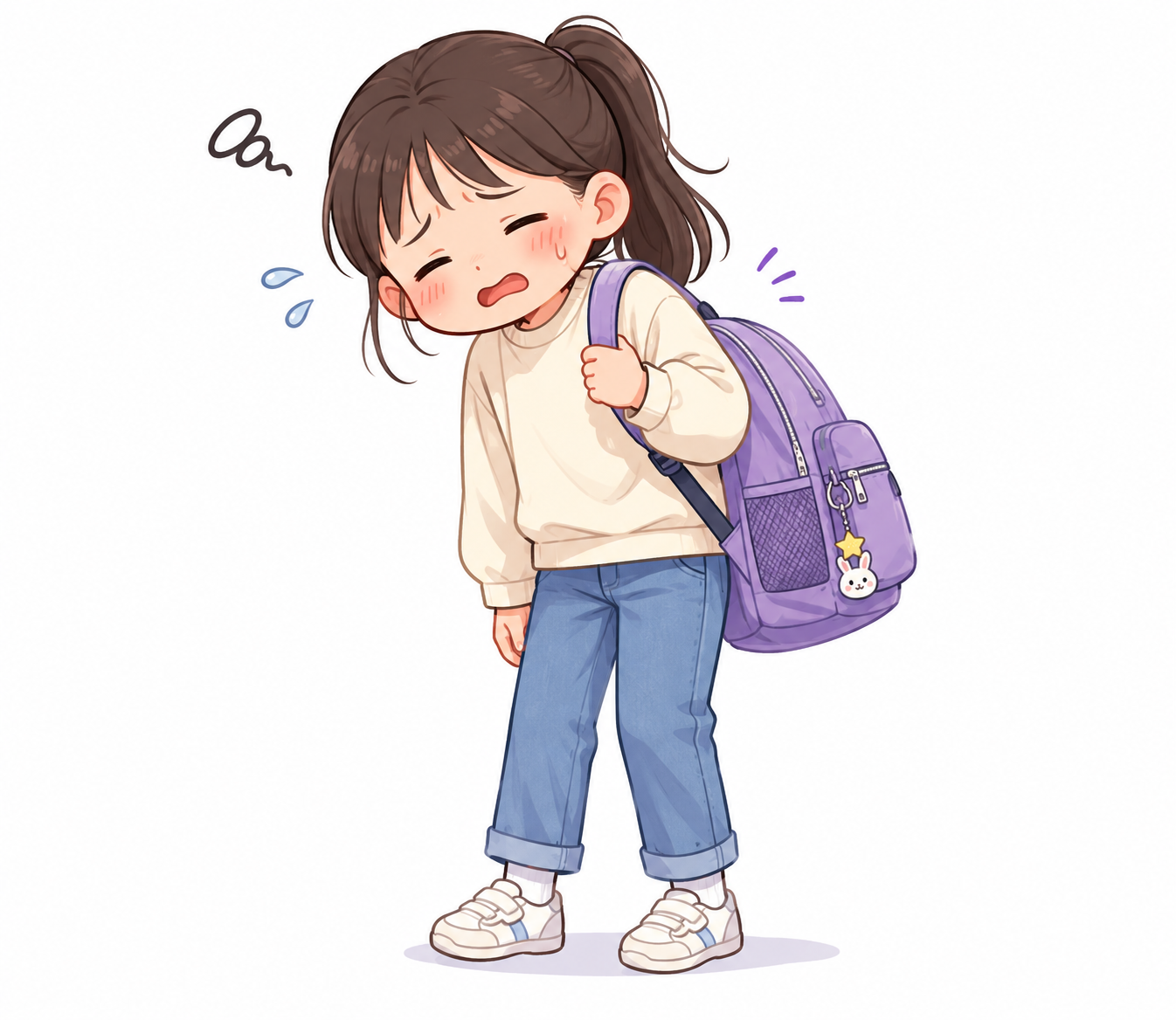
When you hang a bag on one shoulder, your body's center of gravity shifts to that side. To keep from tipping over, your body leans the opposite way or tenses certain muscles. It may feel fine at first, but as this posture adds up, it leaves strain on your muscles and joints.
Four Problems One-Sided Carrying Can Cause
Office workers who spend long hours at a computer may have worse neck and shoulder symptoms, and the longer you carry a heavy bag, the greater the risk to your lower back. If your shoulders look uneven in the mirror, a posture assessment may be worthwhile.
What About Scoliosis?
It's hard to say that one-sided carrying alone causes scoliosis. However, in growing adolescents who already have postural imbalance or weak muscles, it can be a factor that worsens existing asymmetry—which is why a backpack worn on both shoulders is especially recommended for students who are still growing.
How Rehabilitation Medicine Approaches It
If one shoulder often gets knotted up, your neck always feels stiff, a certain spot hurts when you carry your bag, your shoulders are at different heights, or low back pain keeps coming back, it's time to check your posture and muscle condition.
- Posture assessment: We check differences in shoulder height, pelvic and spinal alignment, and gait pattern to analyze the cause of your pain.
- Correcting muscle imbalance: Tight muscles are released, and weak muscles are strengthened through deep neck muscle strengthening, scapular stabilization, and core strengthening exercises.
- Manual therapy: Helps restore function when joint movement is restricted or muscle tension is significant.
- Posture education: You'll learn to manage bag weight, use both shoulders, and maintain good posture—because if daily habits don't change, the pain comes back.
If You Can't Give Up Your Shoulder Bag
- Switch shoulders often.
- Take out anything you don't need, and pack heavy items on the inside, close to your body.
- Don't carry it for long stretches, and stretch your shoulders whenever you can.
- If possible, use a backpack worn on both shoulders.
Final Thoughts
Your body remembers the habits you repeat every day. If you're a growing student or a commuter who carries a bag for long periods, remember that something as simple as how you carry your bag can affect the health of your neck and back. At Ssukssuk Rehabilitation Medicine Clinic in Bangbae, we measure shoulder height and pelvic alignment with Exbody as part of our posture assessment.
Last reviewed: 2026-10-07 This article provides general medical information. Individual diagnosis and treatment plans are determined through an in-person consultation.