
Calcific Tendinitis: Sharp Shoulder Pain When You Move Your Arm
Shoulder pain that doesn't improve with rest and gets worse at night may be calcific tendinitis, and an accurate evaluation followed by step-by-step recovery helps reduce recurrence.
Are you blaming your shoulder pain only on your computer, your smartphone, or tired muscles? If your shoulder pain doesn't go away even with plenty of rest, or it wakes you up at night, it's time to look for another cause—and one of them is calcific tendinitis. In calcific tendinitis, calcium deposits build up in the shoulder tendons, causing pain and inflammation and sometimes sudden, severe pain. We've organized this guide around frequently asked questions.
What Builds Up, and Where?
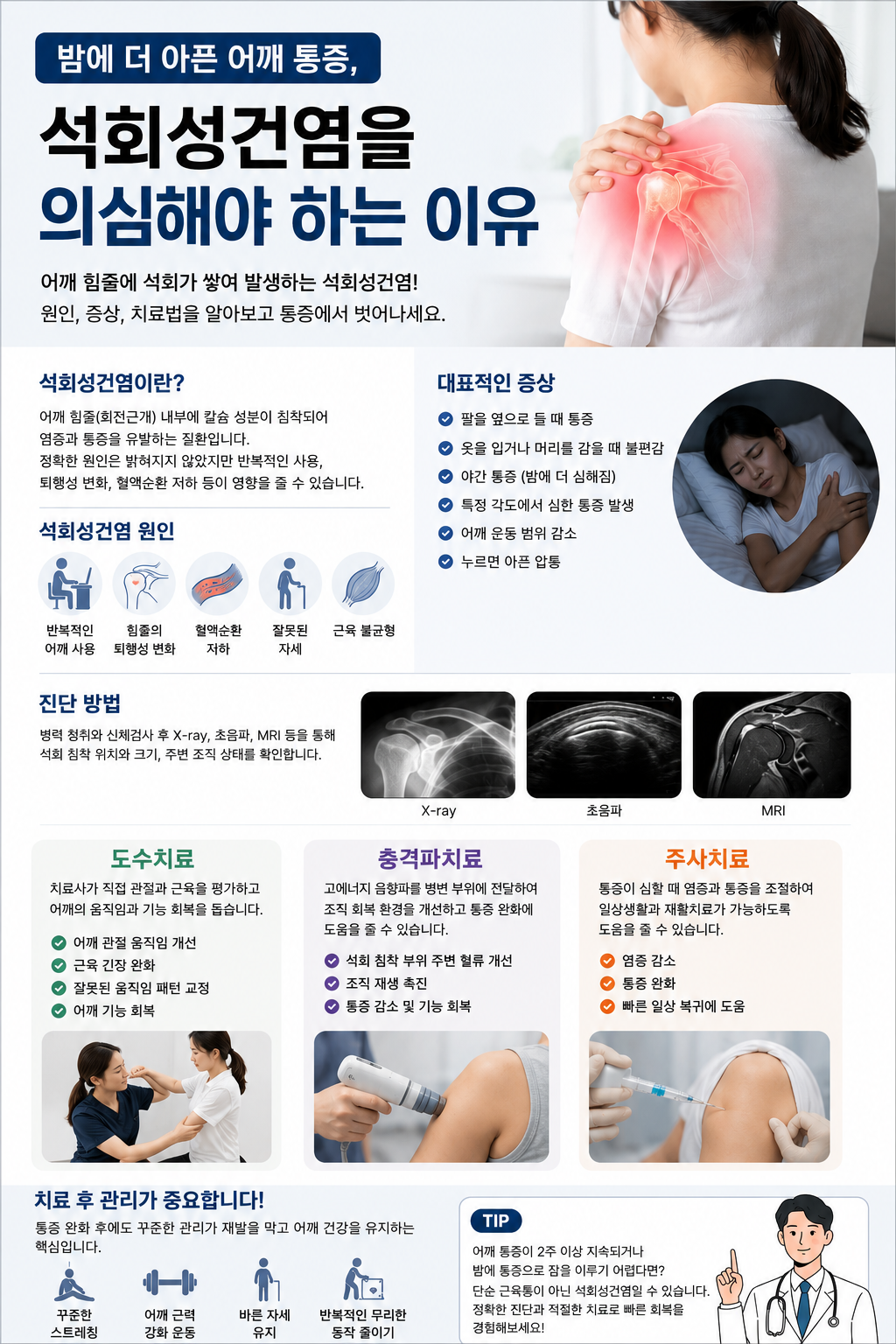
Calcific tendinitis develops when calcium deposits form inside the rotator cuff tendons that move the shoulder. The exact cause isn't yet known, but repetitive shoulder use, degenerative changes in the tendon, reduced blood flow, poor posture, and muscle imbalances around the shoulder are thought to play a role. It's relatively common between the ages of 30 and 60 and occurs more often in women.
What Kind of Pain Does It Cause?
The intensity of pain from calcific tendinitis varies widely from person to person. It may start as mild stiffness, but severe pain can occur while the calcium deposit is being reabsorbed.
- Pain when raising your arm out to the side
- Difficulty with everyday tasks like getting dressed or washing your hair
- Pain that suddenly intensifies at certain angles
- Reduced shoulder range of motion and tenderness when pressed
- Pain that worsens at night
Night pain often gets worse, which can disrupt your sleep as well.
How Is It Diagnosed?
Calcific tendinitis is suspected based on your medical history and a physical exam, then confirmed with imaging. The calcium deposit usually shows up on an X-ray, and ultrasound or MRI may be added if needed. Looking at the size and location of the deposit and the condition of the surrounding tissue is the starting point for a treatment plan.
In What Order Is Treatment Considered?
Shockwave therapy and injection therapy aren't applied the same way to every patient. Your care team decides based on the size and location of the deposit and the severity of your pain.
Can I Start Exercising as Soon as the Pain Eases?
The goal in treating calcific tendinitis goes beyond reducing pain—it's to restore shoulder function and lower the risk of recurrence. Consistent stretching, shoulder strengthening, good posture, and cutting back on repetitive strenuous movements should all go together. Rather than suddenly increasing exercise intensity because the pain has eased, it's safer to recover step by step under professional guidance.
Wrapping Up
If your shoulder pain lingers or is severe enough to keep you from sleeping, don't brush it off as fatigue. With calcific tendinitis, it's important to confirm your condition through diagnosis and then build a treatment plan tailored to your situation. At Ssukssuk Rehabilitation Medicine Clinic in Seocho and Bangbae, we evaluate your imaging results together with your shoulder movement to decide on treatment.
Last reviewed: 2026-10-07 This article provides general medical information. Individual diagnosis and treatment plans are determined through an in-person consultation.