
Low Back Pain and Your Abs: Why Your Core Protects Your Back
Your lower back isn't supported by back muscles alone—strengthening deep abdominal muscles like the transversus abdominis and your whole core helps ease low back pain.
Why would you be told to work your abs when your back hurts? We also often hear, "Isn't my back sore because my back muscles are weak?" Your lower back isn't protected by back muscles alone—the abdominal muscles that support your body's center are also closely tied to low back pain. Here we walk through the connection between low back pain and your abdominal muscles, question by question.
What Role Do the Abdominal Muscles Play for the Lower Back?
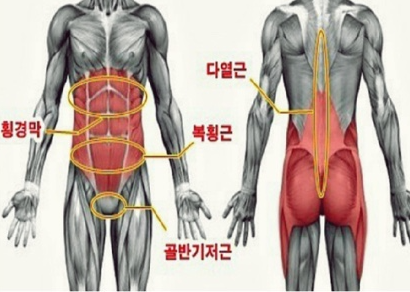
The spine is a pillar that connects your head and arms above to your pelvis and legs below. But the spine can't hold your body steady on its own. That's where the abdominal muscles come in. Muscles such as the transversus abdominis, rectus abdominis, internal and external obliques, multifidus, and pelvic floor muscles wrap around your waist and stabilize the spine. It helps to think of your abdominal muscles as a natural back brace built into your body.
Why Do Weak Abdominal Muscles Cause Low Back Pain?
- Spinal stability decreases. When there's less support for the spine, the back muscles work harder to compensate and become overly tense, leading to stiffness, chronic low back pain, and a back that tires easily.
- Your posture breaks down. The abdominal muscles help control the position of the pelvis; when they weaken, the pelvis tends to tilt forward (anterior pelvic tilt). Your lower back arches excessively, increasing pressure between the lumbar vertebrae and the load on the spinal facet joints.
- The load on your discs increases. Your core muscles help absorb the forces that reach the spine, so when the abdominal muscles are weak, the lumbar discs take on more of that load. This is one reason your back can easily hurt when you lift something or stand up from sitting.
Does a Larger Belly Mean More Back Pain?
Weight gain and abdominal obesity are also linked to low back pain. When your belly protrudes, your center of gravity shifts forward, and your lower back arches more to keep you balanced, so your back muscles never get to rest. Abdominal obesity is known to raise the risk of chronic low back pain.
Which Muscles Matter Most for the Lower Back?
Which Exercises Should I Start With?
If you have low back pain, jumping straight into sit-ups can actually add strain. Core exercises that improve spinal stability are a better choice. Typical examples include abdominal drawing-in, bridges, bird dogs, planks, and dead bugs. If your pain is severe or you have a disc condition, it's best to get an exercise program tailored to you.
If your low back pain lasts more than three months, comes with leg numbness or tingling, radiates from your buttock down to your foot, worsens when you cough or sneeze, or comes with weakness, something other than muscle strength may be the cause. In that case, start with an evaluation at a rehabilitation medicine clinic.
In Summary
Low back pain isn't just about your back muscles. Weak abdominal muscles increase the load on your lower back, so you need to strengthen your entire core along with your back. At Ssukssuk Rehabilitation Medicine Clinic in Bangbae, we guide you through personalized strengthening and stretching one-on-one during exercise therapy sessions.
Last reviewed: 2026-10-07 This article provides general medical information. Individual diagnosis and treatment plans are determined through an in-person consultation.