
Kyphosis in Bangbae & Seocho: Causes and Care for a Rounded Upper Back
A rounded upper back may be more than a posture habit—it can be kyphosis, and early evaluation plus consistent treatment and exercise help you maintain good posture.
Many people assume a rounded back is just the result of bad posture, but sometimes kyphosis is behind it. If your upper back looks unusually rounded in the mirror, or someone has told you your head juts forward, it's worth getting checked. Kyphosis doesn't just change how you look—it can also lead to neck, shoulder, and low back pain and fatigue. Here we explain everything from its causes to how to manage it.
When a Normal Curve Becomes Too Pronounced
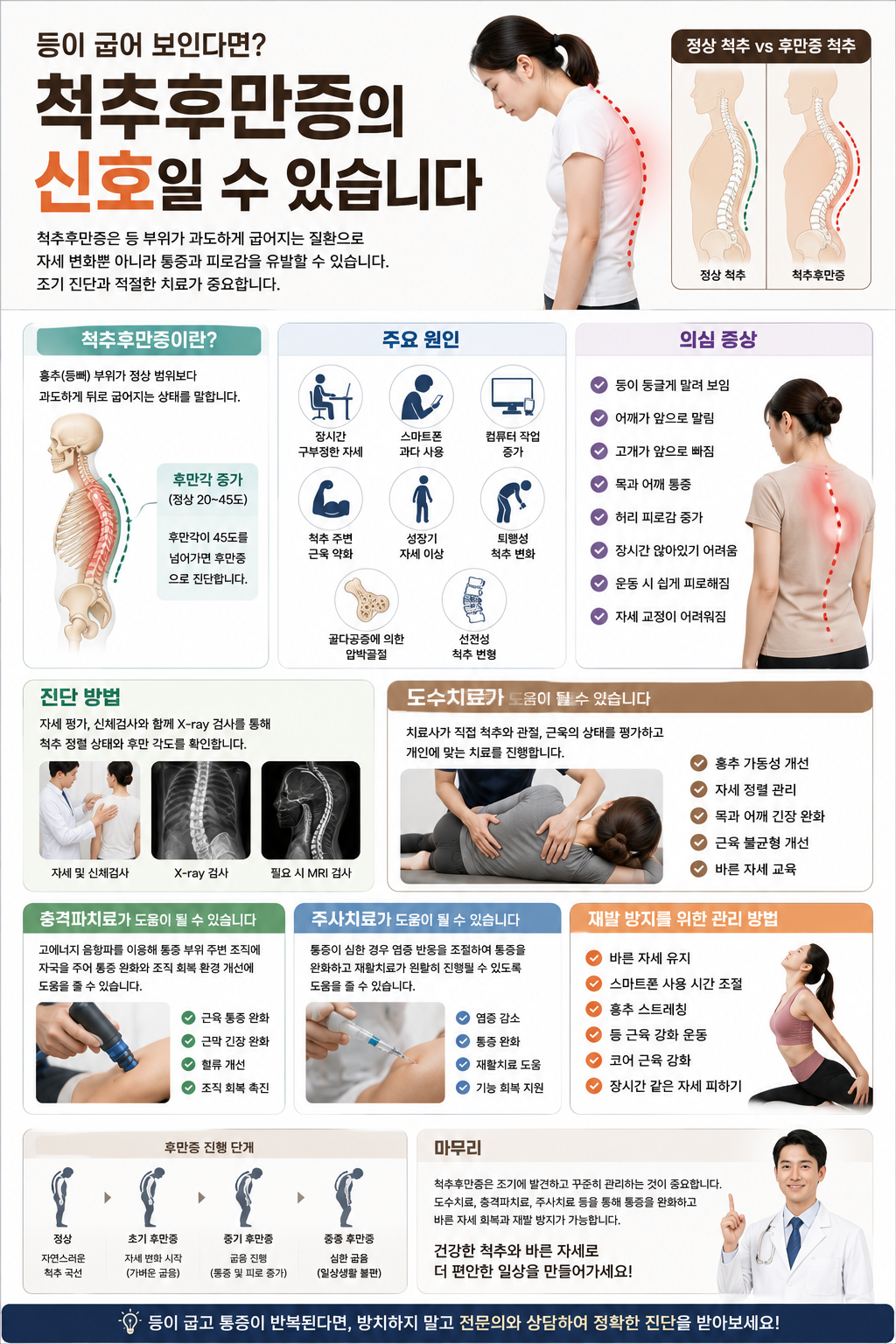
A healthy spine has natural curves: it bends forward at the neck and lower back and backward in the upper back. When the curve in the thoracic spine (upper back) becomes larger than normal, it's called kyphosis.
As kyphosis progresses, the head moves forward and the shoulders roll inward, changing your overall posture. Pain, reduced range of motion, and fatigue can follow. With growing smartphone and computer use, more and more young people are reporting related discomfort.
From Daily Habits to Medical Conditions: Causes of Kyphosis
Lifestyle factors include sitting hunched over for long periods, heavy smartphone use, increased computer work, weak muscles around the spine, and poor posture during growth. There are also structural causes, such as degenerative spinal changes, compression fractures from osteoporosis, and congenital spinal deformities. Functional (postural) kyphosis is becoming more common among people who spend most of the day sitting.
Signs of Kyphosis
- Your upper back looks rounded
- Your shoulders roll forward and your head juts out
- Your neck and shoulders hurt and your lower back tires easily
- Sitting for long periods is hard, and you tire quickly when you exercise
- Even when you try to straighten up, it doesn't come easily
Early on it may look like just a posture problem, but over time muscle imbalances and pain can worsen.
How Diagnosis and Treatment Work
Kyphosis is identified through a posture assessment and physical exam, and if needed, X-rays are used to measure spinal alignment and the degree of kyphosis. Looking at the alignment of the neck, shoulders, and pelvis along with muscle condition is what lets us pinpoint the true source of the pain.
- Manual therapy: Kyphosis often comes with reduced thoracic mobility and imbalances in the surrounding muscles. The therapist evaluates the condition of your spine, joints, and muscles to improve thoracic mobility, manage postural alignment, and release neck and shoulder tension. Combined with exercise therapy, it's even more helpful for posture management.
- Shockwave therapy: It doesn't correct kyphosis itself, but it may be considered for neck, shoulder, or upper back muscle pain or myofascial tension caused by a rounded posture.
- Injection therapy: Considered to support rehabilitation when pain or inflammation interferes with daily life.
Consistent Care Builds Good Posture
After treatment, managing your daily habits is key. Maintain good posture, cut back on smartphone time, and keep up thoracic stretches along with strengthening exercises for your back and core muscles. Avoiding staying in one position for long periods also matters. Good posture lasts only if you keep up the care even after the pain eases.
In Summary
If your back seems to be rounding more and more, or neck and shoulder pain keeps coming back, get checked for kyphosis. At Ssukssuk Rehabilitation Medicine Clinic in Bangbae and Seocho, we check your spinal alignment with Exbody posture assessment and X-rays, then plan manual therapy and exercise therapy.
Last reviewed: 2026-10-07 This article provides general medical information. Individual diagnosis and treatment plans are determined through an in-person consultation.