
Cervical Herniated Disc: Causes of Neck Pain and Arm Numbness
Neck pain combined with arm numbness or altered finger sensation may signal a nerve problem from a cervical herniated disc, so early evaluation and consistent posture care matter.
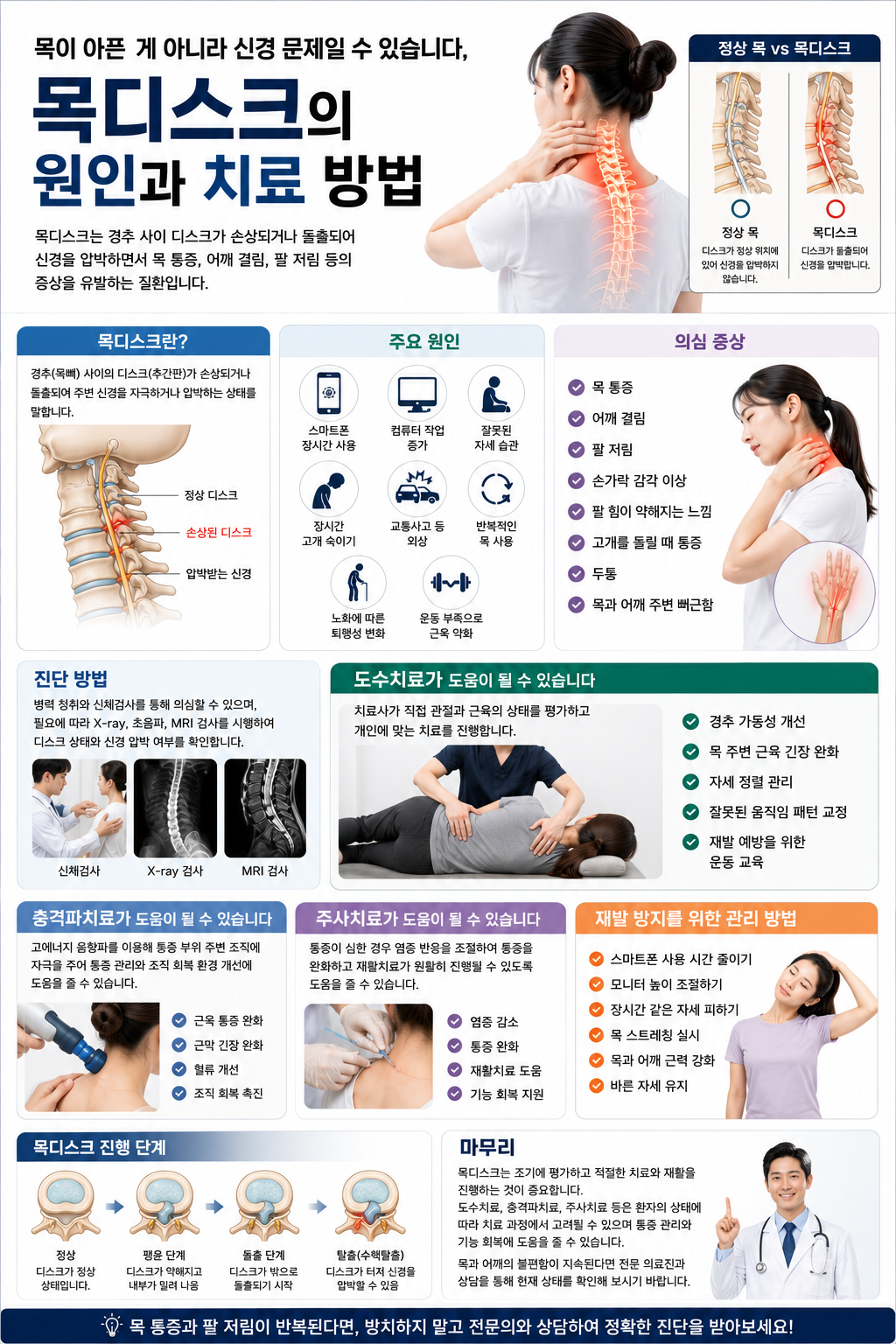
A cervical herniated disc—often called a "neck disc" in Korea—occurs when a disc between the vertebrae of the neck (cervical spine) is damaged or bulges out and irritates nearby nerves. When the disc presses on a nerve, symptoms don't stay in the neck; they can spread to the shoulder, arm, and hand. If you've been dismissing neck pain as tight muscles and now have arm numbness and changes in finger sensation, it's time to check for a cervical herniated disc. We've organized this guide around frequently asked questions.
Why Does a Cervical Herniated Disc Develop?
It often results from a combination of daily habits and degenerative changes. Repeatedly jutting your head forward increases the load on the cervical spine. Common examples are long hours looking at a smartphone, heavy computer work, and spending a lot of time with your head bent down. Other causes include trauma such as car accidents, repetitive neck use, age-related degeneration, and muscle weakness from lack of exercise. Recently, more young people are being diagnosed with cervical disc herniation as well.
What Are the Symptoms?
In addition to neck pain and stiff shoulders, you may have arm numbness, altered sensation in your fingers, or a feeling that your arm is getting weaker. Turning your head may hurt, and headaches or tightness around the neck and shoulders may come with it. How severe the symptoms are varies from person to person depending on how much the nerve is compressed.
How Is It Diagnosed?
A cervical herniated disc is suspected based on your medical history and physical exam, and if needed, X-ray, ultrasound, or MRI is used to check the condition of the disc and whether a nerve is being compressed. An accurate evaluation is especially important when nerve symptoms such as arm numbness are present.
What Treatment Options Are There?
People with a cervical herniated disc often also have tension in the muscles around the neck and postural imbalances.
Your treatment plan is based on both your symptoms and your imaging results.
What Should I Keep Doing After Treatment?
With a cervical herniated disc, lifestyle habits largely determine whether it comes back. Cut down on smartphone time, set your monitor at eye level, avoid holding the same position for long periods, and keep up neck stretches and neck and shoulder strengthening exercises. Even after the pain eases, continuing this care lowers your risk of recurrence.
Summary
If neck pain and arm numbness keep coming back, don't write them off as fatigue—get checked for a cervical herniated disc. At Ssukssuk Rehabilitation Medicine Clinic near Seocho and Bangbae, we combine manual therapy, shockwave therapy, injection therapy, and rehabilitation exercise to fit your condition, based on your diagnosis.
Last reviewed: 2026-10-07 This article provides general medical information. Individual diagnosis and treatment plans are determined through an in-person consultation.