

Myofascial Pain Syndrome in Seocho & Bangbae: Recurring Muscle Knots
If muscle knots and sudden stiffness keep coming back, finding the trigger points of myofascial pain syndrome and changing posture and habits after treatment helps prevent recurrence.
Myofascial pain syndrome is a condition in which repeated tension and overload on muscles and the fascia that surrounds them create trigger points. If your neck is stiff even after a night's sleep, massage only helps briefly, and your shoulders always feel heavy with pulling down into your upper back, it may be more than ordinary muscle soreness. We've grouped the questions most often asked by people in Seocho and Bangbae who struggle with muscle knots and sudden painful stiffness.

How are trigger points different from ordinary muscle knots?
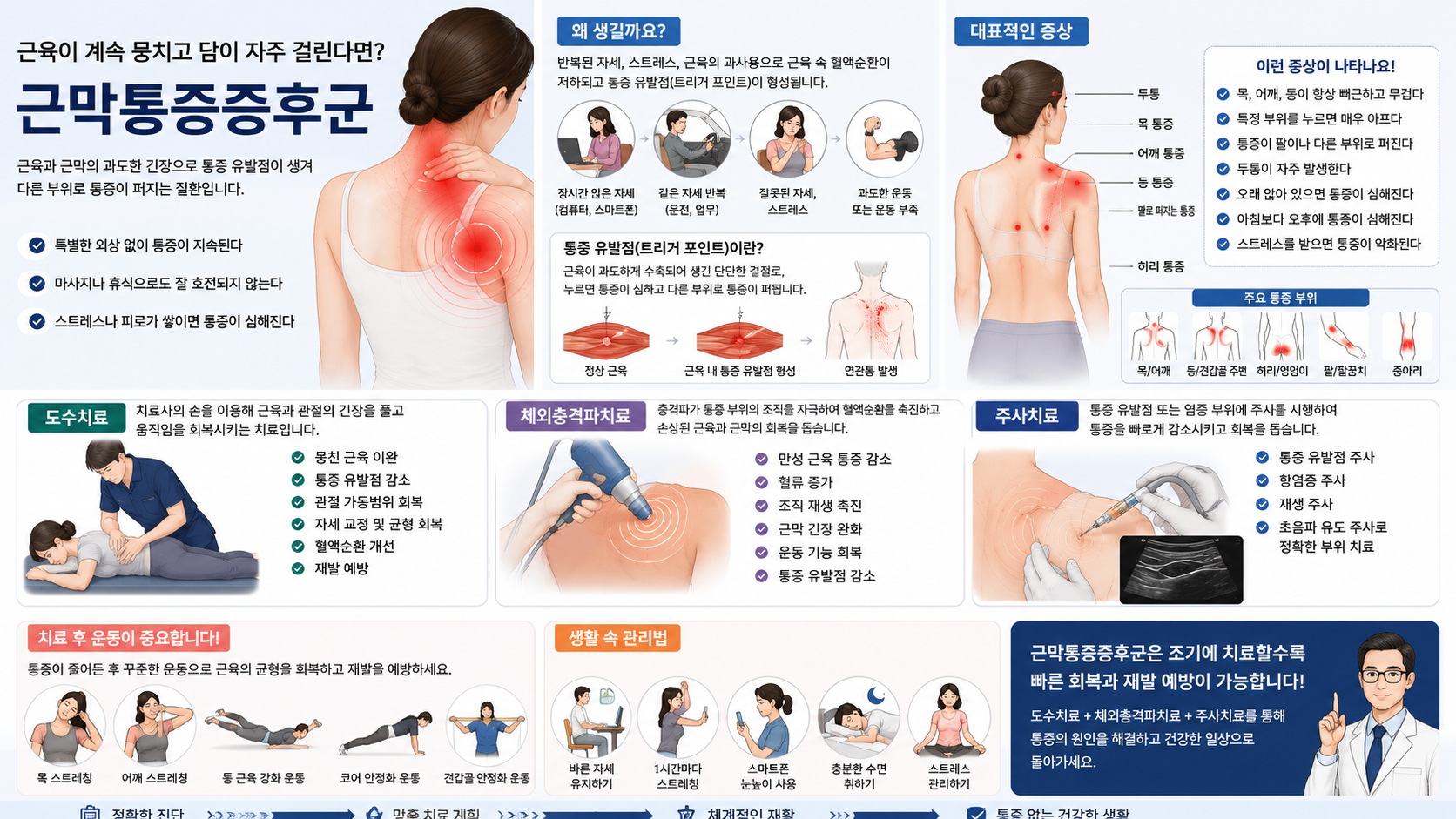
Trigger points are very painful when pressed and create "referred pain" that spreads to other areas. For example, a problem in the neck muscles may cause a headache, or a shoulder muscle may send pain down the arm.
Unlike ordinary knots, over time they can reduce the muscle's elasticity and function and even limit movement. That's why it's important to start managing myofascial pain syndrome early.
Why does it happen, and what are the symptoms?
Sitting for long hours at work, prolonged phone and computer use, driving, repetitive arm use, and poor posture keep muscles from resting. Lack of exercise or overexercising, stress, poor sleep, and accumulated muscle fatigue add to this. When these factors repeat, blood circulation within the muscle drops and oxygen supply falls short, and trigger points take hold.
Because the muscle itself is the source, it's not unusual for discomfort to increase the more you move.
How is it treated?
It may feel like simple muscle fatigue at first, but left untreated it can become chronic pain. Over time, muscles lose flexibility and posture breaks down, raising the risk of other musculoskeletal problems such as neck disc problems, shoulder impingement syndrome, and low back pain. That's why treating myofascial pain syndrome means addressing not only the pain but also why the muscles became tense in the first place.
- Manual therapy: A therapist uses their hands to restore movement in the muscles and joints and gently release tight fascia. The goals are relaxing knotted muscles, reducing trigger points, restoring joint range of motion, correcting posture, and rebalancing the muscles.
- Extracorporeal shockwave therapy (ESWT): Muscles that have been knotted for a long time have reduced blood flow and slower tissue recovery. This non-surgical treatment delivers acoustic shockwaves to the painful area to support circulation and promote tissue recovery, and it may help with long-standing muscle pain or recurring episodes of painful stiffness.
- Injections: When pain is severe or trigger points are clearly defined, we may locate them with ultrasound and combine trigger point injections, anti-inflammatory injections, regenerative injections, and others. Reducing acute pain makes exercise therapy easier.
What should I do once I feel better?
The key is not slipping back into the same posture and habits. Learn neck and shoulder stretches, upper back strengthening, core and shoulder blade stabilization, and posture-correction exercises at the clinic, and keep them up. In daily life:
- Get up and stretch lightly every hour
- Raise your phone to eye level
- Avoid holding the same position for long
- Get enough sleep, exercise regularly, and manage stress
In Summary
Myofascial pain syndrome is common, but it's easy to mistake it for simple muscle soreness and miss the right time for treatment. If your neck and shoulders always feel knotted, painful stiffness is frequent, and massage doesn't really help, consider a rehabilitation medicine evaluation that looks at the source of the pain, your posture, and your muscle function together.
Last reviewed: 2026-10-07 This article provides general medical information. Individual diagnosis and treatment plans are determined through an in-person consultation.