
Leg Crossing and Pelvic Misalignment: A Bangbae Rehab Guide
Crossing your legs won't reshape your pelvic bones, but the habit can leave muscle imbalances around the pelvis and extra strain on the low back and hips.
"Crossing your legs will twist your pelvis." You've probably heard that at least once. It's half true and half false. For anyone who crosses their legs without thinking in meetings, at cafés, or in front of the TV, we've put together a Q&A on how the habit actually affects the pelvis and what you can change.
Does crossing your legs permanently deform the pelvic bones?
No. Crossing your legs doesn't permanently change the pelvic bones themselves. However, when poor posture is repeated over a long time, the tension in muscles and ligaments shifts and can temporarily change pelvic alignment. If this goes on, the load on the lower back and hips increases, and so does the likelihood of pain.
That's why a "twisted pelvis" is better understood as an imbalance of muscles and joints rather than bones being crooked.
What happens in your body while your legs are crossed?
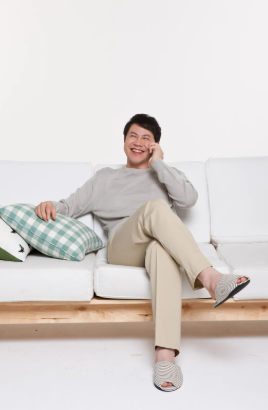
The moment you cross your legs, your pelvis tilts to one side and your weight is no longer evenly distributed across both sides of your buttocks. Your lower back and spine also hold a slightly twisted position to keep you balanced. Once or twice is fine, but if you repeat the same position dozens of times a day, your body adapts to it.
If you always cross in the same direction, the buttock muscles on one side stay stretched while those on the other side stay shortened and tense. When this muscle imbalance persists, you may notice:
- A feeling that your pelvis tilts to one side
- Frequent low back stiffness or buttock pain
- One leg getting more tired than the other when you stand for a long time
Are there signs that I should check my habits?
- Your lower back hurts when you sit for a long time
- Only one side of your buttocks often feels stiff
- It actually feels uncomfortable not to cross your legs
- Your pants twist to one side
- One shoe wears out faster than the other
These signs alone can't confirm a pelvic problem, but they're a good prompt to reconsider your leg-crossing habit.
How should I change my sitting habits, and when should I see a doctor?
Rather than searching for the perfect posture, the key is not holding any one position for too long.
- Sit with both feet resting flat on the floor
- Don't always cross in the same direction
- Get up and move every 30–60 minutes
- Stretch your buttocks and hips, and strengthen your glutes and core
If the pain persists, see a rehabilitation medicine physician. Rather than simply declaring "your pelvis is twisted," rehabilitation medicine takes a comprehensive look at whether the pain comes from muscle imbalance, a spine or hip condition, or another cause. We assess your posture and gait, order imaging if needed, and then combine exercise therapy, manual therapy, and physical therapy, with lifestyle changes at the center of preventing recurrence.
The Bottom Line
Crossing your legs once or twice won't lock your pelvis out of alignment. But a habit of always crossing the same way can throw off the balance of the muscles around your pelvis and leave lasting strain on your lower back and hips. Starting today, try gradually increasing the time you sit with both feet on the floor.
Last reviewed: 2026-10-07 This article provides general medical information. Individual diagnosis and treatment plans are determined through an in-person consultation.