
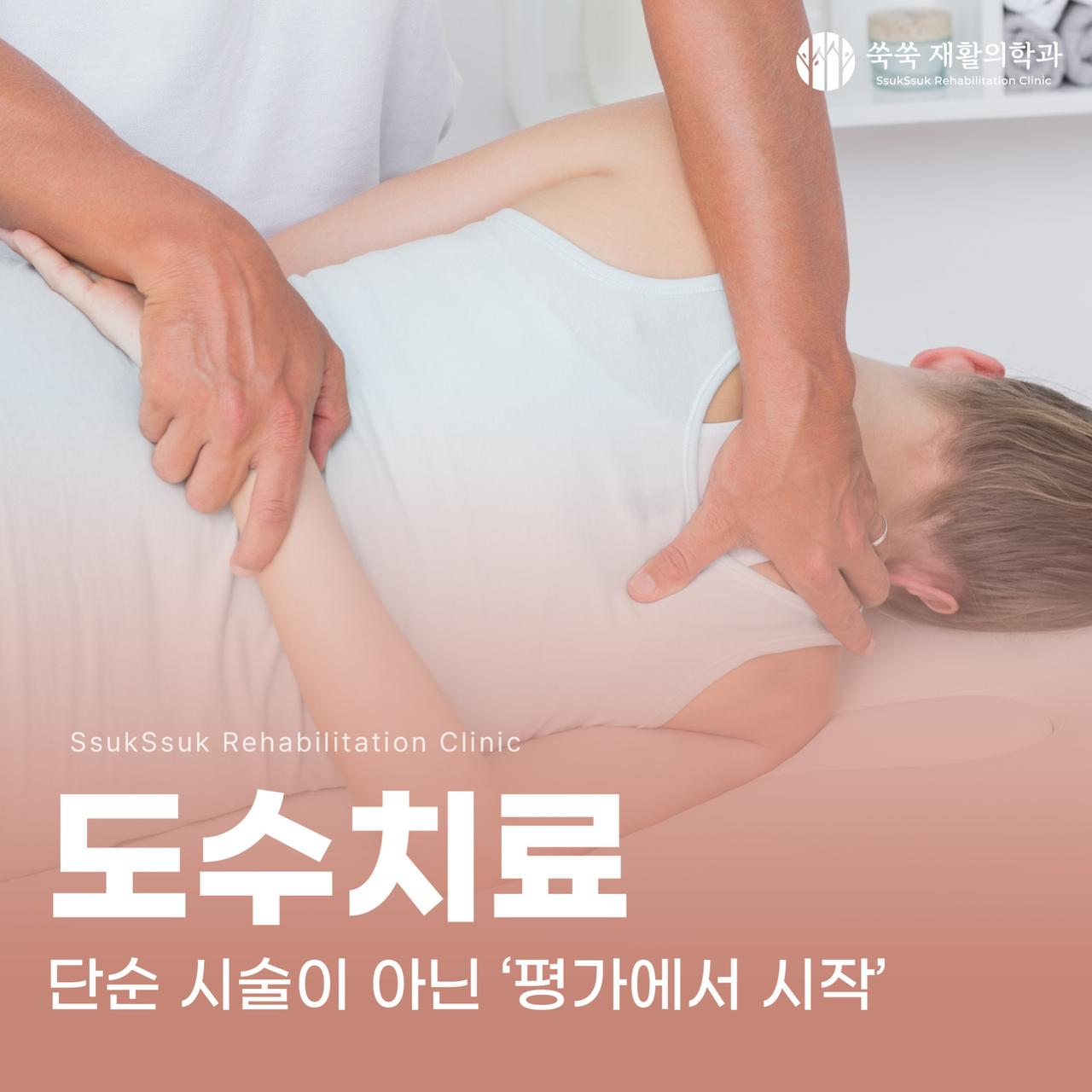
Manual Therapy Near Sadang Station: Treatment That Starts With Assessment
Manual therapy isn't a fixed number of repeated sessions. It's built step by step based on an assessment of your body.
"How many sessions until I get better?" "Do I have to keep coming?" These are the questions we hear most often in manual therapy consultations. Dr. Lee Soo Jin, Director of Ssukssuk Rehabilitation Medicine Clinic, sees these questions as a reflection of how people understand manual therapy. To help those considering manual therapy for the first time understand how treatment works, we've organized this around the questions we're asked most often.
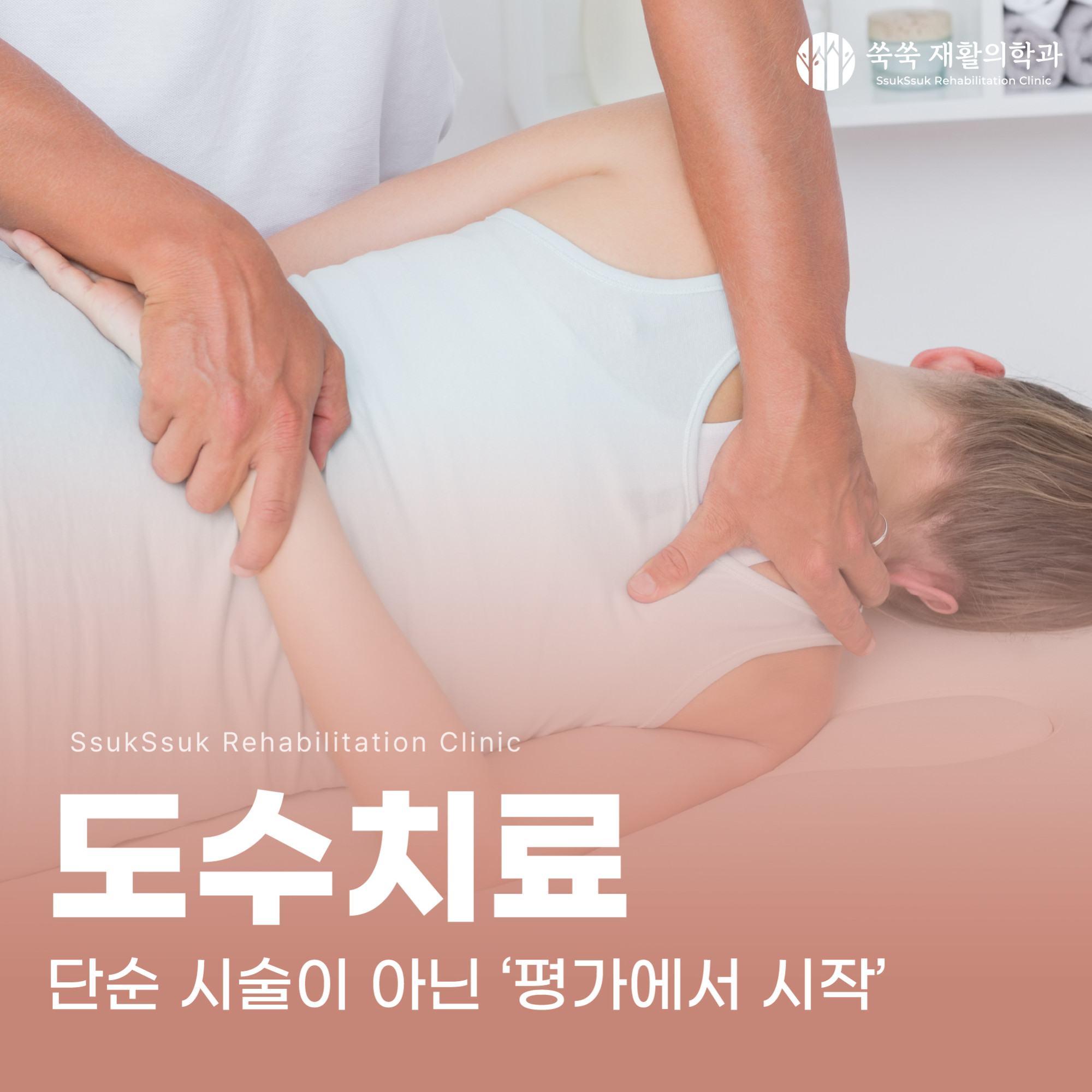
Is Manual Therapy a Fixed Number of Repeated Sessions?
No. If you think of manual therapy as a procedure that repeats the same techniques, it's natural to focus on the number of sessions first. In reality, manual therapy is closer to a process of assessing your current condition and adjusting the approach based on the results. Even with the same pain, the underlying movement patterns and lifestyle differ, so the course and content of treatment differ from person to person.
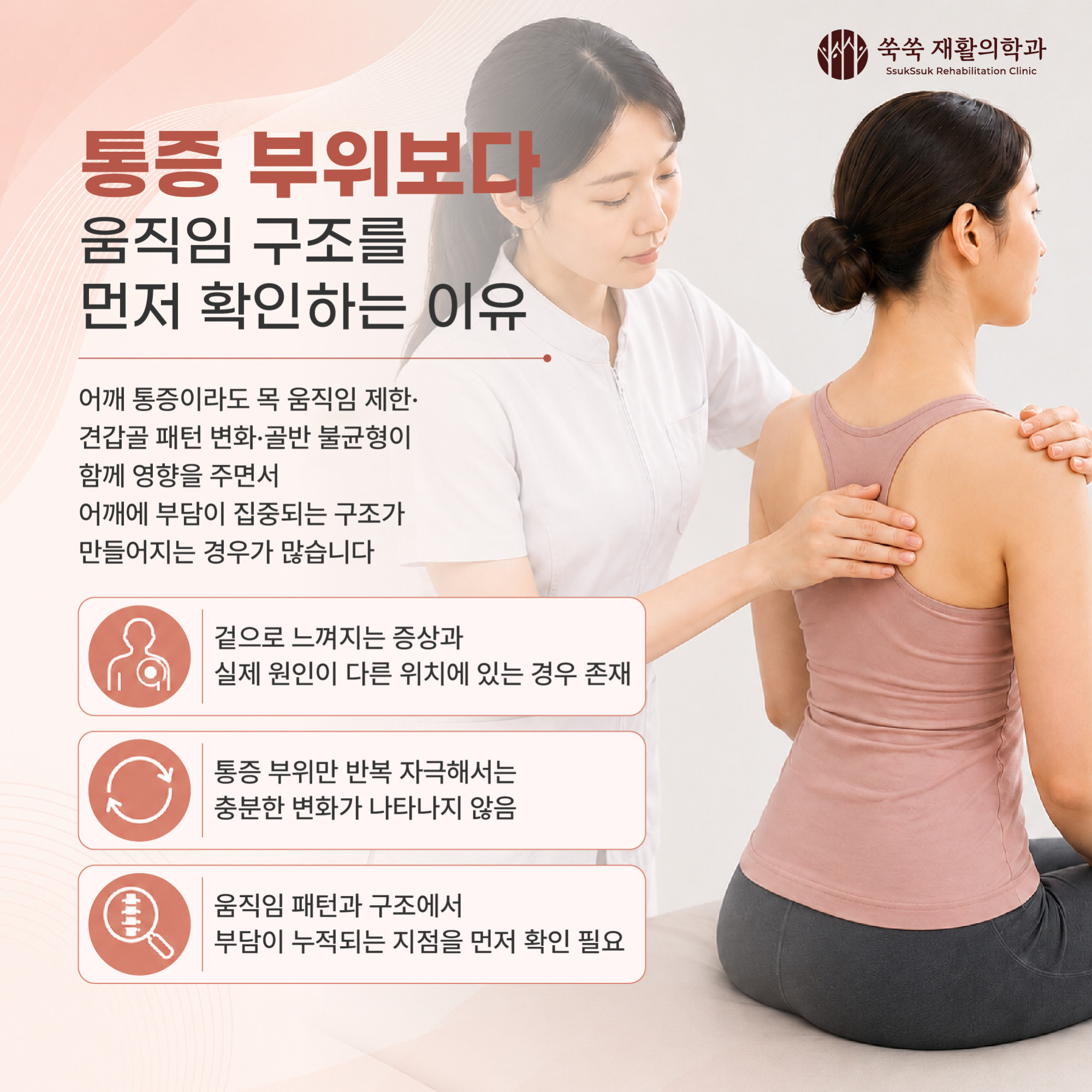
Why Isn't It Enough to Just Work on the Painful Spot?
Pain is a signal that shows up as a result, and the cause often lies earlier, in your movement patterns or repeated habits. Take shoulder pain, for example. Restricted neck movement, altered shoulder blade movement, or an imbalance in the lower back and pelvis can work together to concentrate strain on the shoulder.
When the symptom and the cause are in different places, simply stimulating and loosening the painful area won't bring enough change. That's why manual therapy starts by identifying which movement patterns and structures are building up strain.
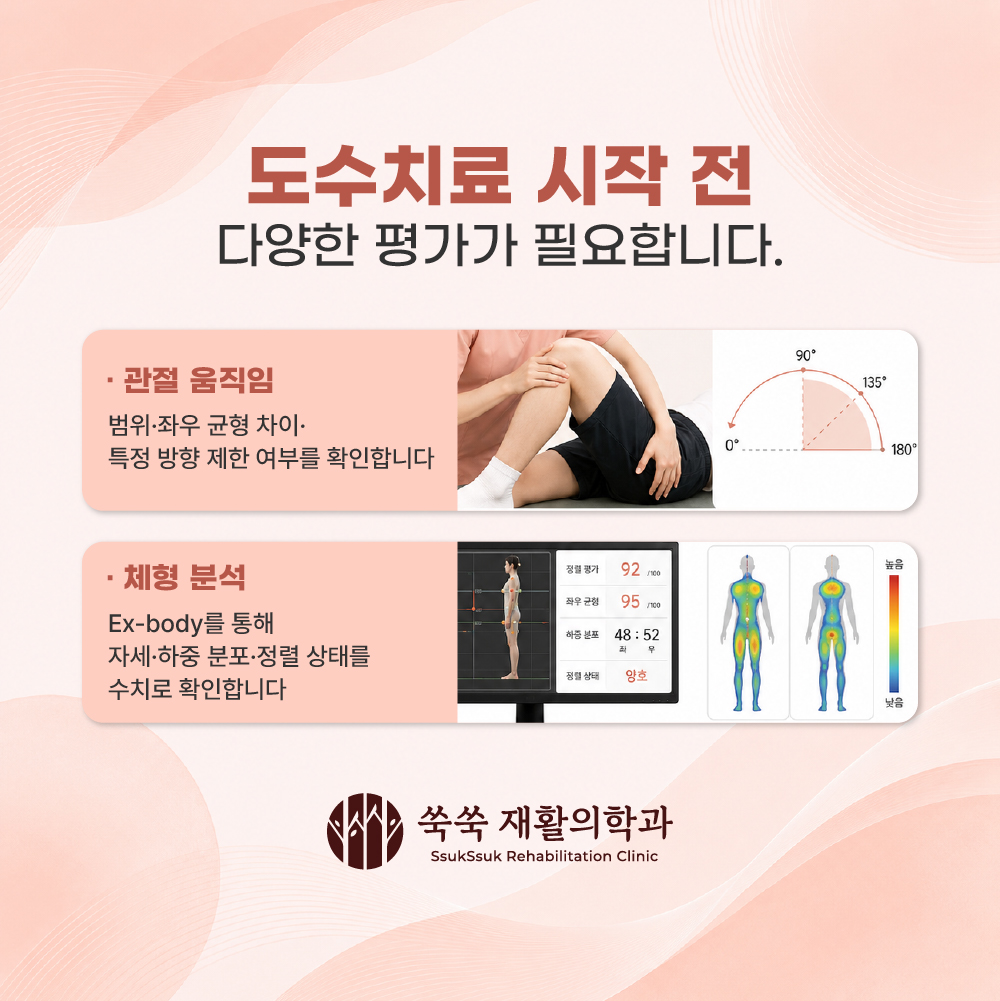
What Does the Assessment Check?
- How much range of motion your joints have
- Whether there are differences between your left and right sides
- Whether movement is blocked in certain directions
- What changes between when you're still and when you're moving
When needed, we use Exbody posture assessment to check your posture with objective data. Because it shows load distribution and alignment in your standing posture and movement patterns as numbers, it complements visual assessment. The purpose of the assessment isn't just to check whether something is wrong, but to interpret which structures are creating repeated strain.
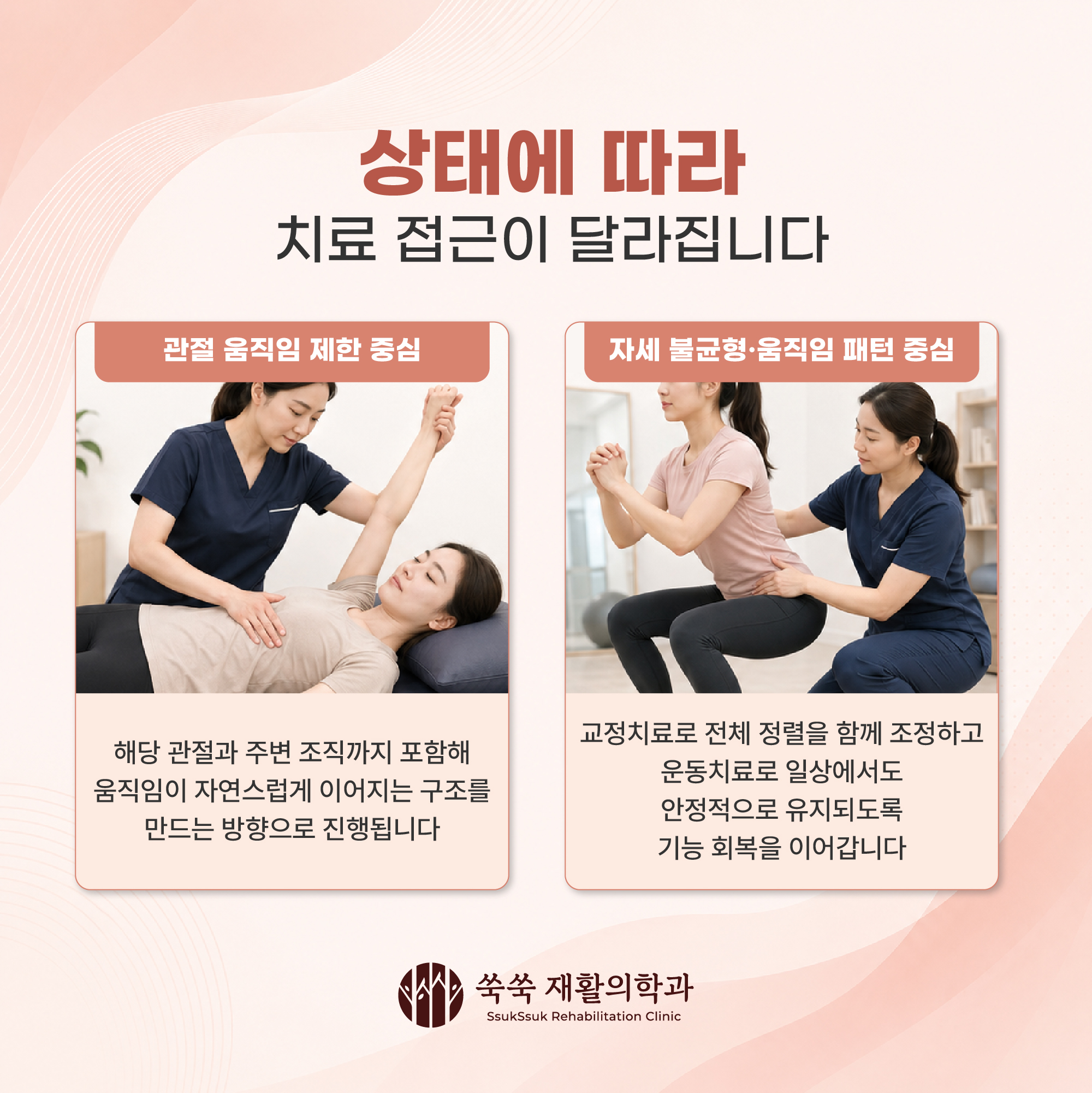
How Does Treatment Proceed After the Assessment?
Treatment isn't one-size-fits-all. It's planned step by step based on which function your body needs to regain first.
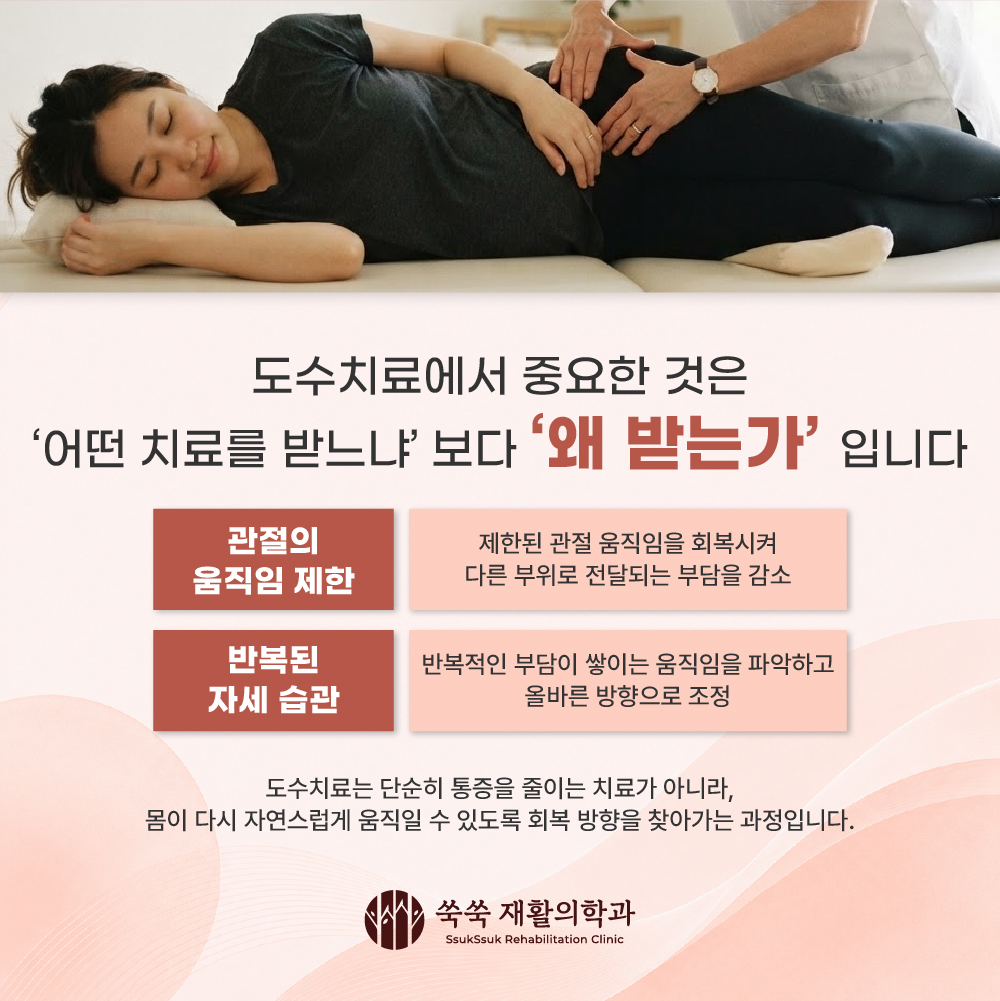
Summary: How to Tell Whether This Treatment Is Right for You
The questions people have about manual therapy ultimately come down to one thing. Even with the same pain, some people's pain comes from restricted joint movement, while others have lost body balance due to postural habits. What matters isn't adding more sessions, but accurately understanding the recurring problem in your body and taking the approach it needs. Manual therapy doesn't stop at reducing pain. It's a process of finding the path to recovery so your body can move naturally again.
Author: Dr. Lee Soo Jin, Director, Ssukssuk Rehabilitation Medicine Clinic (Board-Certified Rehabilitation Medicine Specialist) · Profile Last reviewed: 2026-10-07 This article provides general medical information. Individual diagnosis and treatment decisions are made during an in-person consultation.