
Neck Pain in Bangbae & Seocho: Causes and Treatments Compared
Neck pain can stem from posture, fascia, discs, degeneration, or injury, so matching manual therapy, shockwave, or injections to the cause helps prevent recurrence.
Neck pain (cervicalgia) is pain that comes from problems in the cervical spine and the surrounding muscles, ligaments, joints, and nerves. It doesn't always stay in the neck; it can spread to the shoulders, upper back, and arms. Many office workers and students in Bangbae and Seocho spend all day looking at phones and computers and deal with recurring neck pain. This guide compares the causes and treatments so you can get a sense of where you might fit.
Five Causes of Neck Pain Compared
Often several causes overlap rather than just one. If neck pain you've brushed off as "I must have slept wrong" keeps coming back or gets worse, it's worth considering a cause beyond simple muscle fatigue.
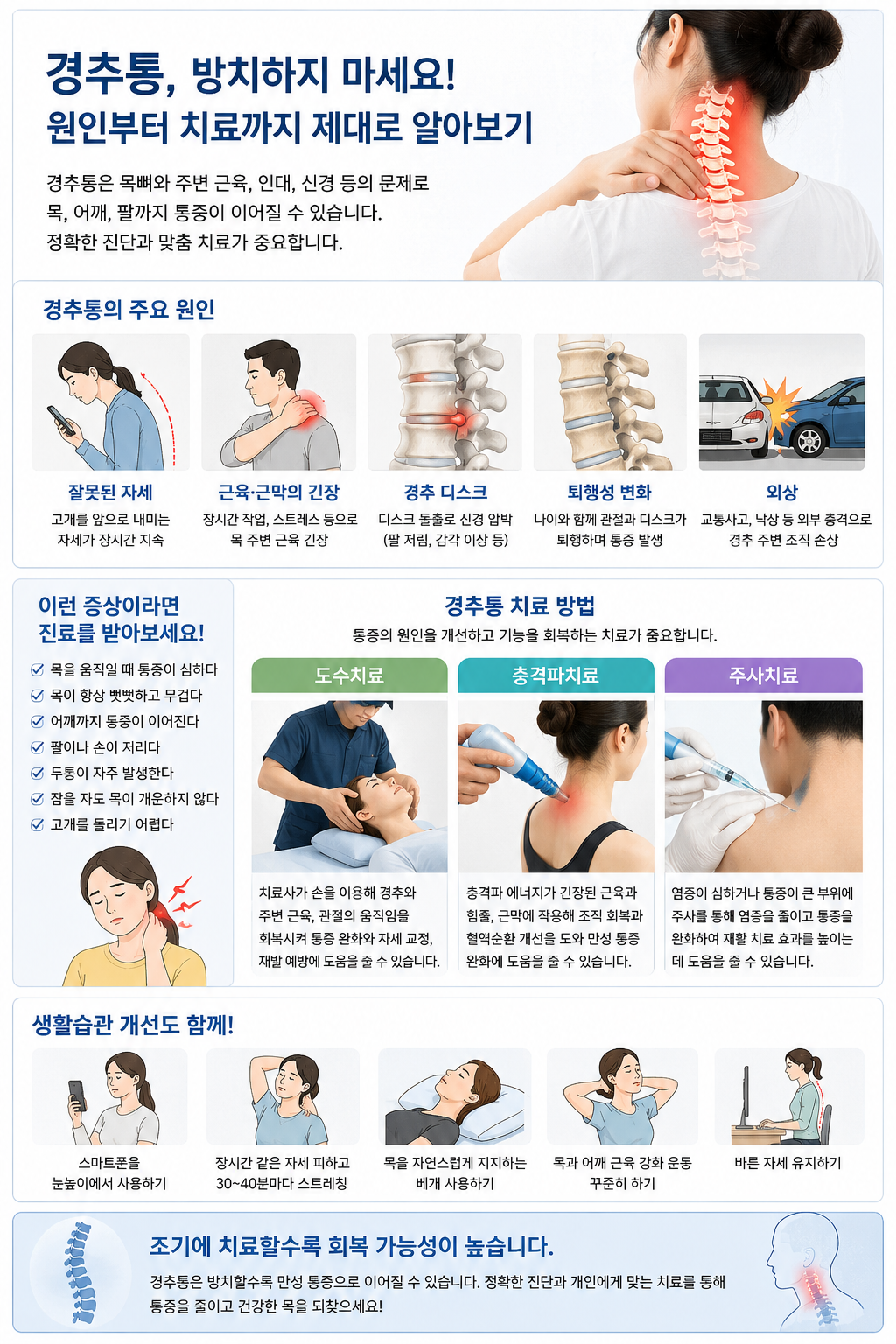
When to See a Doctor
- Pain gets much worse when you move your neck
- Your neck always feels stiff and heavy
- Pain spreads to your shoulders, or your arms or hands feel numb or tingly
- Frequent headaches, or a neck that doesn't feel rested even after sleep
- Difficulty turning your head
How Do Manual Therapy, Shockwave Therapy, and Injections Differ?
Treating neck pain according to its cause helps lower the chance it comes back.
As the comparison shows, each treatment plays a different role, and they are combined to fit your condition based on an accurate diagnosis.
Everyday Neck Care
- Hold your phone at eye level
- Avoid staying in one position too long; stretch your neck every 30–40 minutes
- Use a pillow that supports the natural curve of your neck
- Do strengthening exercises for the neck and shoulder muscles
Final Thoughts
If you leave neck pain alone hoping it will go away, muscle tension can worsen and poor posture can become ingrained, leading to chronic pain. If your neck pain lasts more than 2–3 weeks, or comes with arm numbness, headaches, or shoulder pain, get it evaluated. The key is to pinpoint the cause, build a treatment plan tailored to you, and keep up healthy daily habits.
Last reviewed: 2026-10-07 This article provides general medical information. Individual diagnosis and treatment plans are determined through an in-person consultation.