
School Readiness Program: A Summer Break to Prepare for Fall Semester
Struggles at school may reflect too little practice rather than a lack of ability, and summer break is the right time for that practice.
If your child got feedback at school, big or small, during the first semester, getting through the second semester is probably your biggest worry. At Ssukssuk Child Development Institute, we see this less as a sign that a child lacks ability and more as a sign that they may not have had enough chances to practice, and we believe summer break is the best time for that practice. Here's why, centered on the School Readiness Program we put together for summer break 2026.
School Teaches Daily Life Before Academics
Trouble focusing in class, needing help to stay seated, big emotions when conflicts come up with friends. Hearing things like this, parents naturally worry first.
But elementary school isn't just a place to read and solve math problems. It's where children learn to get along with classmates, understand set rules, listen to the teacher's instructions and act on them, and move back and forth between class time and breaks. Things that seem obvious to adults are all brand new to a child, and for some children, school life itself is a bigger challenge than the schoolwork.
Why Is It Fine at Home but Hard at School?
This is a question we hear often in consultations. Home is a familiar place, but school is different.
- Children have to share one space with many classmates.
- They have to move within set time limits.
- They have to separate class time from break time on their own.
- They have to wait their turn, be considerate of friends, and respond appropriately to unexpected situations.
School asks for many skills all at once. So having a hard time at school doesn't mean a child lacks ability. It's more likely part of the process of adjusting to the school environment.
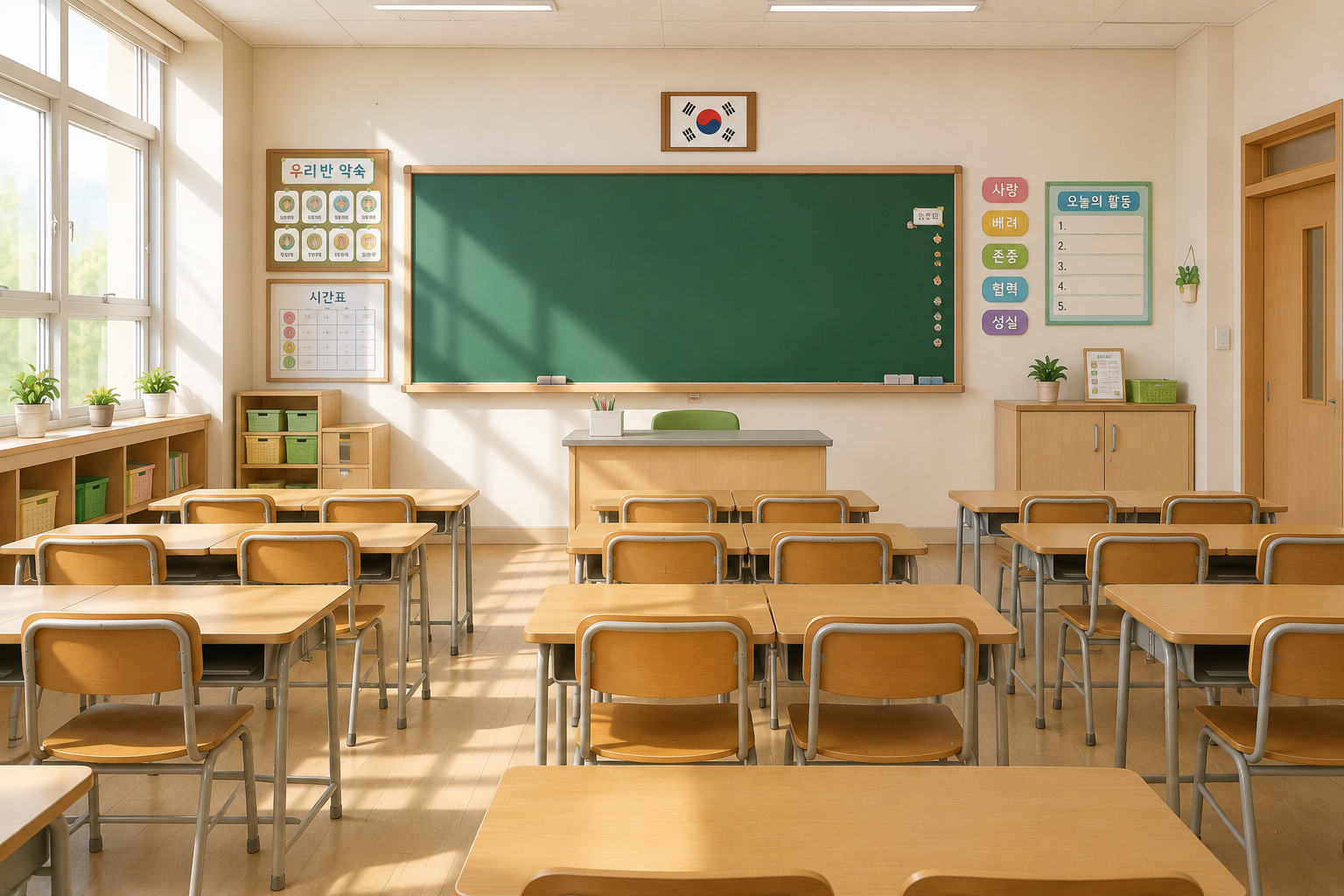
A School Readiness Program Practiced in a Real Classroom Setting
That's why this School Readiness Program takes place in a space that recreates an actual classroom. It isn't just a class where children sit at a desk doing activities. They use desks and cubbies, work while looking at the board, take a break after class, and then get ready for the next lesson, experiencing the flow of a real school day. Repeating that same flow in a realistic setting is an important part of learning new behaviors.
Small Groups: 4 Children, 2 Specialists
A sensory integration occupational therapist and a Level 1 certified speech-language pathologist lead the class together. One leads the lesson, while the other observes the children's behavior and emotions up close and offers help when needed. Because each child struggles with different things, we kept the group small so we can give each child feedback and guidance that fits them.
Every child also learns at a different pace. Some pick things up slowly, and some need more practice. Given the right environment and enough experience, a child who was nervous just walking into the classroom at first may, after a few sessions, be laughing through activities with friends and getting ready for the next activity on their own. Small changes like these add up to a child's confidence.

Summer Break: Time to Prepare for the Second Semester
Once the semester starts, both children and parents are busy just keeping up day to day. Summer break is different. It's a time when children can practice at their own pace and steadily build up new experiences. Helping children start the second semester a little more comfortably is why Ssukssuk Child Development Institute offers the School Readiness Program over summer break.
Last reviewed: 2026-10-07
This article provides general information only. Your child's developmental needs and treatment plan are determined through consultation and assessment.