
ESWT in Seocho: Nonsurgical Treatment for Chronic Tendon Pain
Extracorporeal shockwave therapy (ESWT) is a nonsurgical treatment for slow-healing chronic tendon and ligament pain, best paired with identifying the cause and aftercare.
Extracorporeal shockwave therapy (ESWT) is a nonsurgical treatment that delivers shockwave energy generated outside the body to the painful area to trigger the tissue's healing process. For those whose pain keeps returning to the same spot despite rest, or with certain movements, Dr. Lee Soo Jin, Director of Ssukssuk Rehabilitation Medicine Clinic, explains what kinds of pain ESWT is used for and what is checked before and after treatment.
There's a Reason Some Pain Doesn't Improve With Rest
Discomfort from overdoing it is often managed with rest, heat or cold packs, and stretching. But if pain keeps coming back even after plenty of rest, other causes need to be considered. Some tissues that accumulate strain from repetitive use, such as tendons and ligaments, have relatively limited blood supply, so they heal slowly on their own. Because these chronic tendon and soft tissue problems may not resolve with rest alone, treatments that support the healing process are considered.
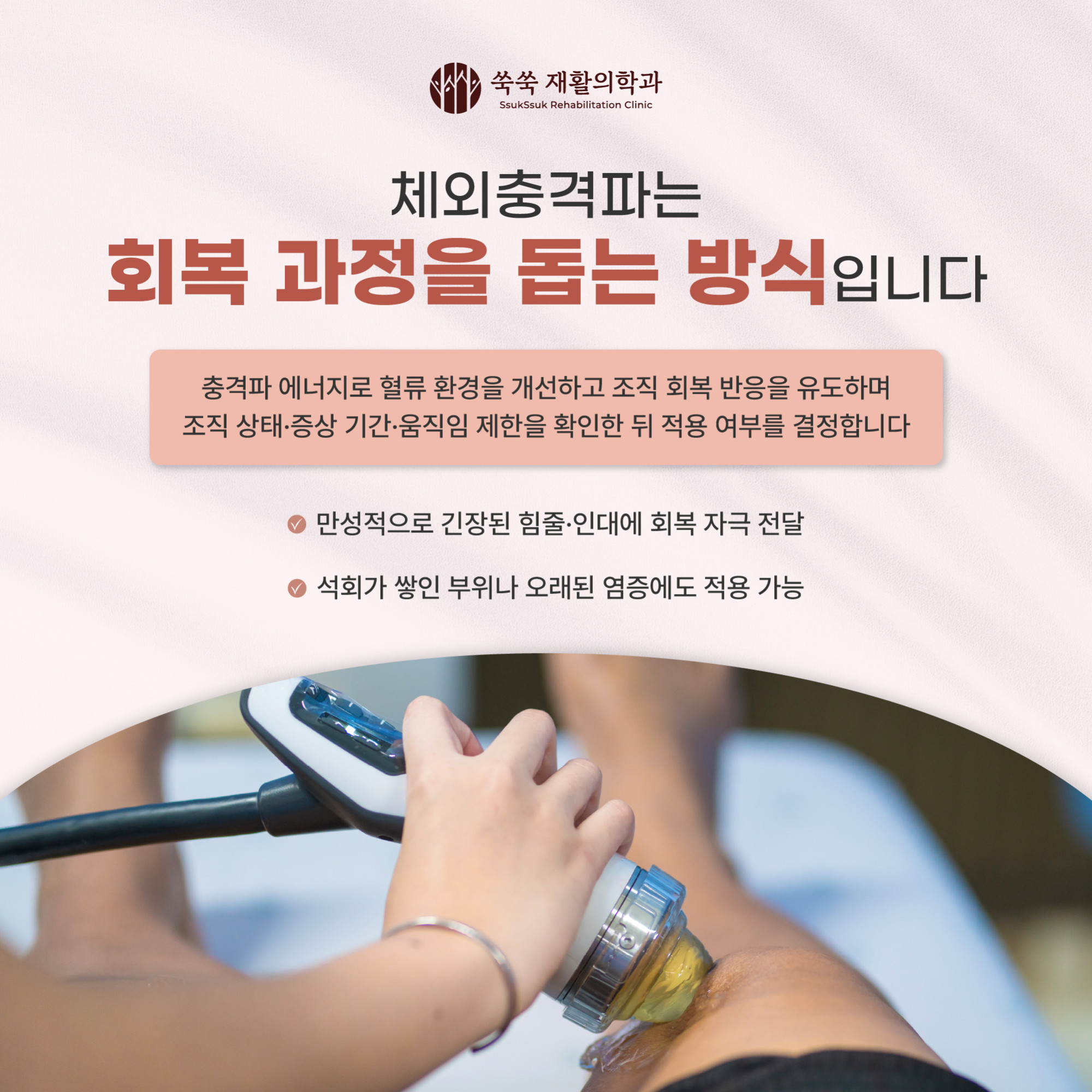
How Does ESWT Work?
It doesn't simply mask the pain. It delivers physical stimulation to tissue that has lost function from repeated strain, improving blood flow and supporting the tissue's healing response. Around tendons and ligaments that are chronically tense or slow to heal, this stimulation can help kick-start recovery. It may also be considered for areas with calcium deposits or long-standing inflammatory changes.
That said, it isn't used the same way for every kind of pain. Whether to use it is decided after checking the location of the pain, the tissue involved, how long the symptoms have lasted, and whether movement is restricted.
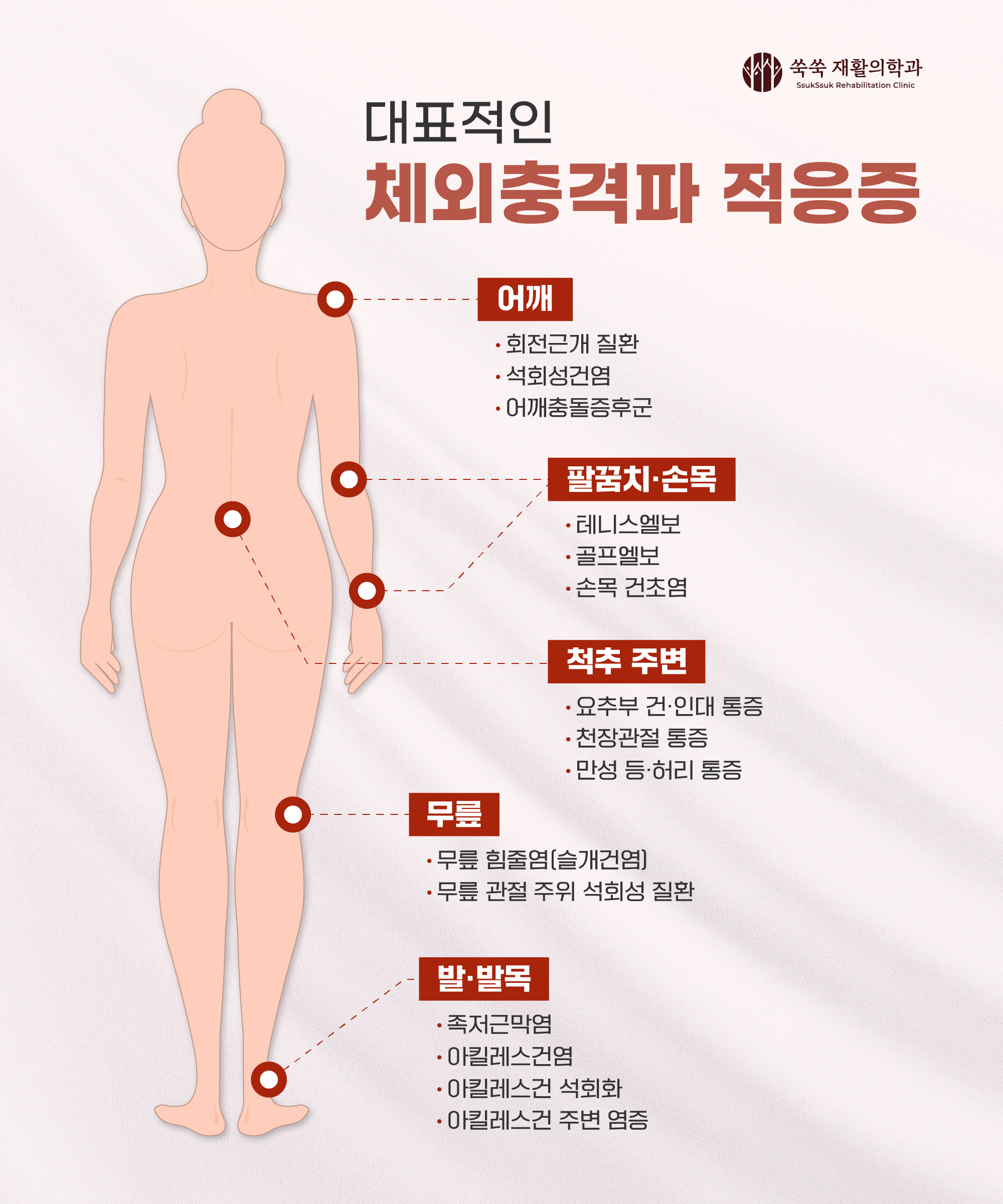
Conditions Where ESWT May Be Considered, by Body Area
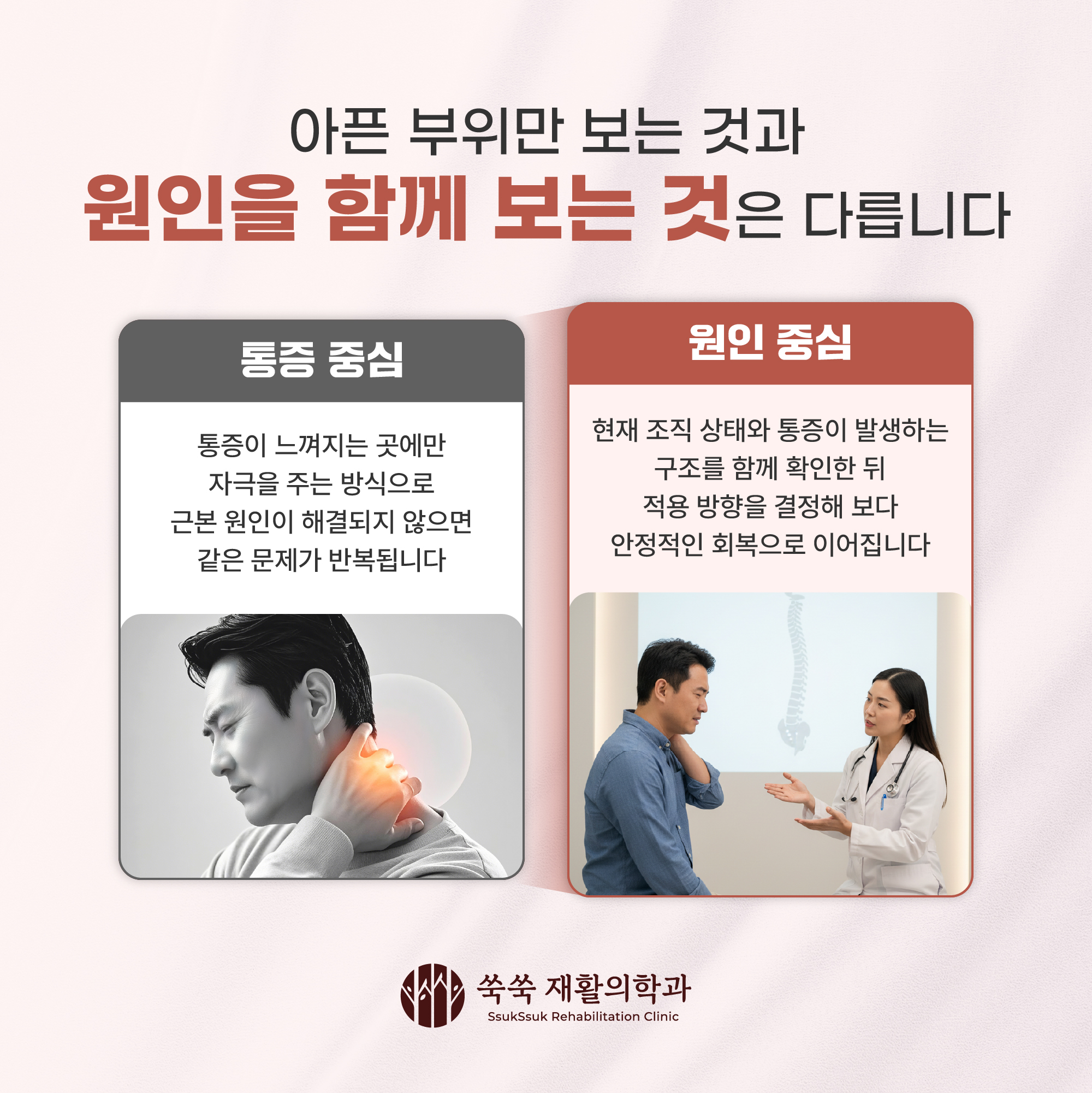
The Same Area Can Have Different Causes
Even with shoulder pain, the approach differs depending on whether it's a rotator cuff tendon problem, a calcific change, or a combination of surrounding muscles and movement patterns. With heel pain, too, what needs to be checked depends on whether the problem is in the plantar fascia itself or is influenced by ankle movement or walking patterns. ESWT doesn't end with stimulating the painful area. Checking the tissue's condition and the underlying cause must come first.
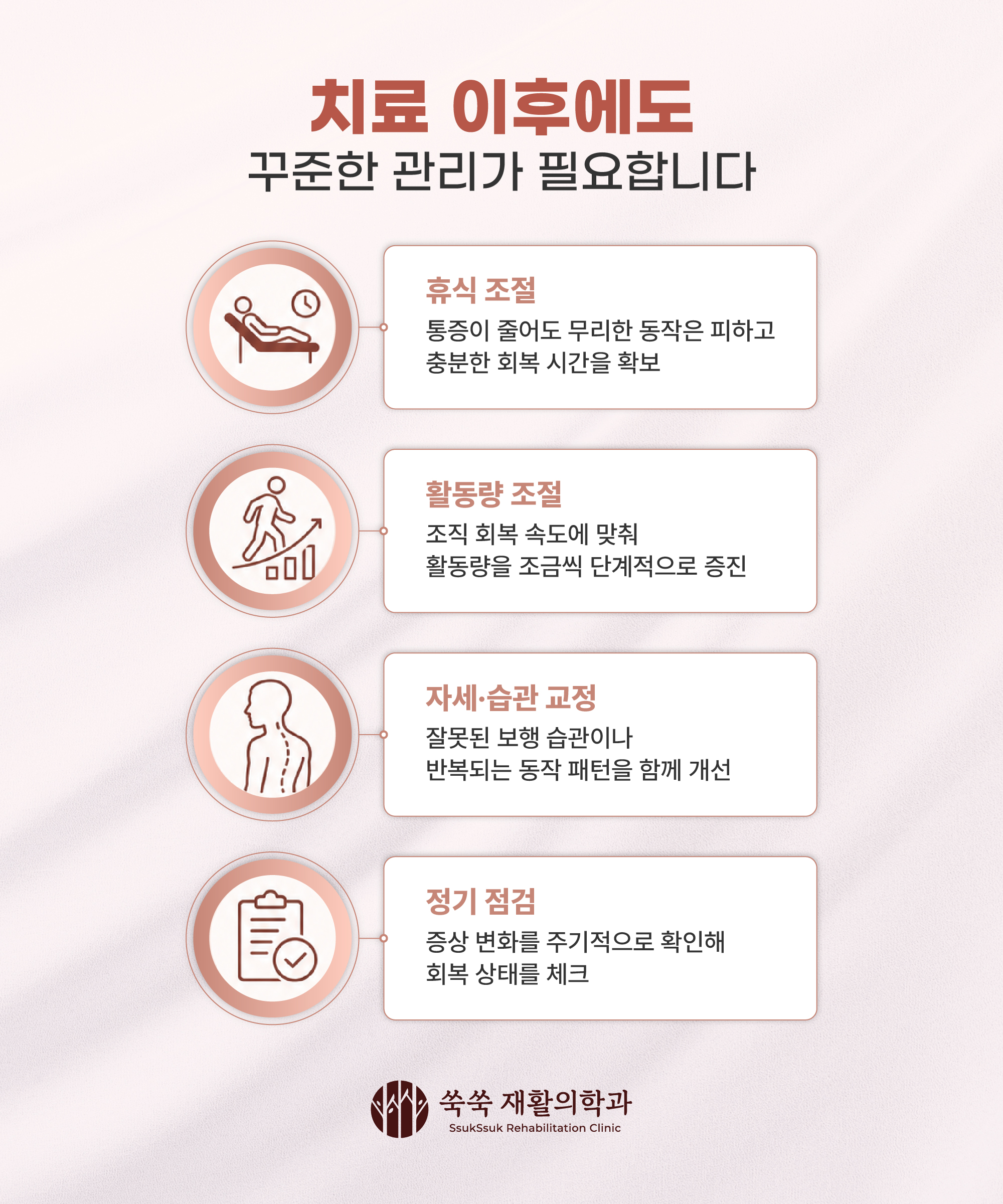
Aftercare Shapes Your Recovery
Discomfort doesn't disappear completely right after ESWT. Tissue takes time to heal, and during that time you need to keep strain from building up in the same area.
- For foot and ankle problems, avoid excessive walking and correct faulty walking habits
- For heavily used areas like the shoulder and elbow, cut back on strenuous movements and maintain proper movement
- Even if the pain eases, don't jump right back to your previous intensity; increase activity gradually
In Closing
The goal of ESWT isn't just to relieve discomfort in the moment, but to help damaged tissue regain normal function so you can return to your daily life. If you have recurring tendon pain, start by getting checked to see whether ESWT is right for you.
Author: Dr. Lee Soo Jin, Director, Ssukssuk Rehabilitation Medicine Clinic (Board-Certified Rehabilitation Medicine Specialist) · Profile Last reviewed: 2026-10-07 This article provides general medical information. Individual diagnosis and treatment decisions are made during an in-person consultation.