

Neck Stiffness Near Seocho Station: Why It Recurs and What to Do
Recurring neck stiffness may stem from posture and nerve-muscle imbalance rather than muscle knots, so the cause should be checked before treatment.
"My neck is stiff even after a night's sleep, and stretching only helps for a moment." We hear this often in the clinic. Dr. Lee Soo Jin, Director of Ssukssuk Rehabilitation Medicine Clinic, explains what she looks for in these consultations, the causes of recurring neck stiffness, the FBT approach, and care after treatment.

Neck Stiffness Is Easy to Write Off as Fatigue
At first, many people assume it's a temporary symptom from being tired or sitting too long, and get by with neck rolls, massage, and stretching. But if the same spot stays stiff and your shoulders start feeling heavy too, muscle fatigue alone doesn't explain it.
Your neck supports the weight of your head and moves all day long, so small postural changes that build up over time can keep the surrounding muscles and nerves in a state of tension. Recurring neck stiffness is a signal to check on your body's current condition.
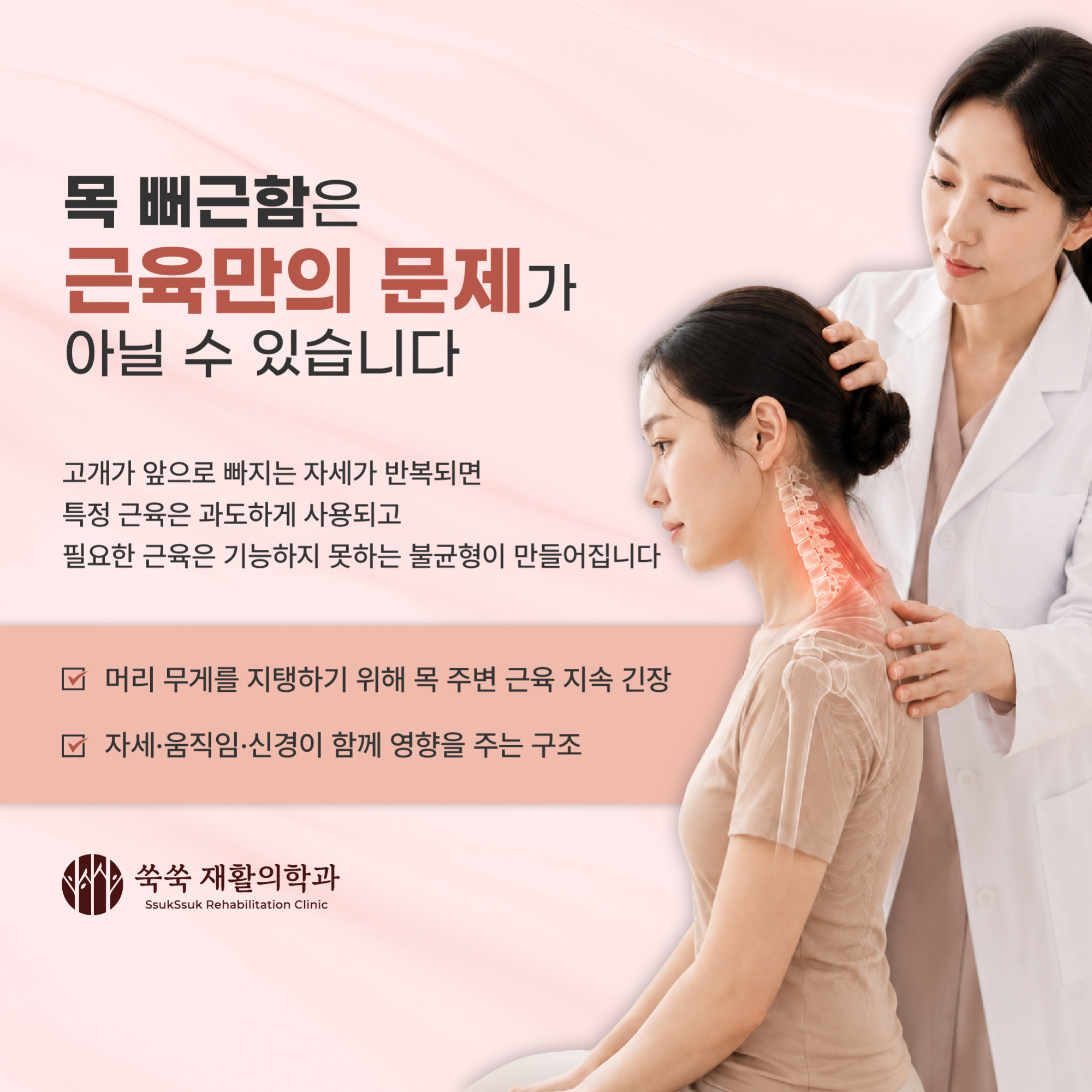
Tight Muscles Aren't the Only Cause
Sometimes muscle tension is the cause, but quite often symptoms arise from a combination of posture, movement, and how the nerves and muscles work together. For office workers who spend long hours at a computer or people who use their smartphones for long periods, a repeated forward head posture means the neck muscles never get a break from holding up the weight of the head. This creates an imbalance where some muscles are overworked while others can't do their job.
That's why, with neck stiffness, we don't stop at deciding the muscles are tight. The cause becomes clear only when we also look at how your body moves.
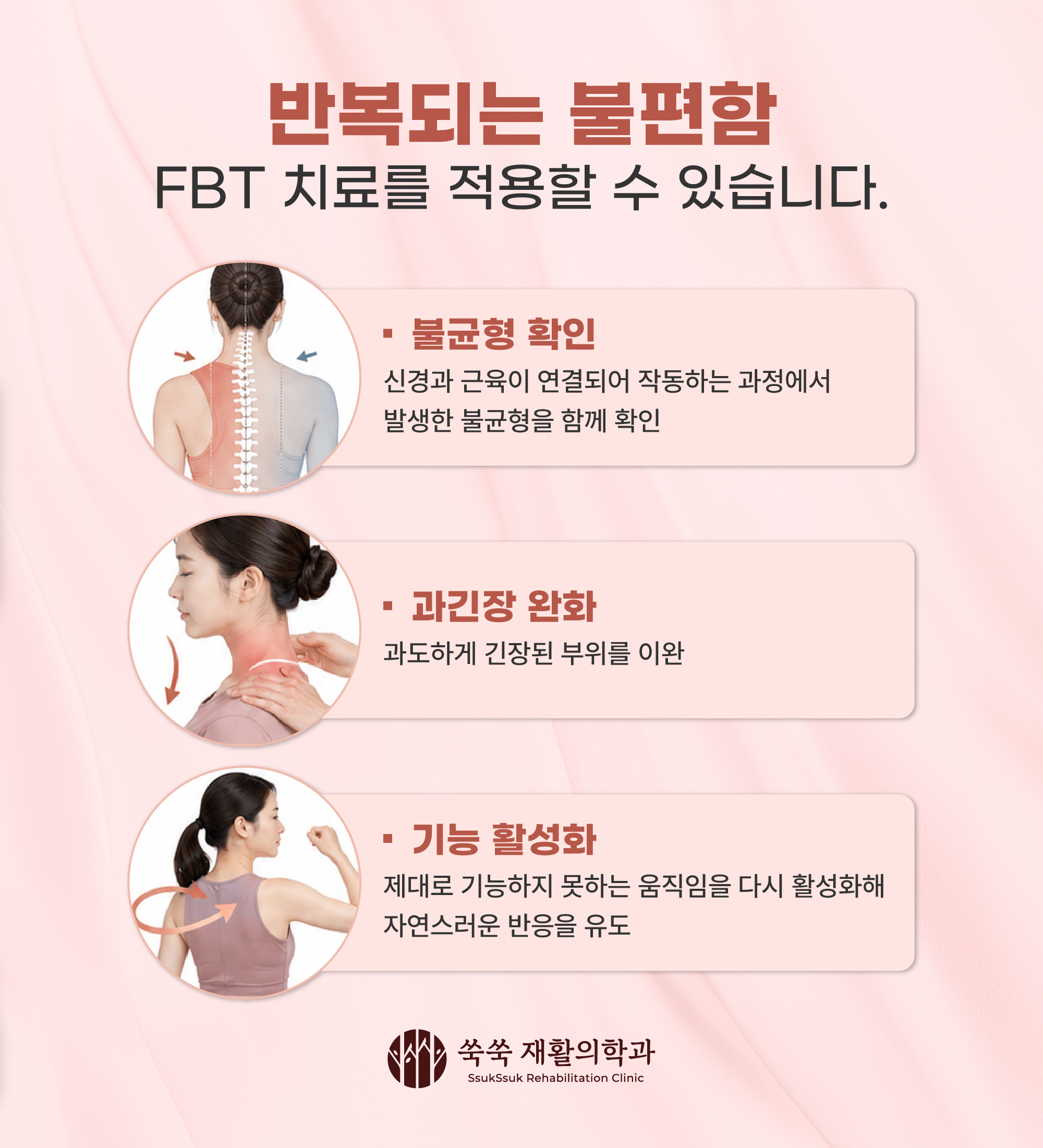
Sensory Signals and FBT (Functional Balance Treatment)
The body doesn't move by muscles alone. Information from sensory receptors in the skin, joints, and muscles travels through the nerves to regulate balance and movement. When repeated postures and faulty movements continue, this signaling doesn't flow smoothly, causing certain areas to become overly tense or movement to become restricted.
FBT (Functional Balance Treatment) doesn't focus only on the painful area. It's an approach that also checks for imbalances in how the nerves and muscles work together. It relaxes overly tense areas and reactivates diminished movement, helping the body respond naturally.
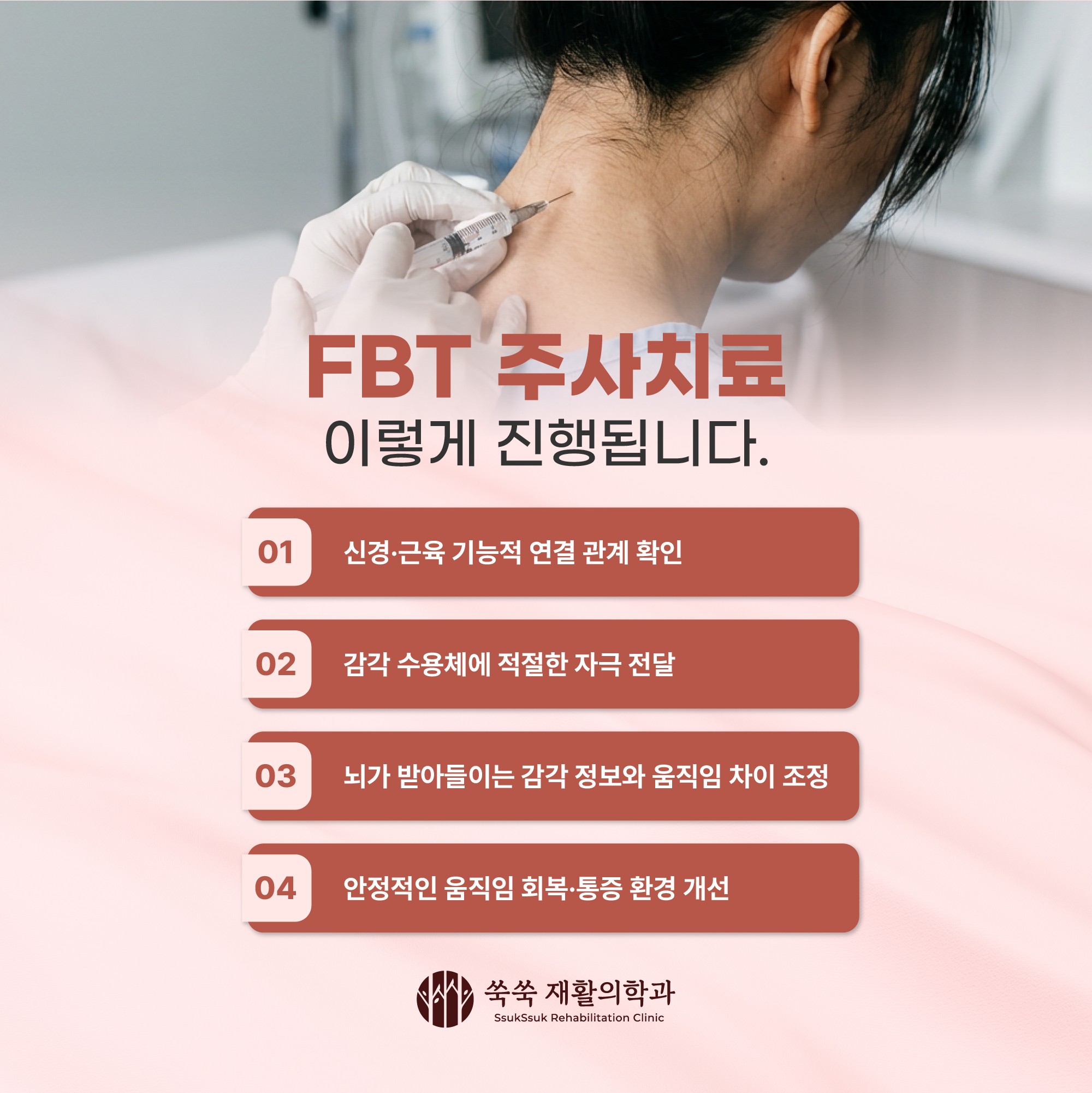
When Are FBT Injections Considered?
A functional approach is considered when muscle care alone isn't making enough of a difference and neck stiffness keeps coming back. When the body's alignment is off or certain muscles are overly tense, a gap can develop between the sensory information the brain receives and the actual movement. FBT injections deliver an appropriate stimulus to the sensory receptors to help the body produce stable movement.
Injection therapy is also used to control pain and improve tissue condition, and keeping the improvement afterward requires ongoing attention to movement and lifestyle habits.
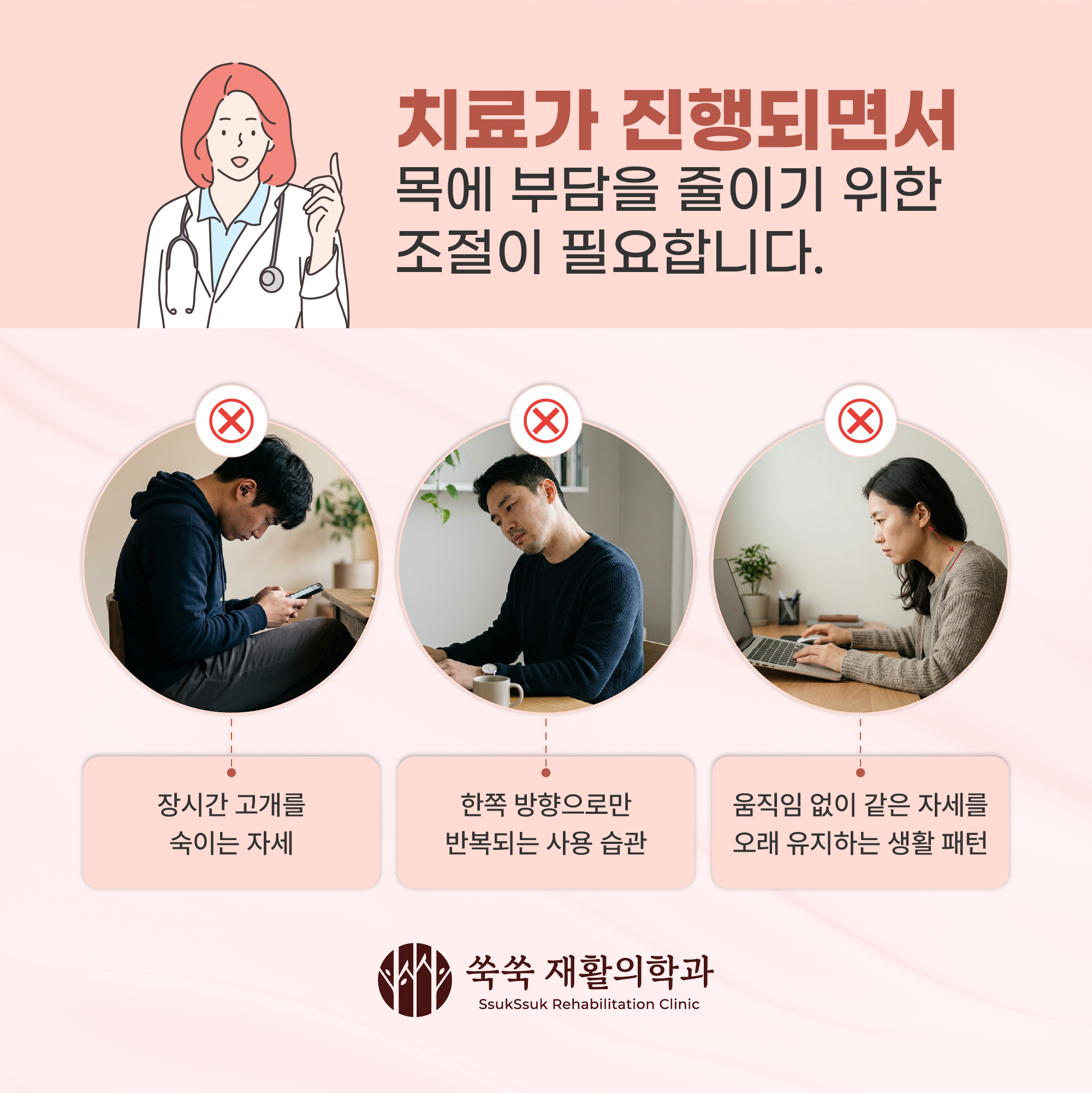
Summary: Find the Cause Rather Than Just Loosening It Up
- Keeping your head down for long periods, favoring one side, and holding the same position without moving all put strain back on your neck.
- Recurring neck stiffness may be less a sign that you're tired and more a signal that your body is being used differently than before.
- Don't stop at temporary relief. Find out what's changing around your neck so you can choose the right way to manage it.
Author: Dr. Lee Soo Jin, Director, Ssukssuk Rehabilitation Medicine Clinic (Board-Certified Rehabilitation Medicine Specialist) · Profile Last reviewed: 2026-10-07 This article provides general medical information. Individual diagnosis and treatment decisions are made during an in-person consultation.