

Shoulder Tightness Near Naebang Station: When Posture Is the Cause
Shoulder tightness that returns after you loosen it often starts with posture, like forward head or rounded shoulders, so evaluating the cause comes first.
When shoulder tightness keeps coming back after you loosen it up, the answer often lies in your posture rather than your muscles. For those whose shoulders tighten again within days of a massage, Dr. Lee Soo Jin, Director of Ssukssuk Rehabilitation Medicine Clinic, explains the postures behind shoulder tightness, how it's evaluated, and the difference between prolotherapy and collagen injections.

Tightness That Eases With Rest vs. Tightness That Keeps Coming Back
"My shoulders always feel heavy." "It's fine while I'm getting a massage, but a few days later it's tight again." We hear this often when patients come in for shoulder tightness. Most people blame sitting too long, using the computer a lot, or sleeping in an awkward position, and try to work it out with stretching and massage.
If it's temporary muscle tension, rest and self-care can help. But if the same spot keeps tightening and your neck and upper back start to bother you too, fatigue alone is hard to blame. That's because the muscles around the shoulder are strongly influenced by your everyday posture and movement habits.
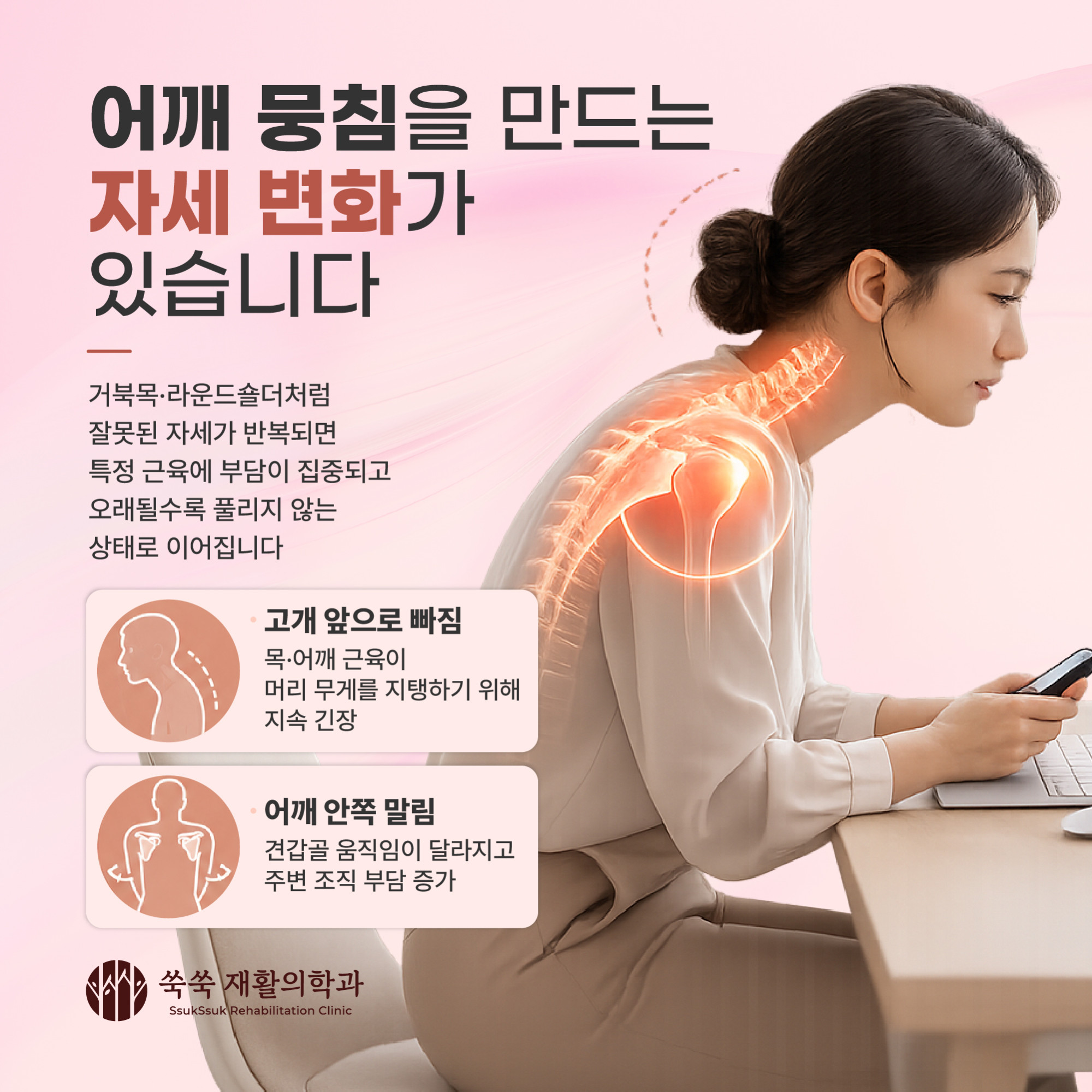
Forward Head and Rounded Shoulders Keep Your Shoulders Tense
The muscles around the shoulder work constantly to stabilize the movement of your head and arms. When you sit for long periods or repeat poor postures, strain concentrates on certain muscles.
Forward head posture and rounded shoulders are the most common examples. When your head juts forward, the neck and shoulder muscles stay tense to support its weight. When your shoulders roll inward, shoulder blade movement changes, and the tissues around the shoulder take on more strain. If that initial stiffness lingers, the muscles start to tense up easily and don't relax well. In the end, shoulder tightness is closely tied to the way you use your body.
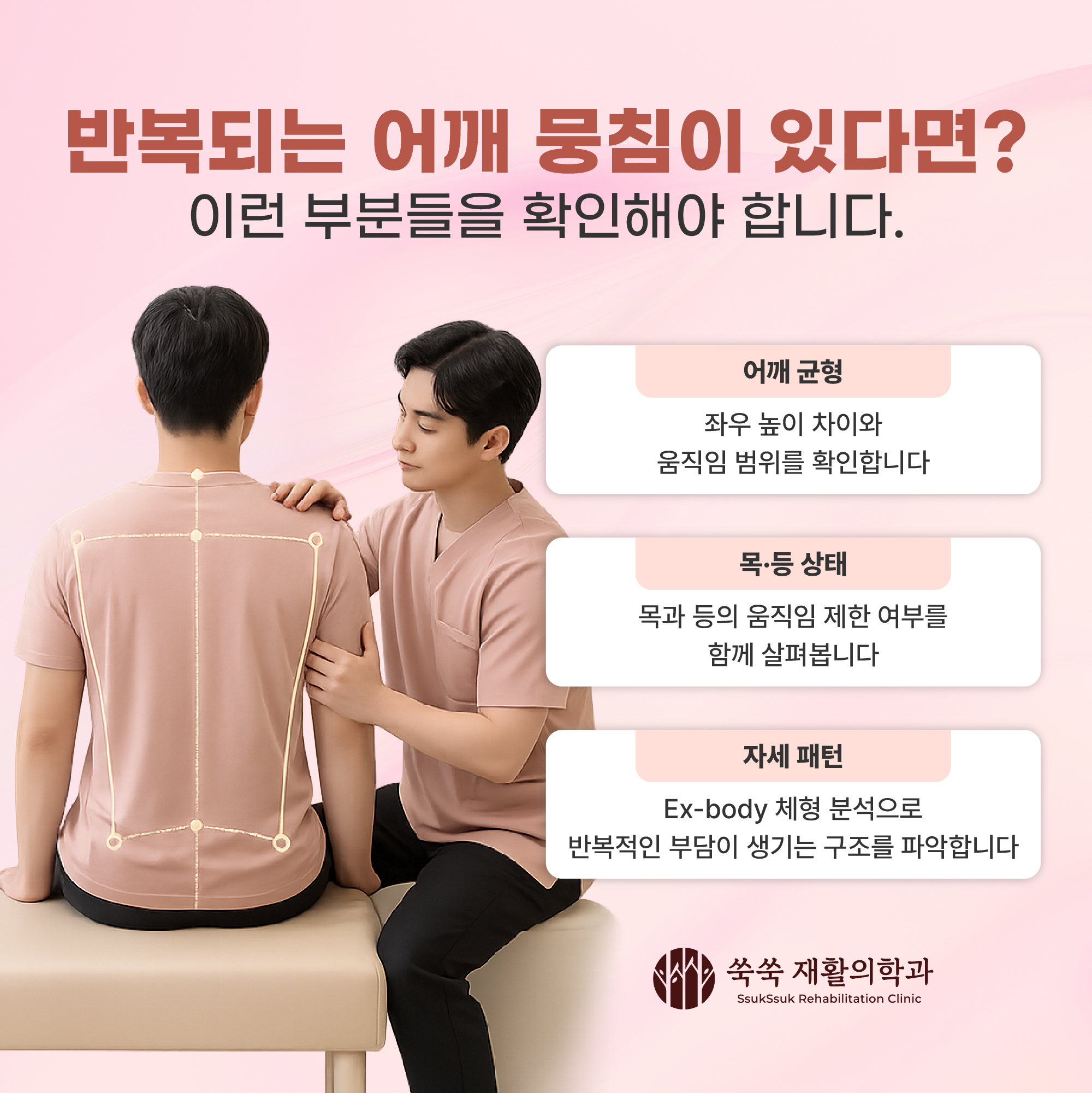
An Evaluation to Find Why It Keeps Coming Back
Even with the same shoulder tightness, postural imbalance is the main cause for some people, while for others, restricted movement around the joint or repetitive use has built up strain in specific tissues. That's why, during an exam, we look at the painful area along with:
- Differences in shoulder height
- Differences in movement between the left and right sides
- Restricted neck and upper back movement
- Postures you usually hold for long periods
When needed, we use Exbody posture assessment to objectively check your posture and body balance and see where strain keeps recurring. The key isn't just finding the tight spot, but understanding why strain keeps building up there.
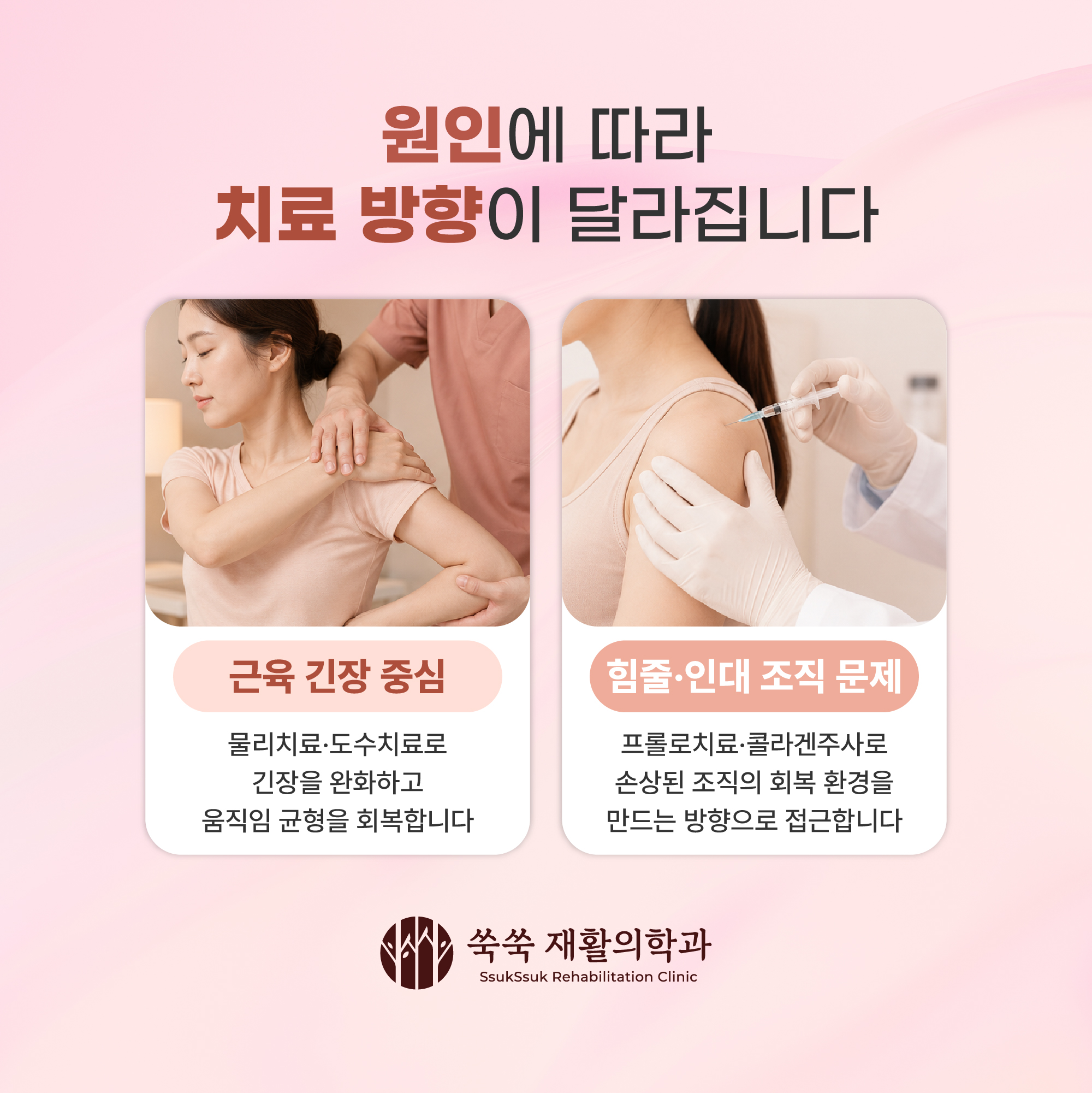
Prolotherapy vs. Collagen Injections: What's the Difference?
When repeated postures and movements build up strain in the tendons, ligaments, and soft tissues around the shoulder, the discomfort tends to linger. In these cases, injection therapy may be considered depending on the condition of the tissue.
The approach differs depending on whether the cause is muscle tension or a problem with the tendons and surrounding tissues, so we check your current condition before deciding on treatment.
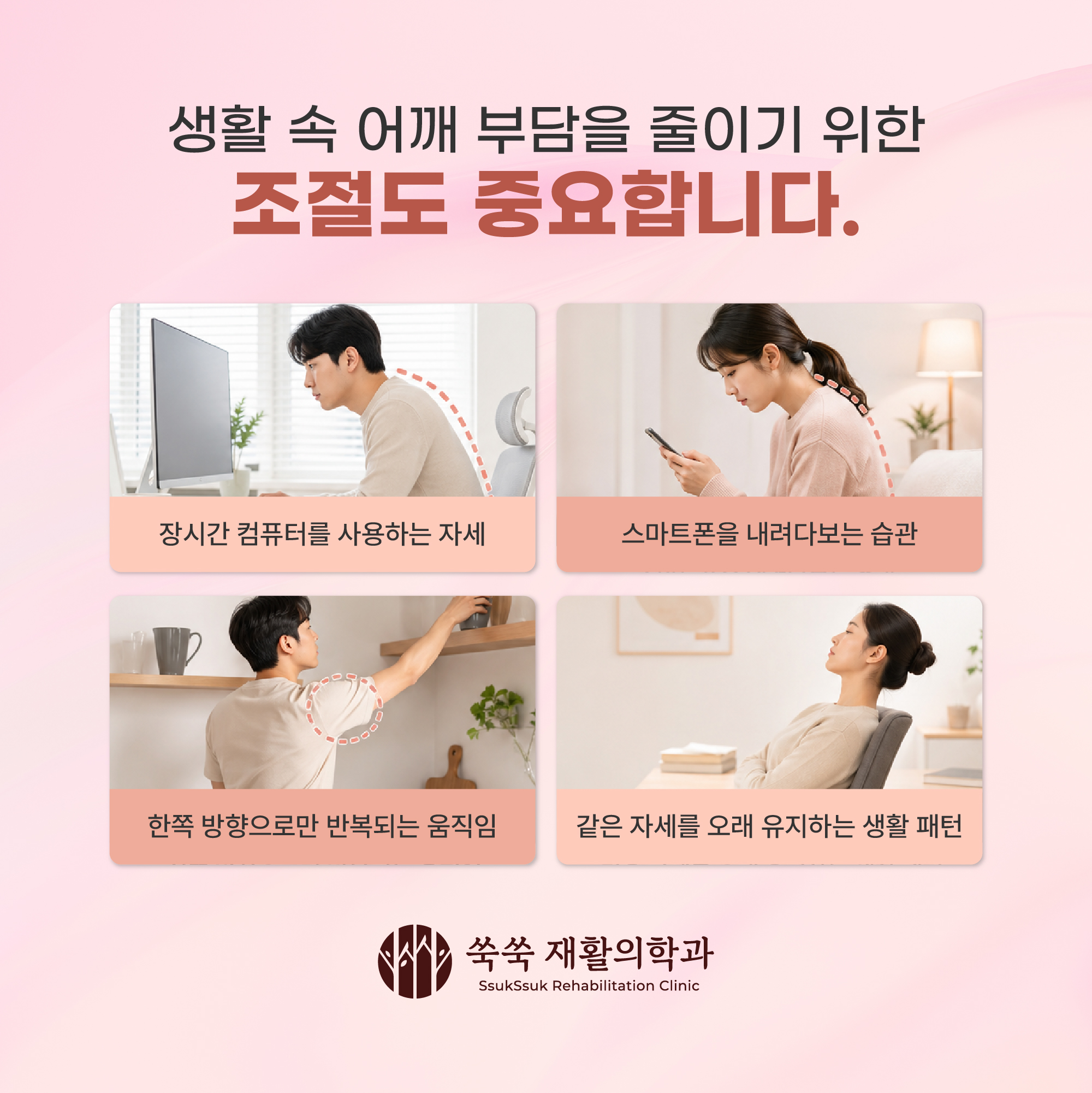
Final Thoughts
- Even if treatment eases the discomfort, shoulder tightness can return if the postures and movements that strain your shoulders stay the same.
- Take a look at your habits too, such as long hours at the computer, looking down at your smartphone, and favoring one side.
- Instead of brushing off recurring stiffness as fatigue, checking for changes in your body is the starting point of good care.
Author: Dr. Lee Soo Jin, Director, Ssukssuk Rehabilitation Medicine Clinic (Board-Certified Rehabilitation Medicine Specialist) · Profile Last reviewed: 2026-10-07 This article provides general medical information. Individual diagnosis and treatment decisions are made during an in-person consultation.