
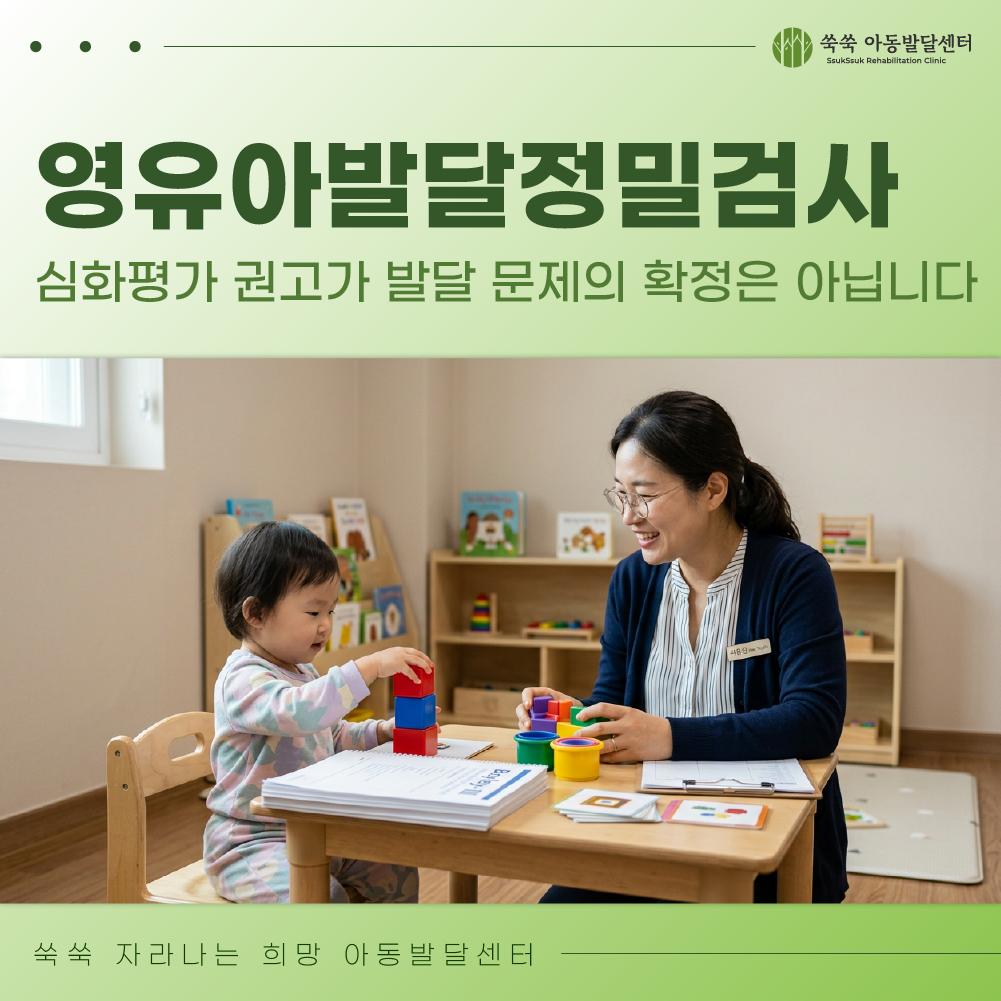
Further Evaluation Recommended? In-Depth Testing in Seocho-dong
A "further evaluation recommended" result isn't a diagnosis. It's a first step toward understanding your child's strengths and where they need support.
Seeing "further evaluation recommended" on your child's infant health checkup results can be worrying, but it doesn't mean a developmental problem has been confirmed. Here, in question order, is what parents preparing for in-depth developmental testing at Ssukssuk Child Development Center in Seocho-dong usually want to know.
What does "further evaluation recommended" mean?
It's a note, based on findings from the National Health Insurance Service infant health checkup, suggesting a closer look at a specific area of development. It's closer to saying, "Let's get an accurate assessment of where your child is right now."
Think of it as a preventive signal that "a closer look would be helpful," rather than a finding that "there's a problem." Children of the same age vary widely in development, and a short screening can't capture everything, so some children need a follow-up check. Rather than feeling discouraged just because you received the recommendation, it's better to see it as a chance to take an objective look at where your child is today.
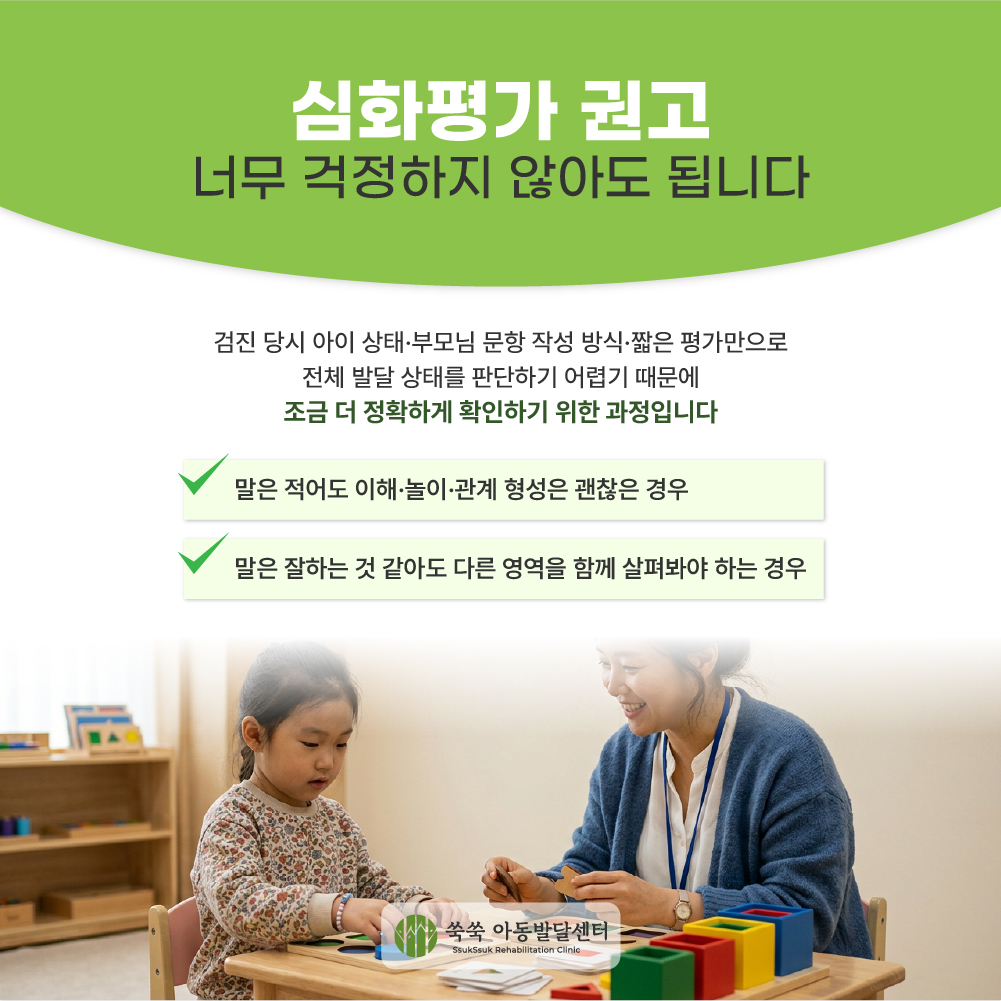
Why one screening can't tell the whole story
The infant health checkup is an important check of growth and development. Still, it's hard for a single assessment to fully capture every child's developmental path.
- On the day of the checkup, children may be tense in an unfamiliar place and act differently than usual.
- The questions parents fill out rely on their observations over time, so answers can differ from how the child actually behaves day to day.
- Young children change a lot in a short time. They may suddenly pick up new words or behaviors, or one area may develop first while others catch up later.
Some children say fewer words than their peers but do well in understanding speech, play, and relating to people. Others seem to talk well but need a look at other areas of development. That's why it's hard to judge overall development from one behavior, and a further evaluation recommendation is the step for checking this more precisely.

What does in-depth developmental testing look at?
In-depth developmental testing for infants and young children isn't just about sorting whether a child is ahead of or behind peers. It looks comprehensively at which areas are developing well and which need more support.
To parents, "talks late," "has trouble focusing," or "seems to act differently from other kids" may feel like a single concern. But a real developmental assessment has to look at several areas together to see the current picture clearly. More important than the wording on a report is learning what your child needs right now.
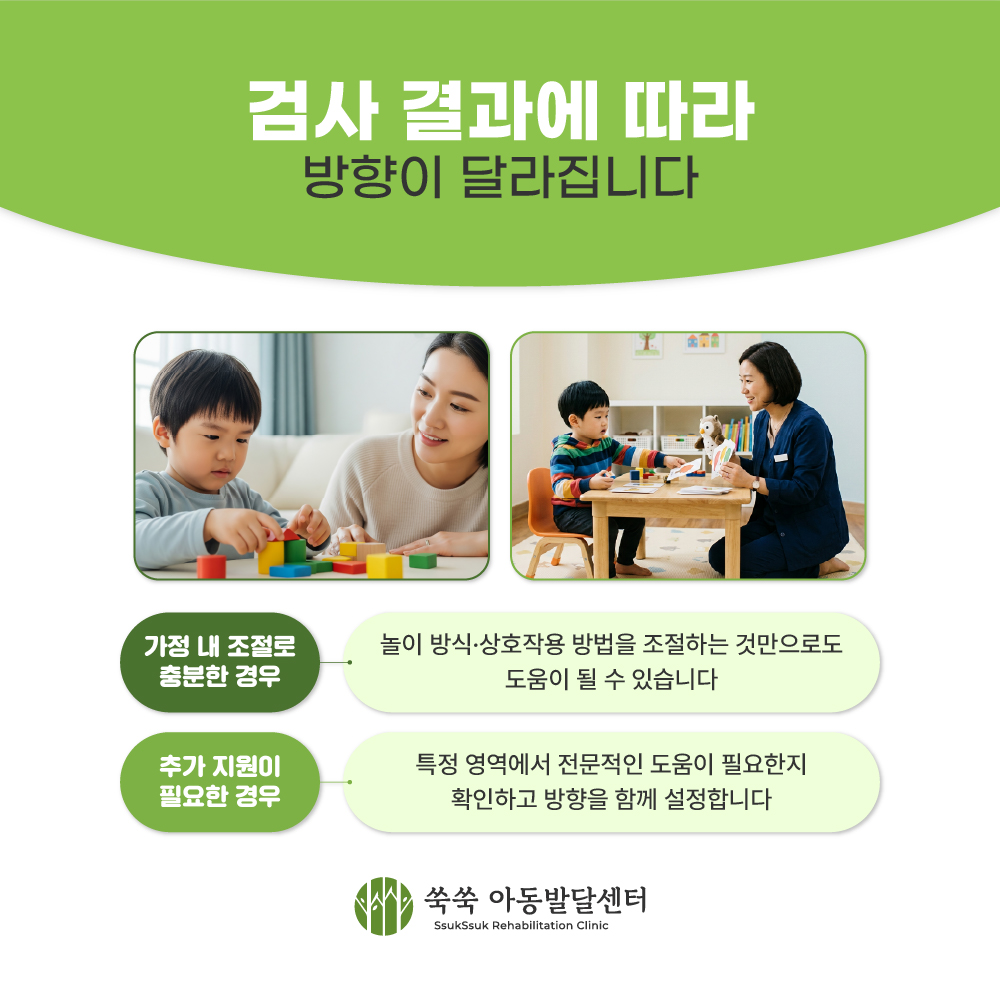
Test results don't sort children into "problem" or "no problem"
Many parents hesitate to pursue further evaluation because the results feel daunting. But in-depth developmental testing results don't simply divide children into "has a problem" or "doesn't." They're a way to understand current developmental levels and find the right direction for support.
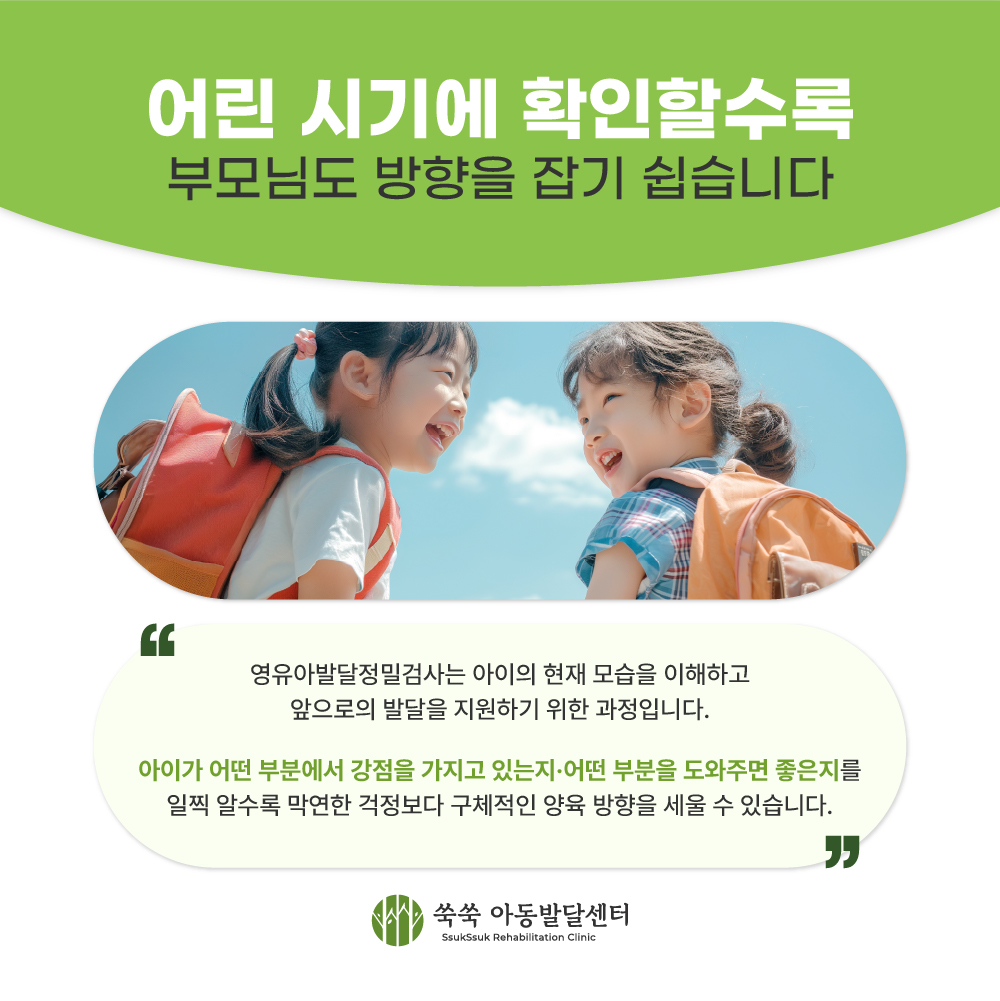
After testing, you can see which areas your child is doing well in and which need more practice. Sometimes adjusting how you play and interact at home is enough to help; other times, additional support in a specific area may be recommended. Checking early lets you make a concrete plan tailored to your child instead of carrying vague worry.
Wrapping up
- A further evaluation recommendation does not diagnose a condition or declare that your child has a problem.
- In-depth developmental testing is a process for looking closely at your child's development and, if needed, connecting them with the right support.
- Rather than worrying about results in advance, what matters is a professional assessment of your child's strengths and the areas where they need help.
If you're looking for a child development center in Seocho-dong, we hope you'll see a further evaluation recommendation as a starting point for understanding your child and shaping your approach to parenting.
Last reviewed: 2026-10-07 This article provides general information only. Your child's developmental status and treatment plan are determined through consultation and assessment.