

Physical Therapy in Seocho: When Pain and Movement Change
Changes in movement and daily life, more than how much it hurts, tell you when you need physical therapy, and starting early makes recovery easier.
If something is just a little uncomfortable, should you put up with it, or should you get physical therapy? When their body hurts, many people wait it out, thinking, "A few days of rest and it'll go away." Dr. Lee Soo Jin, Director of Ssukssuk Rehabilitation Medicine Clinic, explains how she decides when physical therapy is needed, following the questions patients ask most often.
How Is Pain That Goes Away With Rest Different From Pain That Doesn't?
Discomfort from temporary fatigue or overuse can sometimes improve with enough rest. But if the same area keeps bothering you over time, or pain returns with certain movements, rest alone may not be enough for recovery.
Discomfort around the neck, lower back, shoulders, and joints in particular affects not just pain but also movement. If it started as mild stiffness, you've gradually started moving less, and everyday movements have become uncomfortable, your body's function has begun to decline, and you need care suited to your current condition.
When Is Physical Therapy Needed?
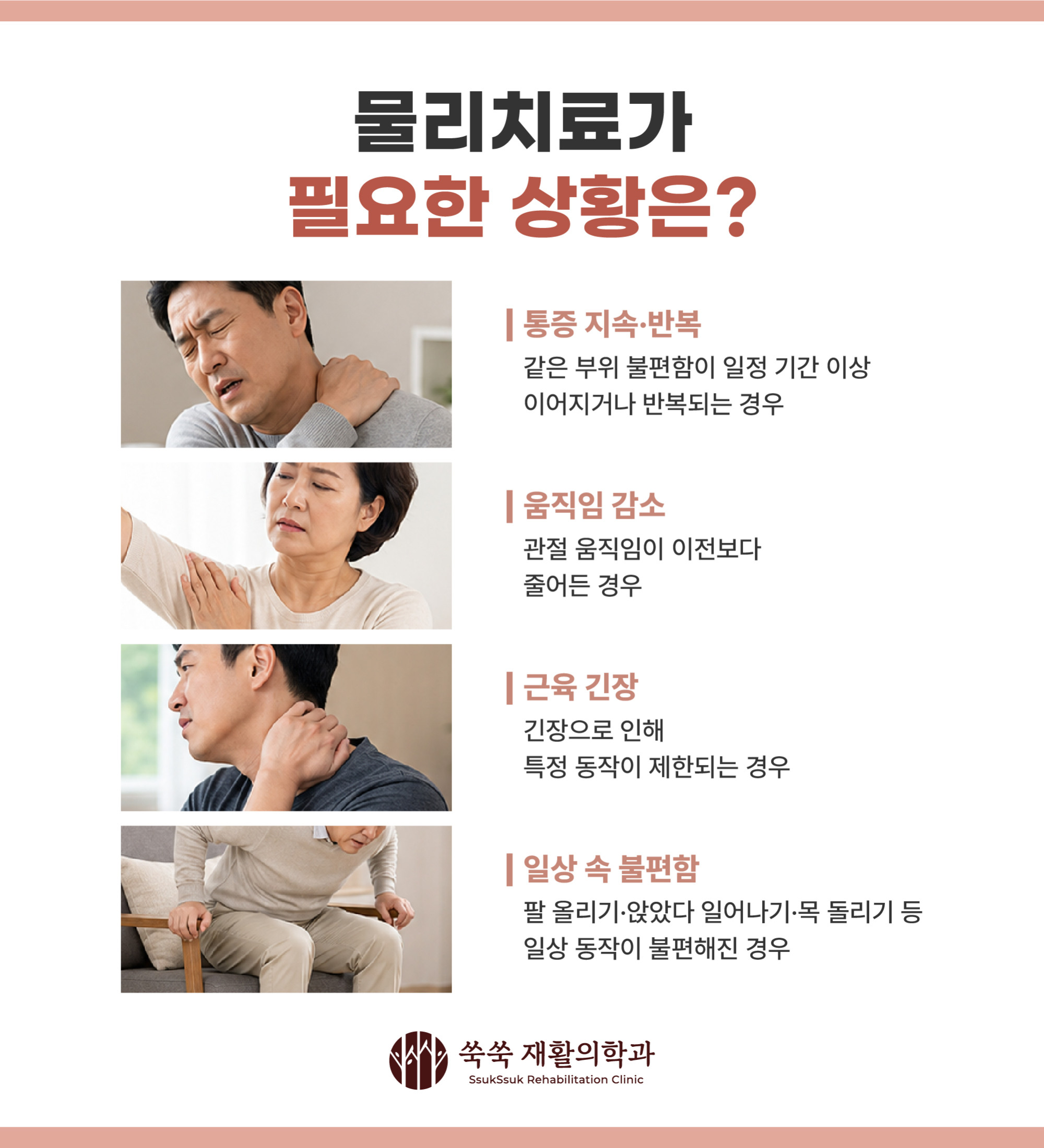
Physical therapy is considered not only when you're in pain, but also when function has declined and you need to recover.
- Pain has lasted beyond a certain period
- Discomfort keeps returning to the same area
- Joint movement is more limited than before
- Muscle tension is restricting movement
- Everyday movements have become uncomfortable
Even if the pain isn't severe, if it's uncomfortable to raise your arm, your lower back feels stiff when you stand up from sitting, or you can't turn your neck as far, these are signs your body is changing. Rather than ignoring them, get your condition checked.
Can't I Just Judge by How Much It Hurts?
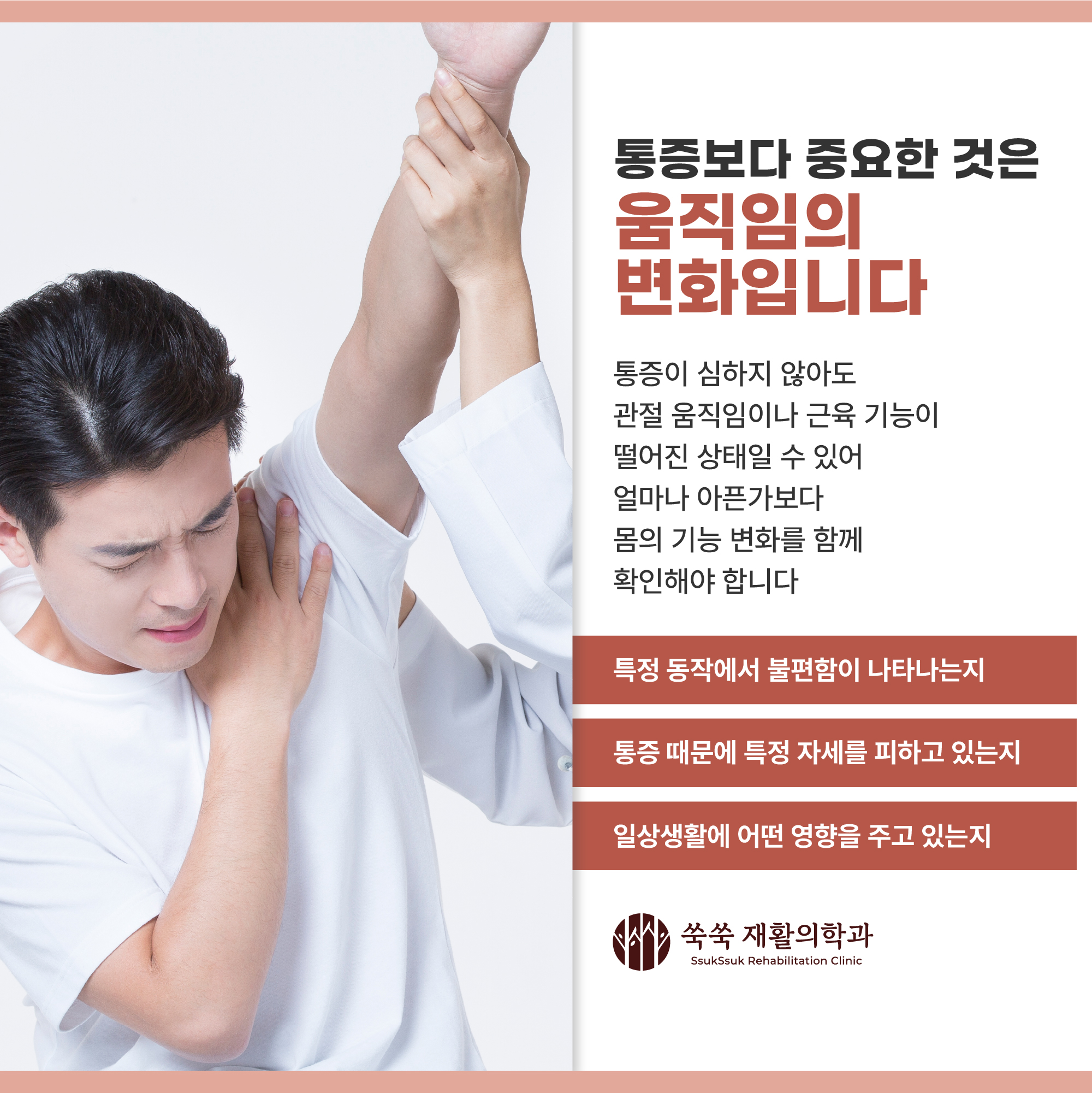
Even when the same area hurts, people's conditions differ. Some have pain but move fine, while others have only mild pain but reduced joint movement or muscle function. That's why, along with "How much does it hurt?", we look at:
- Which movements are uncomfortable
- Whether your range of motion has decreased
- Whether you avoid certain postures because of pain
- How it affects your daily life
When something is uncomfortable, the body protects itself by moving less. But if this goes on too long, the unused areas lose function, and moving again becomes a bigger strain.
How Does Physical Therapy Help the Body?
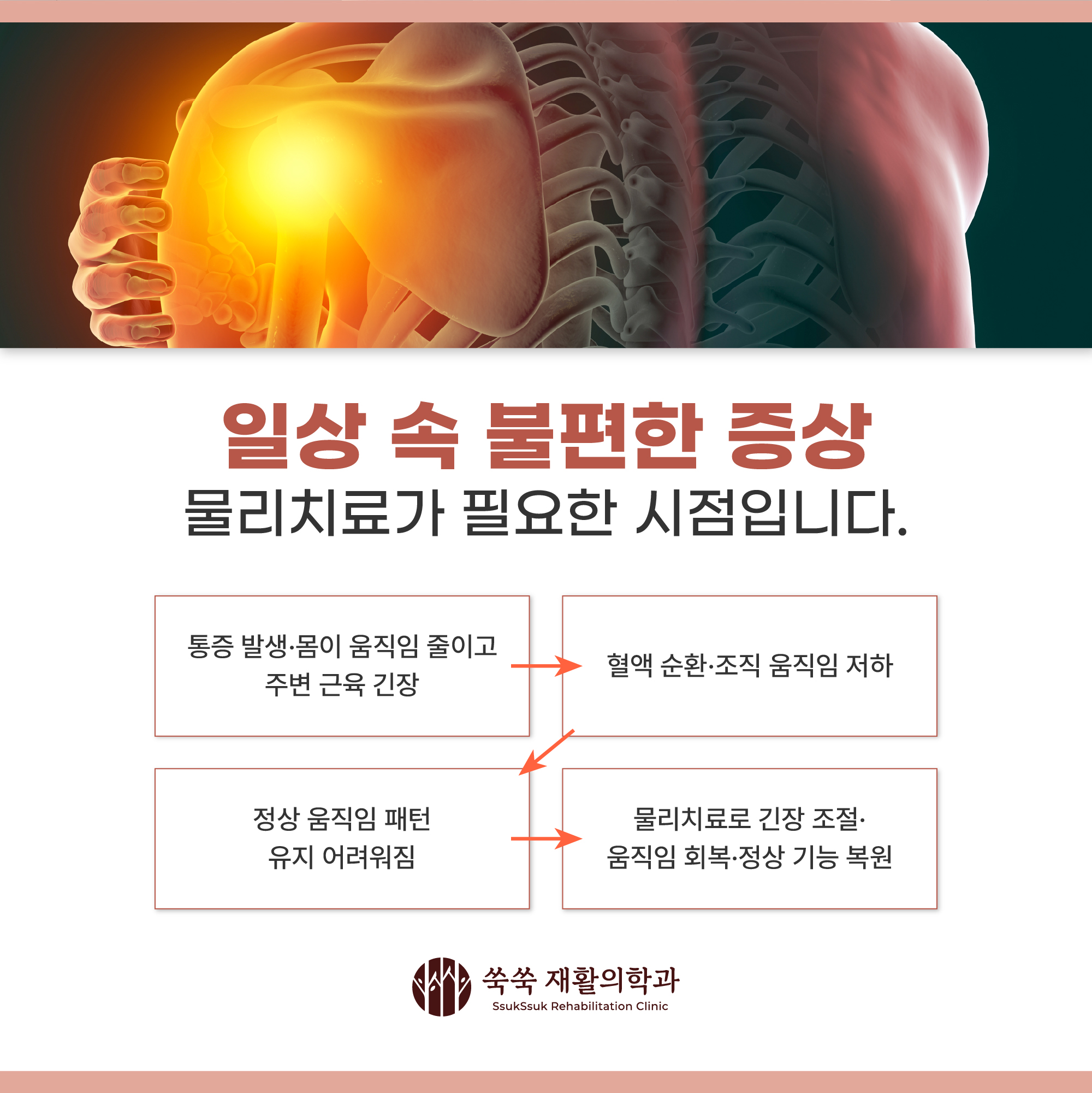
When pain develops, the body reduces movement and tightens the surrounding muscles to protect the area. If this continues, blood circulation and tissue mobility decline, making it harder to maintain normal movement patterns.
Physical therapy helps regulate tense tissues and regain lost movement, supporting the body's return to normal function. If movement restrictions last a long time, strain can concentrate in specific areas and lead to new problems, so it's best to start the recovery process early.

In Summary
Sometimes how much your daily life has changed matters more than the pain itself. If movements that used to come naturally have become difficult, or it's hard to hold one position for long, it's a sign your function is changing. Physical therapy helps you regain normal movement before these changes become fixed, so if discomfort keeps coming back, check in on your body now rather than waiting.
Author: Dr. Lee Soo Jin, Director, Ssukssuk Rehabilitation Medicine Clinic (Board-Certified Rehabilitation Medicine Specialist) · Profile Last reviewed: 2026-10-07 This article provides general medical information. Individual diagnosis and treatment decisions are made during an in-person consultation.