

Cognitive Therapy near Seocho Station: Cognitive Skills Before Learning
Cognitive therapy isn't about more studying; it supports the thinking processes a child uses to take in and use information.
Many parents see cognitive therapy as a way to catch up on schoolwork, but cognition isn't only about learning letters or solving problems. Here's what our Development Center near Seocho Station checks first before cognitive therapy, and how cognitive difficulties can show up.

Cognitive skills are used in both learning and daily life
Cognitive skills are the abilities involved in taking in information from the world, understanding it, remembering it, and thinking it through to solve problems. They're at work when a child learns a new way to play, understands a parent's explanation, or completes a task that has steps.
So the goal of cognitive therapy isn't to increase how much a child studies. It supports the basic thinking processes a child uses to take in and use information. Children with developmental difficulties may process and use information differently even from the same experience, so the first step is to find out where they're struggling now.
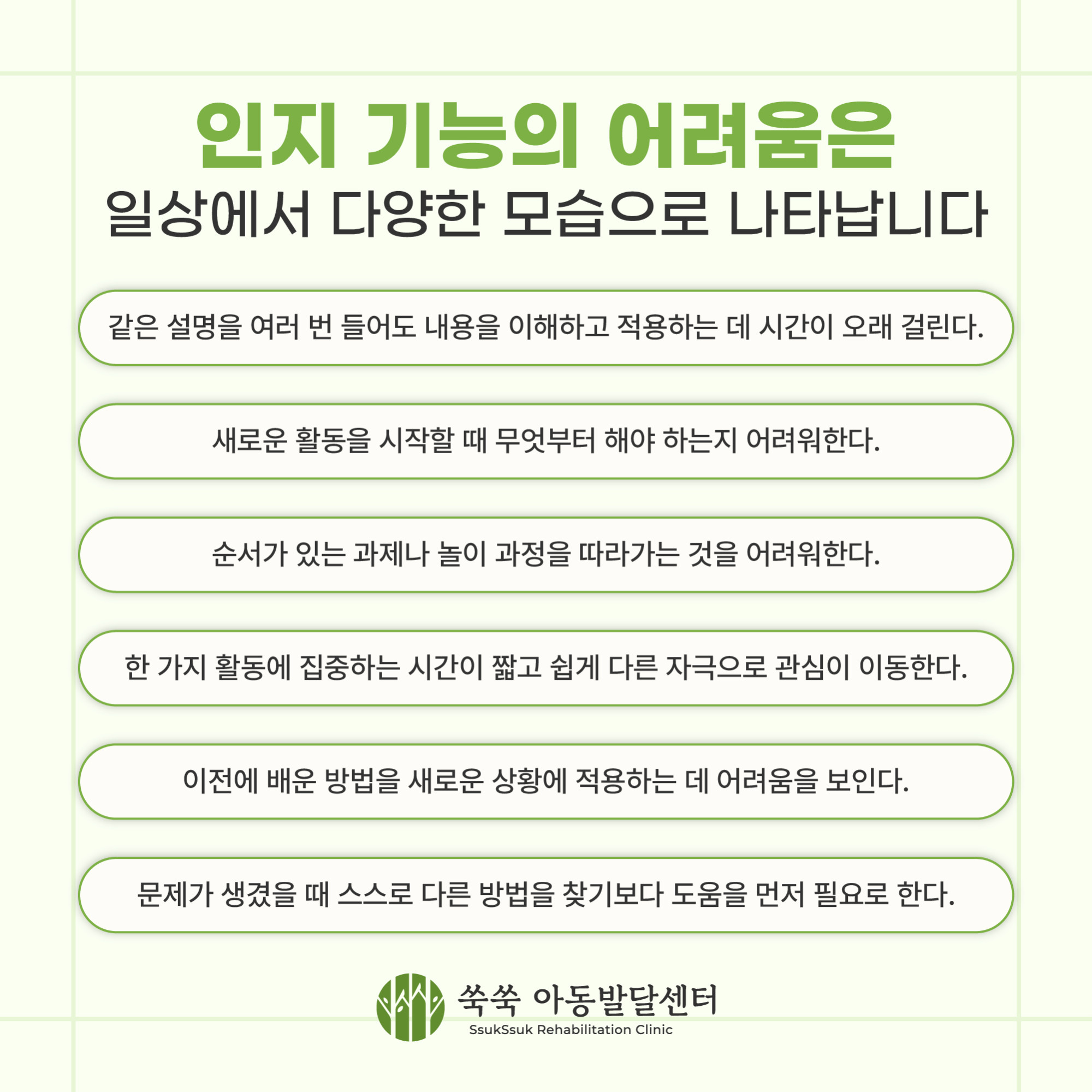
What might be behind "not doing well in school"?
Cognitive difficulties don't only show up as "not doing well in school." They can appear in many everyday moments when a child needs to understand and use information, like these:
- Takes a long time to understand and apply something, even after hearing the same explanation several times
- Feels lost about where to start with a new activity
- Has trouble following tasks or games that have steps
- Stays with an activity only briefly and is easily drawn to other things
- Has trouble applying a method learned before to a new situation
- Asks for help first instead of trying another way when a problem comes up
These aren't signs of a lack of willpower or effort. They can appear when there's difficulty in taking in and processing information, so rather than teaching the same thing over and over, it's important to find which part of the process is hard and approach it accordingly.
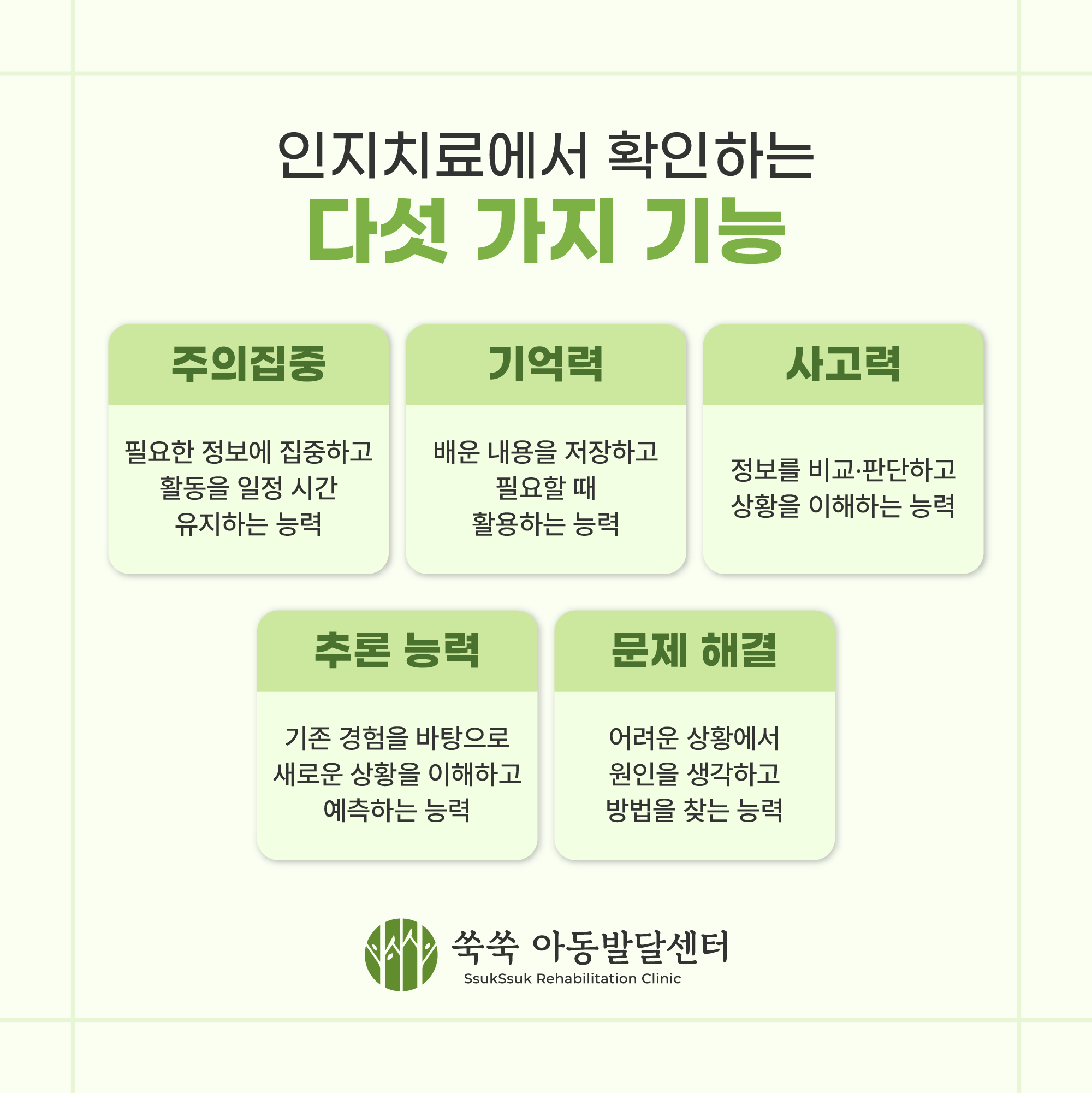
Five cognitive skills cognitive therapy looks at
These cognitive skills don't work in isolation. Even a single new task requires listening to and understanding an explanation, focusing, remembering, and finding a solution on one's own, all at once. That's why cognitive therapy aims to support the whole process of how a child learns and thinks, rather than getting through one problem.
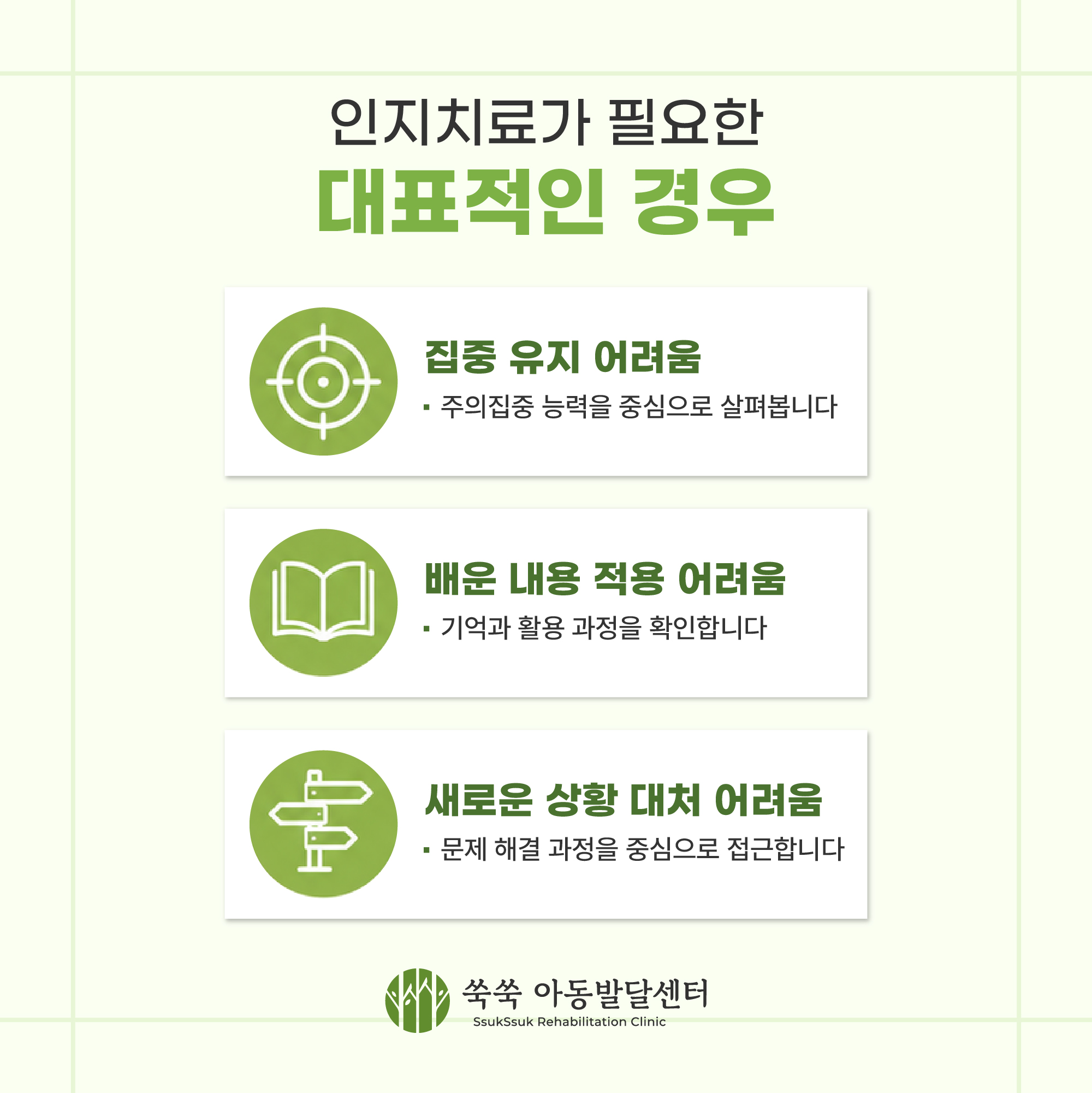
What we check instead of assigning more problems
When a child has cognitive difficulties, repeating the same experience may still leave them stuck when it comes to understanding and applying it on their own. What's needed then isn't more problems, but finding the point of difficulty.
- A child who has trouble staying focused → attention
- A child who has trouble using what they've learned → memory and application
- A child who finds new situations hard → problem solving
Based on the current level identified this way, cognitive therapy builds the cognitive skills a child needs and helps them use those skills in learning and everyday life. For children with ADHD, developmental delays, or difficulties with learning, checking cognitive skills and setting the direction of support can be especially important.

In summary
The goal of cognitive therapy isn't only getting more answers right, faster. It's building a process for thinking, trying, and solving things on one's own when facing something new. Even activities that once needed help can become things a child does independently with repeated experience and the right support, and cognitive skills also affect play with friends, self-regulation, and everyday choices and judgments. Because every child struggles for different reasons and needs different help, the first step is to understand your child's current cognitive skills accurately and set a direction that fits them.
Last reviewed: 2026-10-07 This article offers general information only. Your child's developmental status and treatment plan are determined through consultation and assessment.