

Speech Therapy in Banpo: Why It's Done Through Play
Play in speech therapy isn't just playtime; it's a goal-driven setup that lets children use language without pressure.
It's therapy for learning to talk, so why is it done through play? Some parents looking into speech therapy at our Development Center in Banpo ask exactly this. Here's the role play has in speech therapy, in the order parents usually ask.

How does language grow in young children?
When adults think of learning a language, they often picture repeating words and practicing sentences. But a young child's language isn't knowledge learned at a desk; it develops naturally through interacting with people and experiencing the world around them.
Through play, infants and toddlers keep meeting new situations, expressing thoughts and needs, and checking how others respond. The time spent playing with toys is when the experiences needed for communication build up. So play in speech therapy isn't just handing a child a favorite activity; it's about creating situations where they naturally use language.

What can we learn by watching play?
Play shows how a child communicates right now. We can see what words they use to get a toy they want, whether they show interest in the other person during play, and how they share their own ideas.
We also see how they use words they know in real situations. Repeating "car" is a different language skill from rolling a car along and linking meaning, like "Car going," "Big car," or "Daddy's car."
In play, we can see not only expressive language but also understanding what others say, responding to fit the situation, and the interaction of keeping an activity going together, all at once. That's why speech therapy often uses play: to see a child's current language level and the direction they need to grow in a low-pressure setting.
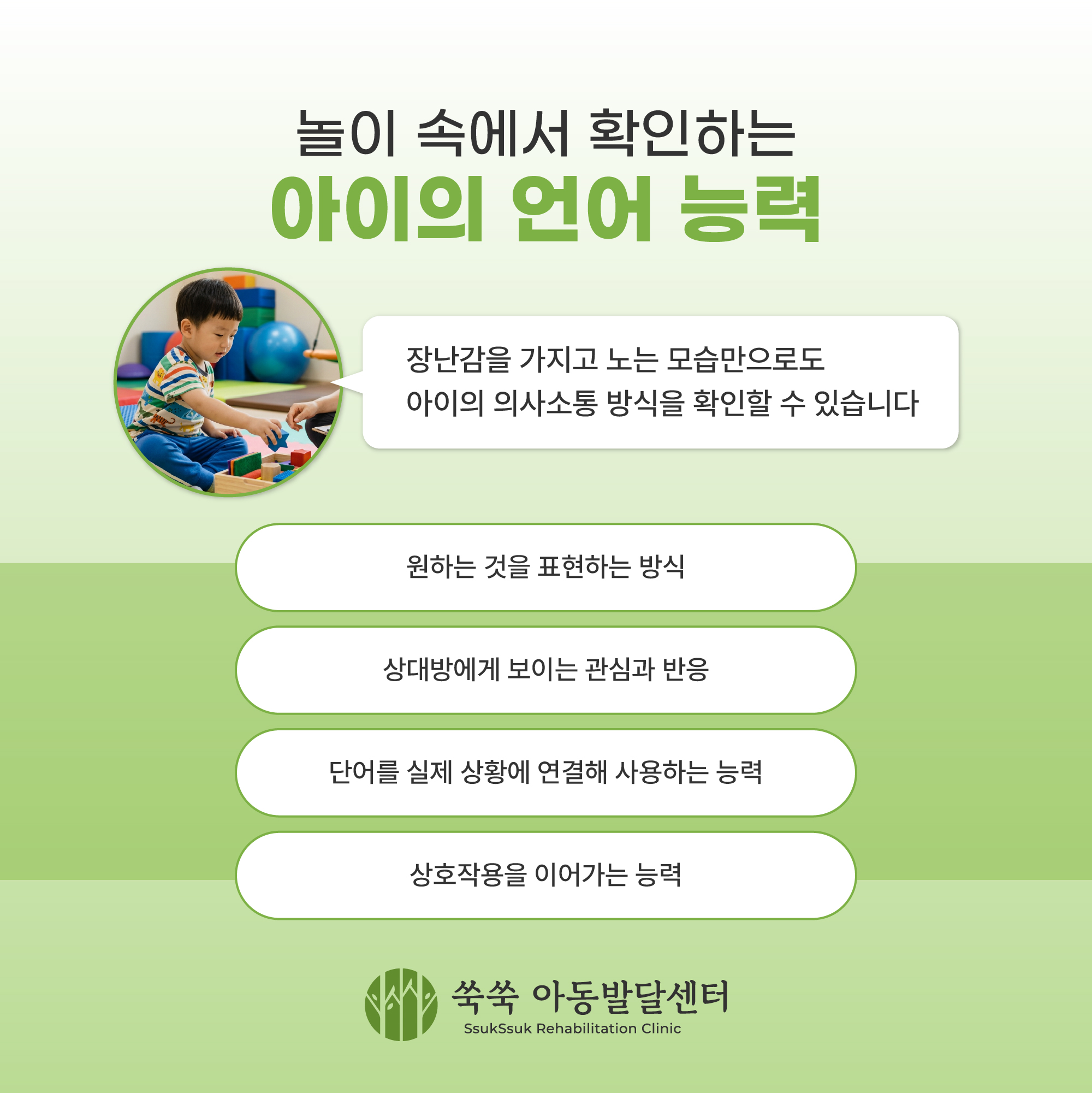
What language experiences do different kinds of play offer?
For a child whose language is slow to develop, simply being in a situation where they have to talk can feel like pressure. That's why it matters to create chances to express themselves naturally inside familiar, fun play. Language can develop more effectively when children feel a need and try using it themselves than when they memorize and repeat.
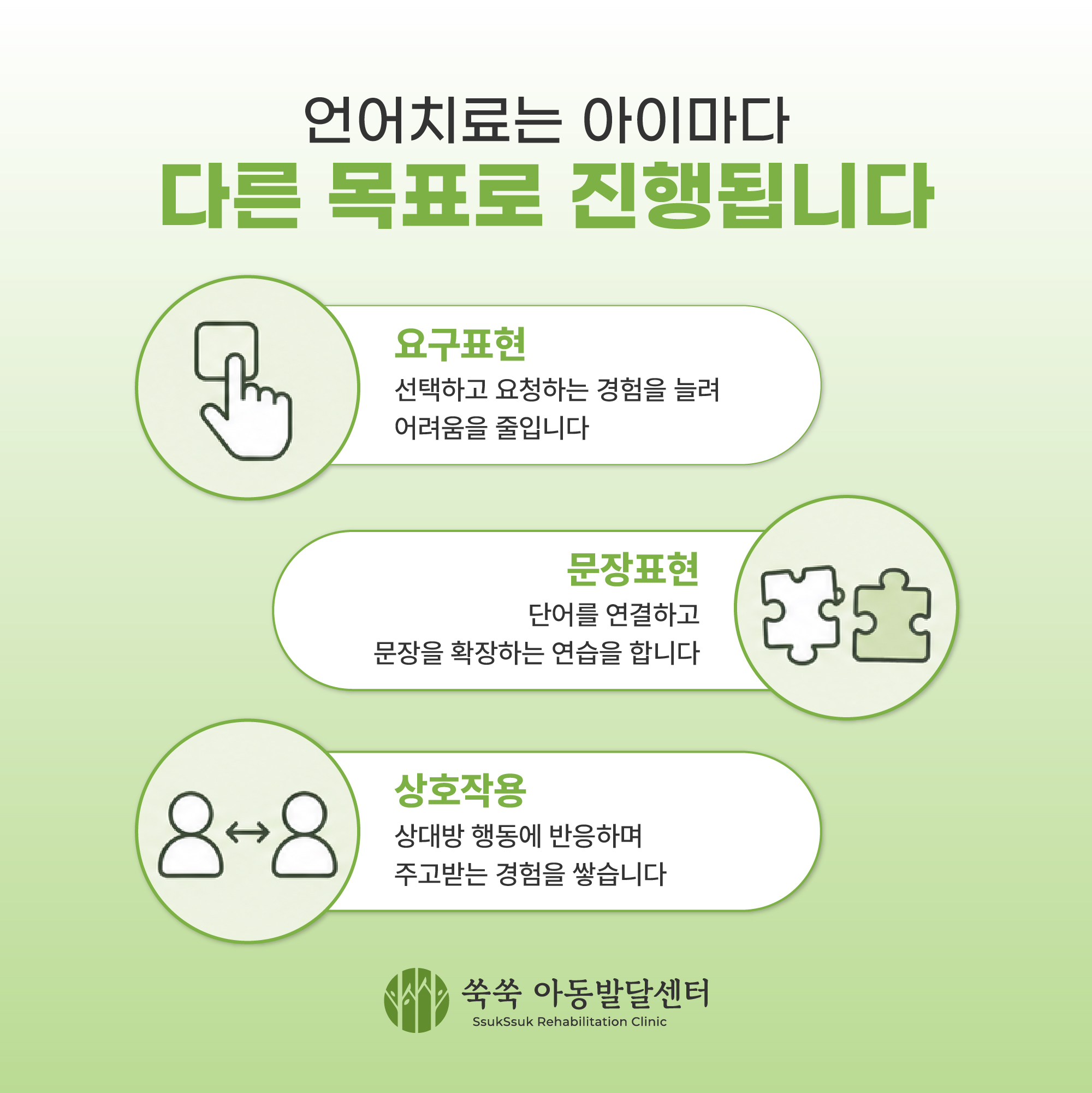
Play in speech therapy has a goal
Having fun together isn't the only reason we use play. The play used in speech therapy is planned with goals that take into account the child's current language level and difficulties.
- A child who struggles to express needs → more chances to choose and request things during play
- A child with limited sentences → linking words and expanding sentences in play situations
- A child who struggles with back-and-forth → keeping play going together, watching and responding to the other person
Play itself isn't the goal; the key is using play to create chances to use language. Since every child finds different areas hard, which play we choose and how we interact matters.

How can you play at home?
Children express themselves more actively and try harder to interact when they're doing something they're interested in. That's where they learn new words, share their thoughts, and come to understand other people's reactions.
At home, too, rather than giving the right answer or pushing your child to talk a lot, it can help to join in an activity they're interested in and wait for them to express themselves. Language development doesn't happen only at set times; it carries over into all kinds of everyday experiences.
To sum up, play in speech therapy at our Development Center in Banpo isn't a tool for making children repeat words. It's a process that builds a child's ability to communicate with people and express their thoughts in an enjoyable setting.
Last reviewed: 2026-10-07 This article offers general information only. Your child's developmental status and treatment plan are determined through consultation and assessment.