

"Further Evaluation Recommended" in Seocho-dong: Why Not to Wait
A "further evaluation recommended" result doesn't confirm a developmental problem; it's a check to find the right help at the right time.
A "further evaluation recommended" result from the infant health checkup doesn't mean a developmental problem has been confirmed. It means the screening found some areas worth looking at more closely, and it's a step toward understanding your child accurately. Here's why our Development Center in Seocho-dong finds it helpful not to delay an assessment after this result.
When the infant health checkup comes back with "further evaluation recommended," the first worry is often "Is something wrong with my child?" You may also wonder whether to wait and see, since your child is still young and every child develops a bit differently, or to get checked. Setting the anxiety about results aside for a moment, it helps your child more to find out which areas are hard right now and which abilities they use well. Since every child develops at their own pace, it's important to look objectively at where your child is now rather than comparing them with peers.

What it means to check in the infant and toddler years
In the infant and toddler years, many abilities grow quickly and at the same time: learning and expressing language, understanding the environment, building experience through play, and forming relationships.
If you find out which areas are hard during this time, you can help your child in a way that fits them instead of just waiting. Even for a child who seems late to talk, the approach differs depending on whether it's only about expressing language, or whether understanding speech or social interaction also needs a look. A child's developmental traits also show in how they learn new activities, how they play, and how they respond to sensory input.
Checking early isn't about deciding there's a problem; it's about preparing the stimulation and environment your child needs now.

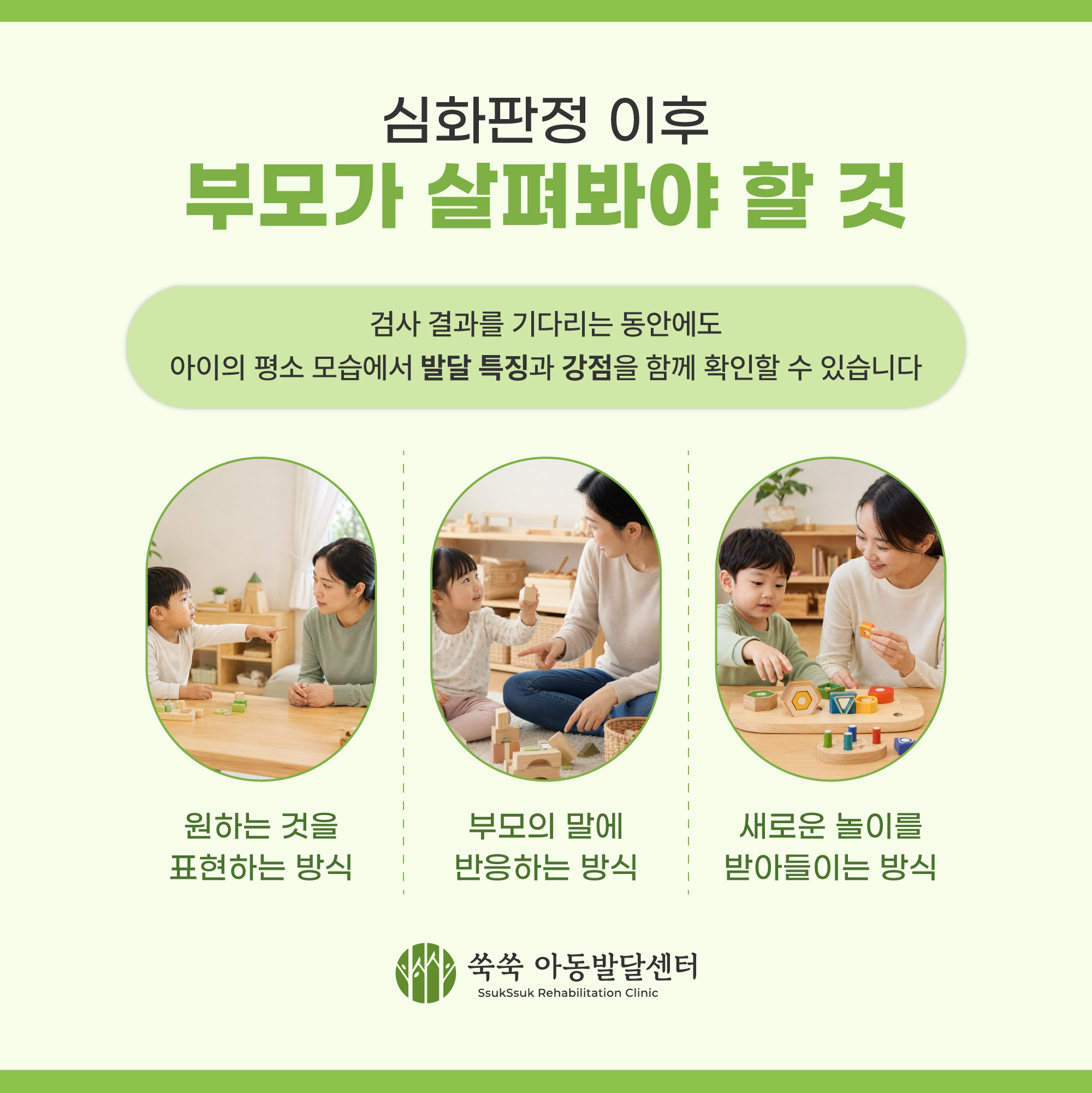
While waiting for the assessment, what can you watch for at home?
Your child's development shows not only in the testing room but in time spent at home, in play, and in interactions with family. This everyday picture is exactly what parents can see most closely.
- How does your child let you know what they want?
- How do they respond when you talk to them?
- How do they take to a new game?
Don't just look for what's lacking; write down what your child does well, too. Some children are slow to express themselves but connect well with people; others love to play but need help putting their thoughts into words. Instead of simply waiting for results, this becomes time to understand your child's traits.

What gets put off when checking is delayed?
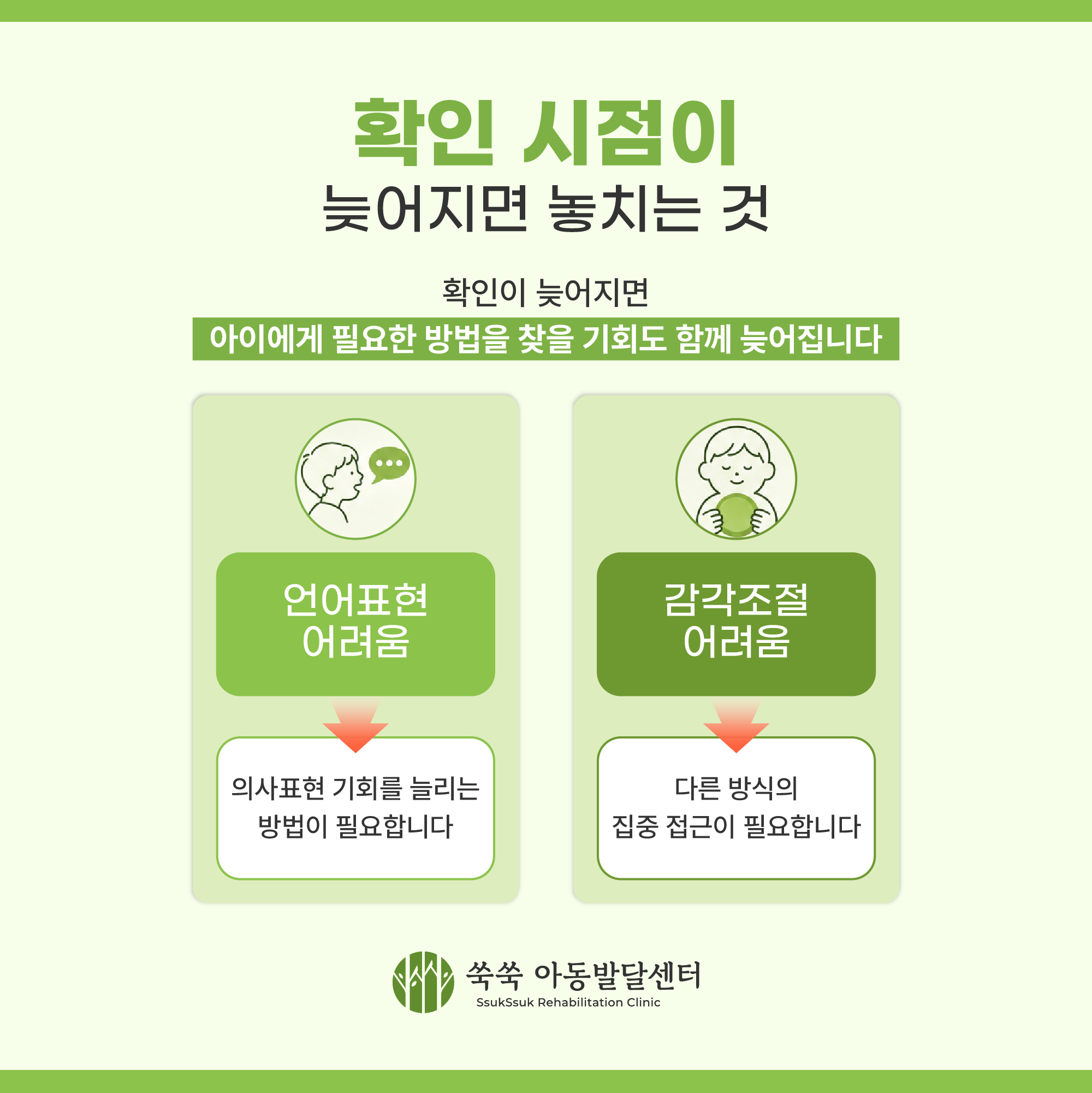
A "further evaluation recommended" result doesn't mean therapy has to start right away. But if checking your child's current status is delayed, the chance to learn what kind of help they need can be pushed back too. In development, finding the right direction for your child matters more than a quick verdict.
A child who has trouble expressing themselves may benefit from more chances to communicate, while a child who has trouble with sensory regulation or staying focused may need a different approach. Knowing which area is hard lets parents choose concrete steps instead of worrying vaguely. Not delaying the assessment isn't about finding problems; it's about understanding your child's developmental traits and connecting the help they need.
The goal: knowing both strengths and needs
When results come in, even small things can feel worrying. But the purpose of a further evaluation isn't to grade your child or single out weaknesses. It's to understand which stage of development your child is in, where their strengths are, and which areas need extra support. If needed, you can find the direction that fits your child's difficulties, whether in language development, cognitive function, sensory regulation, or play and interaction.
In summary
- A "further evaluation recommended" result isn't something to dread; it's a signal to understand your child's current picture more accurately.
- Not putting off the assessment means you can find out sooner where your child needs help.
- The key isn't sorting fast from slow, but finding the help your child needs at the right time.
Last reviewed: 2026-10-07 This article offers general information only. Your child's developmental status and treatment plan are determined through consultation and assessment.