

Language Delay near Seocho Station: From Words to Sentences
With a language delay, we look beyond word count to how a child links known words into sentences and uses them to communicate.
There can be a stretch when your child's words keep growing one by one, yet they seem stuck at linking two or more words or putting their thoughts into sentences. It's easy to wait, thinking "They've started saying words, so sentences will come soon." But language development isn't complete just because the number of words goes up. Here's why our Development Center near Seocho Station looks separately at the step from words to sentences when evaluating a language delay.

Single words and word combinations are different skills
A child who says familiar words like "water," "mommy," or "car" moves on to linking words to share what they mean, like "Mommy, water please" or "Car go." This takes the ability to choose words that fit the situation, understand how words relate to each other, and the intention to share a thought with someone else.
That's why, with a language delay, we look not only at how many words a child says but at how they combine and use the language they have.

Changes that come with the move to sentences
Sentences get longer, but several other changes come along too.
- Linking words — A child who used only the key words, like "mommy" or "snack," expands to phrases with intent, like "Mommy, snack please" or "Doggy running."
- Grammar words and connectors — As sentences grow, so does the ability to use small grammar words and phrases that connect ideas.
- Talking about experiences — The child describes things that happened, like "Went to playground" or "Played with friend."
- Keeping conversations going with questions — The child asks things like "Why?" or "Where going?" to keep the conversation going.
Some children know the words themselves but have trouble linking them into sentences. In that case, rather than teaching more new words, it's important to give more chances to express themselves with the language they already have.
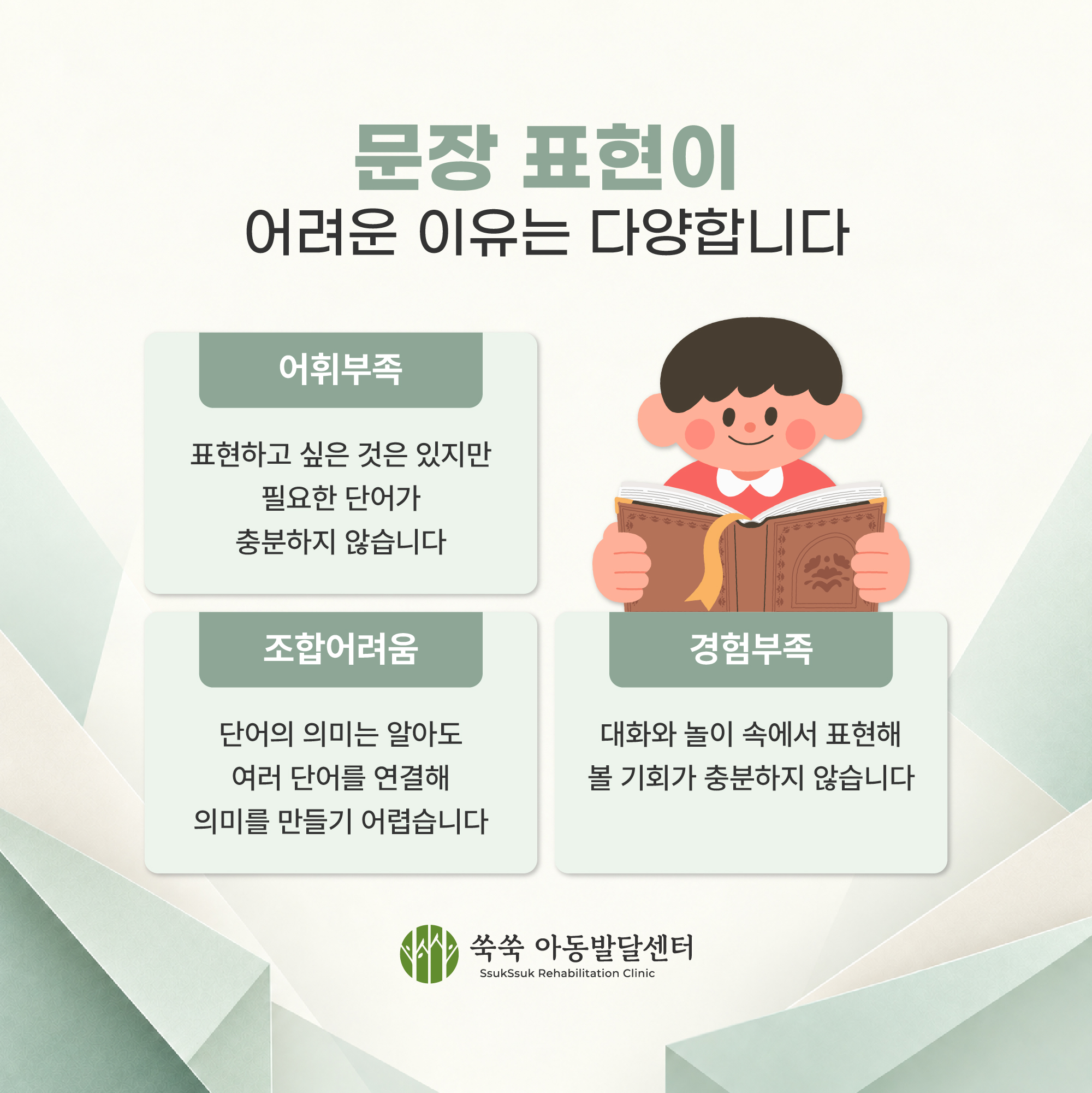
Why making sentences is hard differs from child to child
- The child has things to say but hasn't built up enough words to link into sentences
- The child knows what words mean but finds it hard to put several words together into one idea
To make a sentence, a child has to go beyond remembering words: understand the situation, organize what they want to say, and choose the right words. Seeing a car and saying "car" is a different skill from expanding the thought, like "Big car going by" or "Let's go in Daddy's car."
Language doesn't grow through solo practice; it grows through back-and-forth exchanges. Conversations with parents, talking during play, and time spent sharing thoughts all add up, and sentence use can gradually expand.

What to watch for at home
- How does your child let you know what they want?
- Do they try to tell you about things that happened?
- How do they respond to your questions?
- Do they describe what's happening while playing with toys?
- Do they make up lines during pretend play?
- Do they expand their language through back-and-forth play?
Whether your child uses perfect sentences isn't the only thing to look at. More important clues are whether they try to share their thoughts and whether their ways of expressing themselves are becoming more varied than before. The comparison isn't other children the same age; it's your child a while ago. Check what has changed since then.

In summary
Every child with a language delay struggles in a different place. Some need help building vocabulary; others need help linking words into sentences or describing their experiences. Rather than just measuring sentence length, look at whether your child is trying to communicate with people through language and growing toward expressing their thoughts. A language delay isn't only about starting to talk late; it's an area where the whole process of understanding and using language needs to be checked.
Last reviewed: 2026-10-07 This article offers general information only. Your child's developmental status and treatment plan are determined through consultation and assessment.