

In-Depth Developmental Assessment in Bangbae-dong: Where Your Child Is
An in-depth developmental assessment isn't about finding shortcomings; it shows where your child is now, strengths and needs alike.
"What if the results say my child is behind?" It's a worry many parents have before an in-depth developmental assessment for infants and toddlers. But a developmental assessment isn't about measuring your child against a standard or picking out weaknesses. It's a way to understand where your child is right now. Our Development Center in Bangbae-dong has put together what the assessment can tell you, in the order parents usually ask.

What does the assessment look at?
It looks at which stage of development your child is going through, which areas may need a closer look compared with peers, and what your child's strengths are.
In the infant and toddler years, children of the same age grow at different speeds and have different interests. Some children's spoken language takes off early, while others shine in play, movement, or problem solving. Understanding how your child is growing right now matters more than a "fast" or "slow" result.

Why look at several developmental areas together?
It's easy to judge development by what stands out, like how much a child talks or whether they're quicker than peers. In reality, development happens as language, cognition, motor skills, social skills, and adaptive skills all influence one another.
Some children are a little slow in expressing themselves but do well in play and problem solving. Others seem to talk well but need a closer look at understanding situations or interacting with others. To capture differences like these, the in-depth developmental assessment looks at several areas together to see where your child's strengths are and where they need support. Because every child develops in a different order and at a different pace, we don't judge the whole picture from one behavior; we put it all together.

Is it just about finding what's lacking?
No. One important purpose of the assessment is to identify your child's abilities and strengths as well. Some children are still clumsy with words but quickly figure out new games or eagerly explore their surroundings. Others are slow to talk but reliably understand what people say and respond appropriately.
We look at strengths not to get a better score, but to use those abilities as a foundation when deciding how to support the areas that need help.

What happens after you get the results?
The value of the assessment doesn't end with reading the report. The next step is thinking about what environment and experiences your child needs, based on the results.
Assessment results aren't a yardstick for judging your child. They're a reference for understanding your child better and deciding how to help in everyday life.
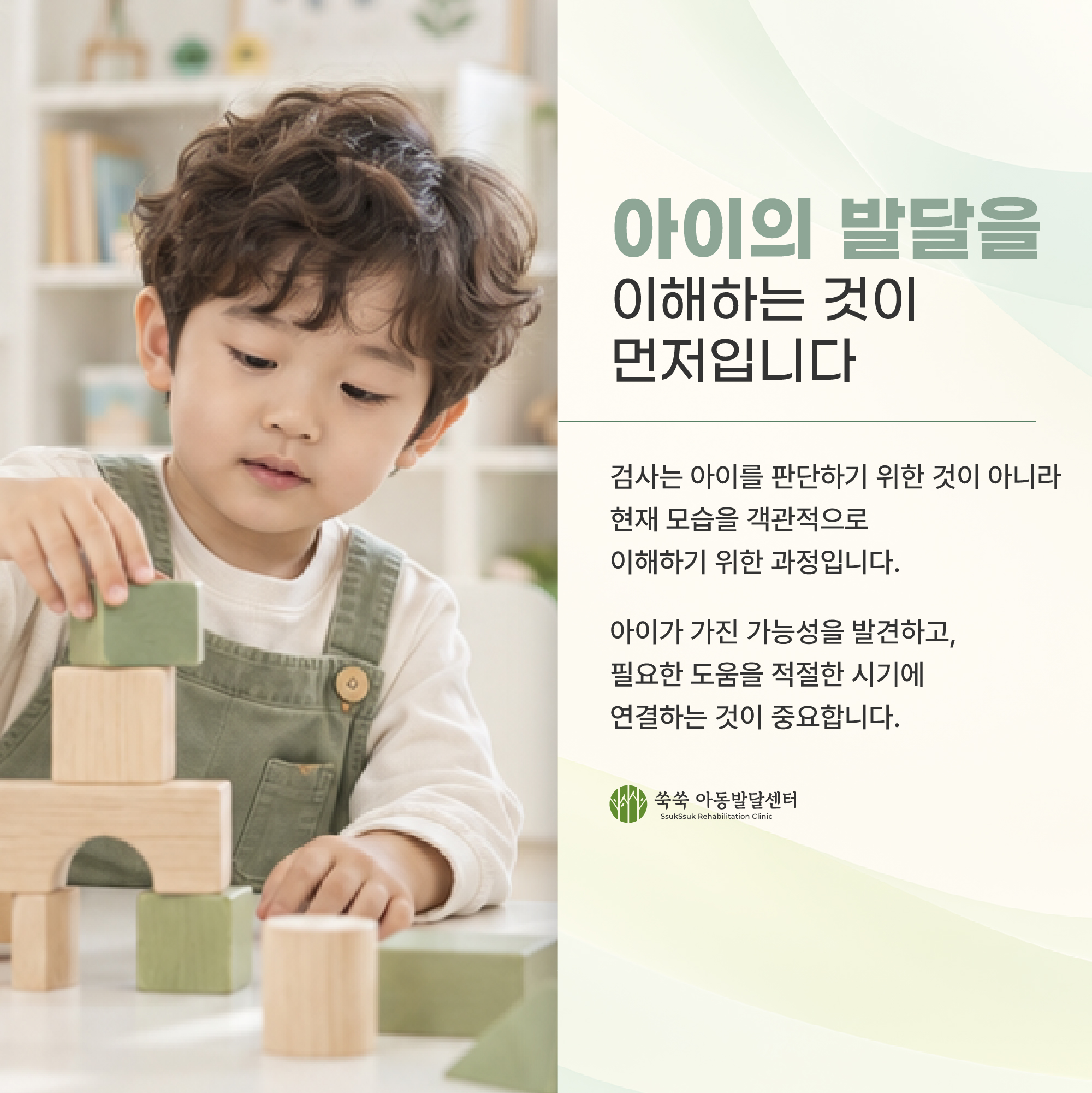
Knowing where your child is now is the starting point
Rather than whether your child is faster or slower than others, what matters is understanding how your child learns, expresses themselves, and connects with the people around them. An in-depth developmental assessment is a way to see your child's current picture objectively and find the right direction for support. When you focus on understanding where your child is, rather than judging them by the results, and provide the right experiences and environment, you can discover your child's potential and get them the help they need at the right time.
Last reviewed: 2026-10-07 This article offers general information only. Your child's developmental status and treatment plan are determined through consultation and assessment.