
Recurring Shoulder Pain: Muscle Knots and FBT Injections
Recurring shoulder pain often stems from tension between muscles and movement imbalance rather than simple knots, so the cause needs a closer look.
When your shoulders feel stiff and heavy, it's natural to assume your muscles are just knotted up. But shoulder pain isn't caused by muscle fatigue alone. Dr. Lee Soo Jin, Director of Ssukssuk Rehabilitation Medicine Clinic, walks through the functional causes of recurring shoulder pain, FBT injection therapy, and how to restore movement after treatment.
Why Muscle Knots Don't Tell the Whole Story
Repetitive arm use places strain on the rotator cuff and surrounding tendons, and when shoulder joint movement decreases, the nearby muscles become overly tense. Holding the same posture for long periods or relying on one arm concentrates the load on certain muscles, changing the tension between muscles and the balance of movement. Massage or rest may ease the discomfort for a while, but the pain can return to the same spot.
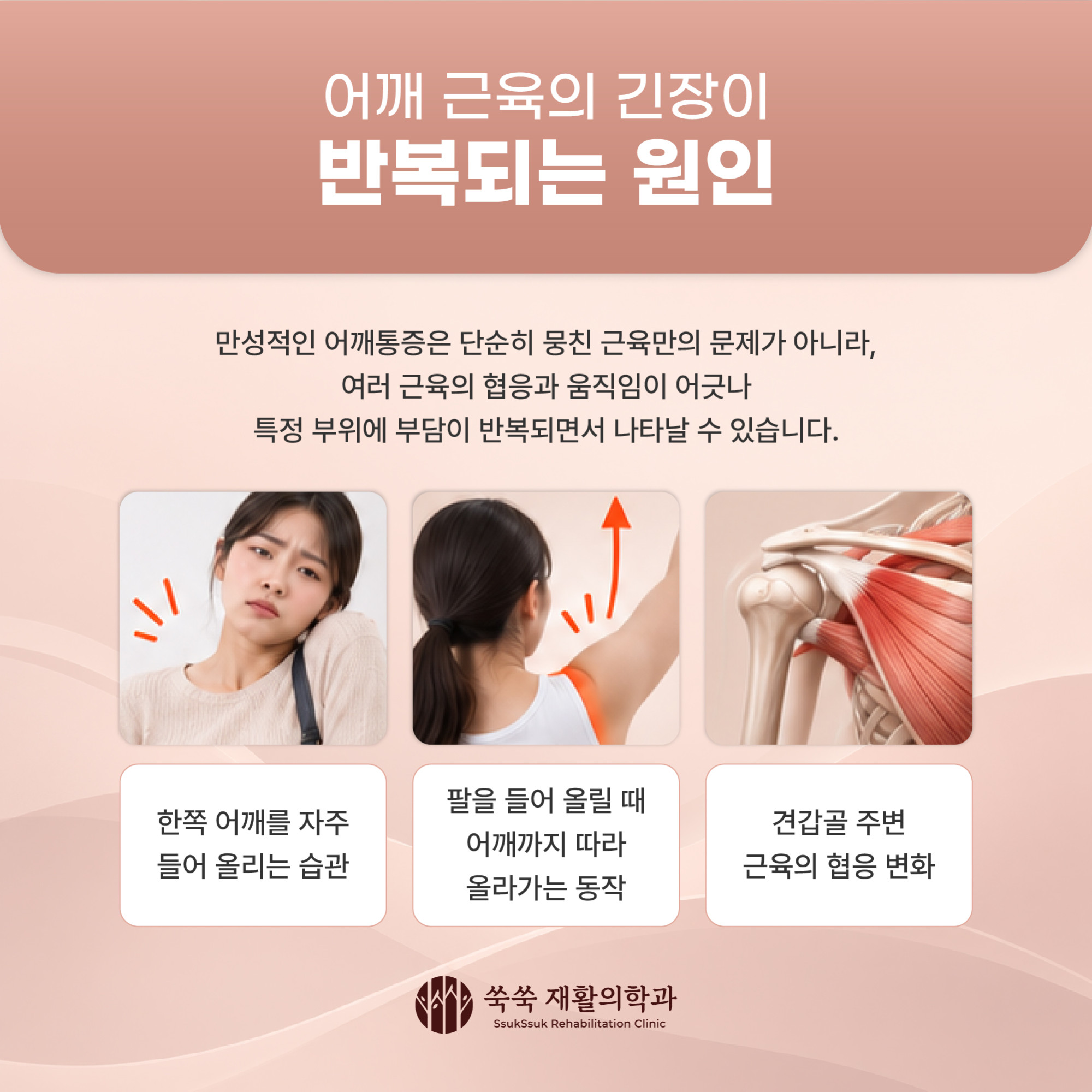
Muscles don't work in isolation. Several muscles share the work of moving a joint. Even lifting your arm requires the shoulder joint and the muscles around the shoulder blade to move together. When some muscles become excessively tense or fall out of balance, strain keeps piling up in specific areas. Common contributing factors include:
- A habit of frequently hiking up one shoulder
- The shoulder rising along with the arm when you lift it
- Changes in how the muscles around the shoulder blade coordinate
If this continues, the area from the neck to the shoulder stays tight even at rest and grows stiffer the more you use your arm. So we go a step beyond asking "Where does it hurt?" to ask "Why does tension keep building in that spot?" We look at where tension is high and how it relates to your actual movement to set the direction of treatment.
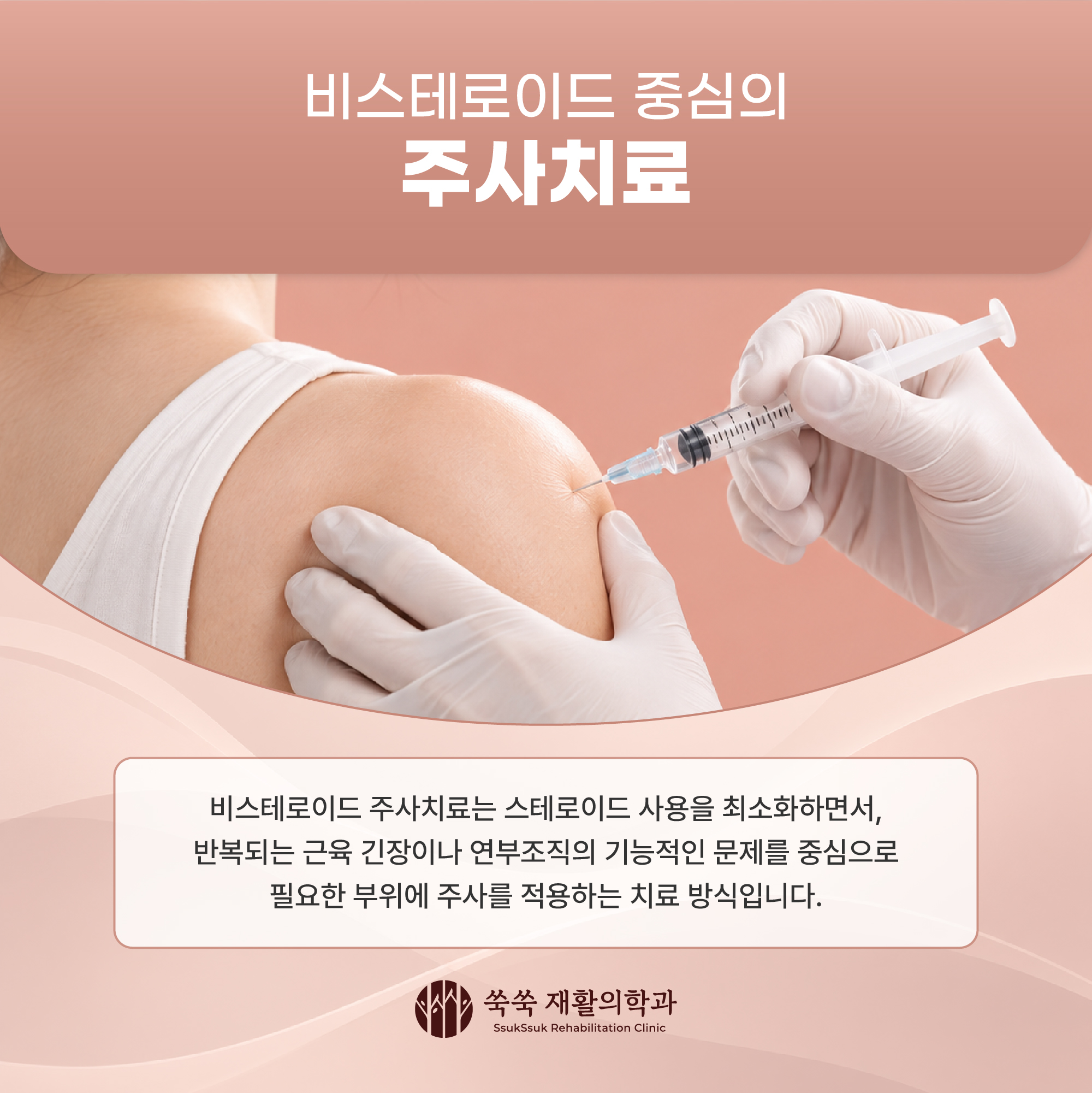
Are All Shoulder Injections Steroids?
No. Even when injections are considered for muscle knots or chronic shoulder pain, steroids aren't used in every case. A steroid injection is one way to reduce inflammation and pain. When the main issue is recurring muscle tension or a functional problem in the soft tissues, we minimize steroid use and focus on non-steroid injections. This approach reduces the burden of repeated steroid use while tailoring treatment to your pain pattern and the area being treated.
Injection sites aren't chosen based on a single sore spot. We determine them by examining tender points, muscle tension, and the areas where movement reproduces the pain. Distinguishing these areas helps reduce unnecessary irritation and allows a precise approach to the muscles and soft tissues causing the problem. Reactions after treatment are usually mild, such as bruising or temporary soreness at the injection site.
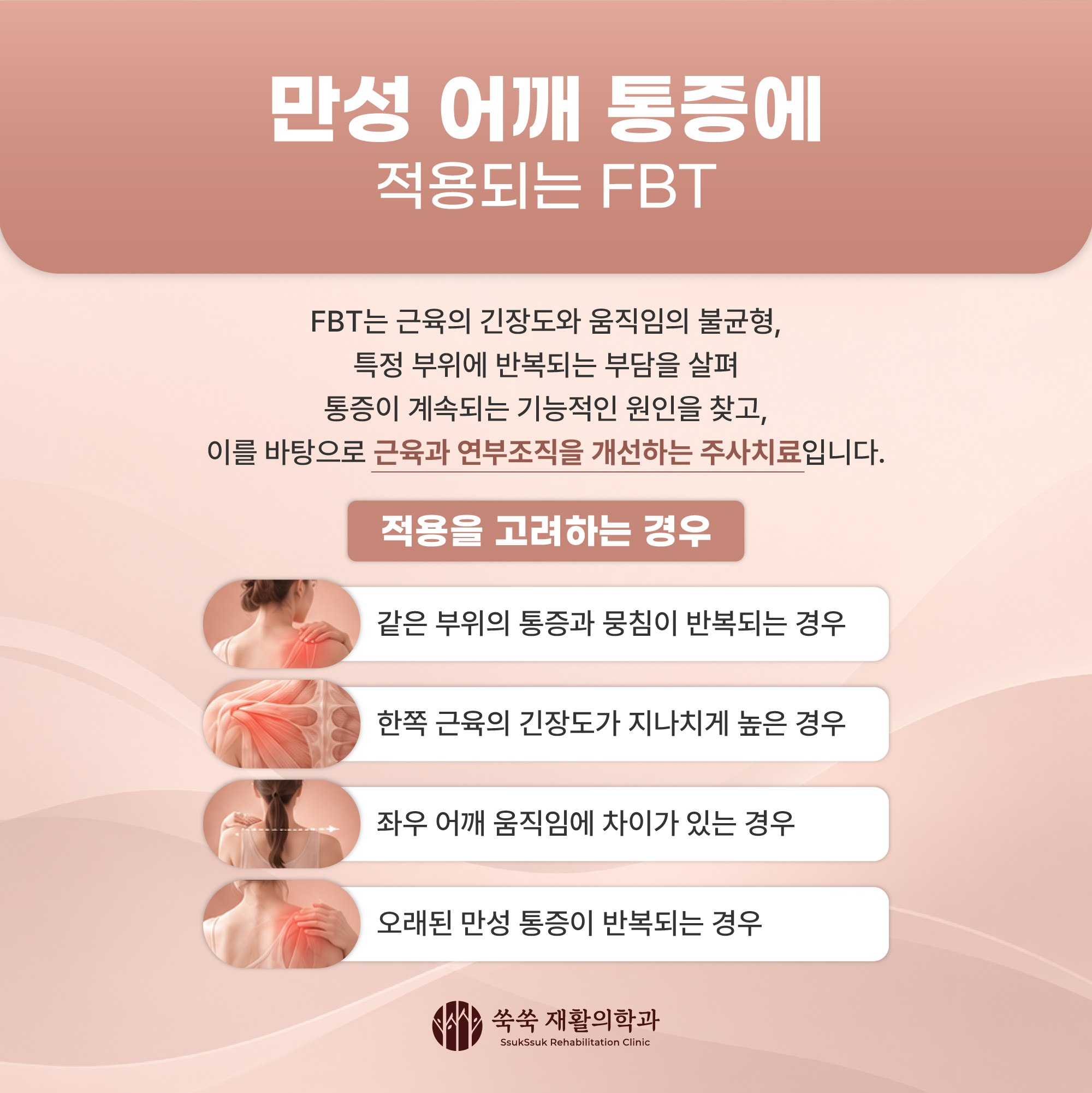
FBT Looks at Why the Pain Keeps Coming Back
FBT stands for Functional Balance Treatment. Rather than injecting only the painful area, it's an injection approach that also asks, "Why do pain and tightness keep returning to the same spot?" If one shoulder keeps tightening up, we don't treat just the shoulder. We check the tension in the surrounding muscles, which muscles take on the load when you move your arm, and differences in movement between your left and right shoulders. After identifying where tension recurs and where movement is imbalanced, we apply injections to the responsible muscles and soft tissues to restore functional balance.
When muscle tension is abnormally high or long-standing chronic pain keeps recurring, this functional approach can help relieve pain and restore balanced movement.
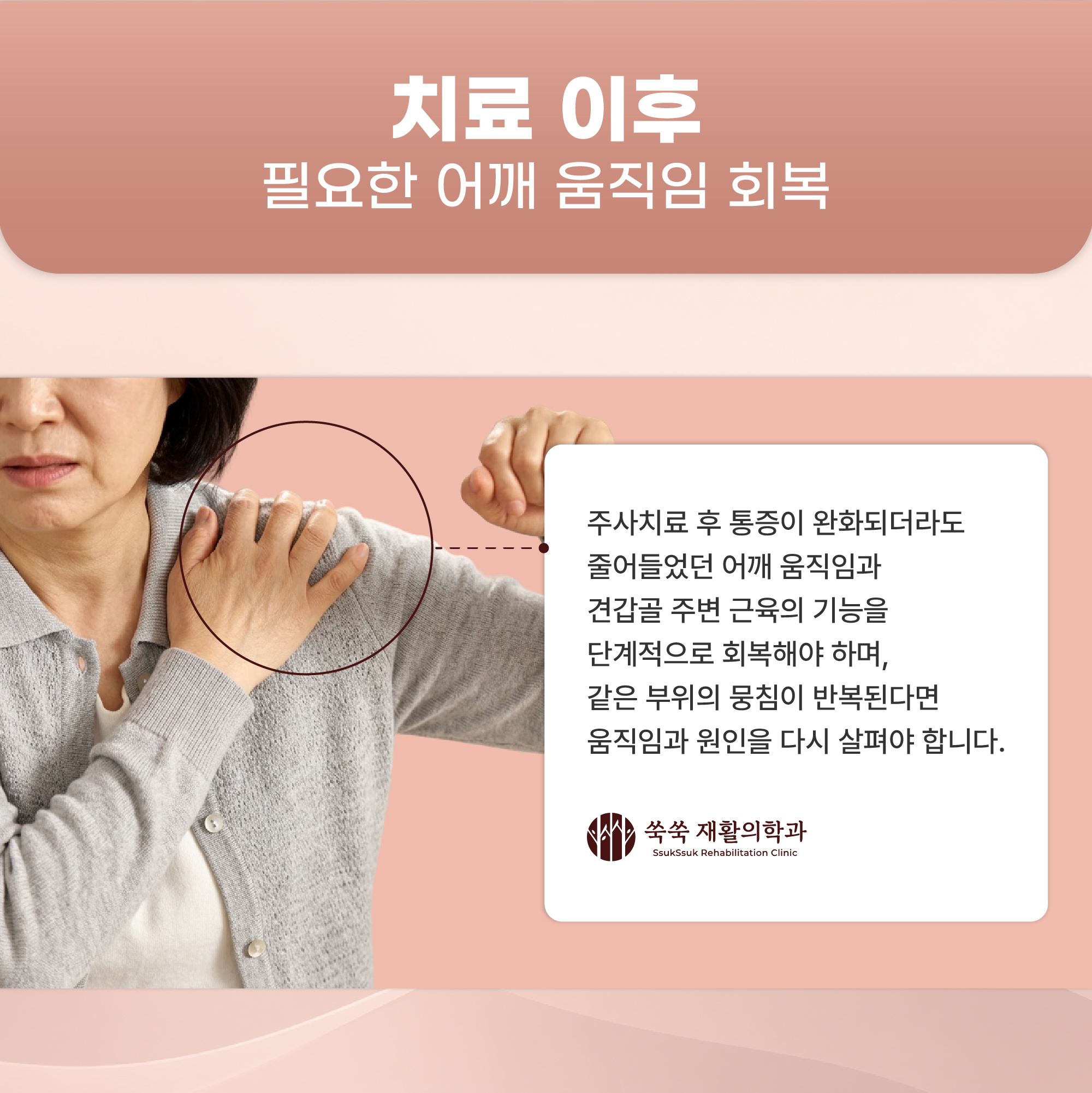
After Injections: Time to Regain Movement
Once your shoulder feels better after injection therapy, it's time to bring back the movement you lost. If you've been uncomfortable for a long time, you may have developed habits like using the arm less or holding one shoulder rigid. If only the pain goes away and you return to old movement patterns, the strain will build up again.
- Gradually increase shoulder joint movement as you recover
- Help the muscles around the shoulder blade move naturally
- For overhead movements like washing your hair, changing clothes, or reaching for items on high shelves, slowly increase the range and repetitions without making the pain worse
If pain persists or the same area stays stiff despite repeated treatment, we re-examine the original cause and your movement rather than simply adding more injections.
Final Thoughts
With shoulder pain, recovery isn't over just because the pain has eased. You also need to check whether movement is returning naturally and whether certain motions are causing strain again. If your pain has improved but your shoulder still doesn't move comfortably, or tightness keeps returning to the same spot, it's worth getting checked to find out why.
Author: Dr. Lee Soo Jin, Director, Ssukssuk Rehabilitation Medicine Clinic (Board-Certified Rehabilitation Medicine Specialist) · Profile Last reviewed: 2026-10-07 This article provides general medical information. Individual diagnosis and treatment decisions are made during an in-person consultation.