
Scoliosis Clinic
About this care
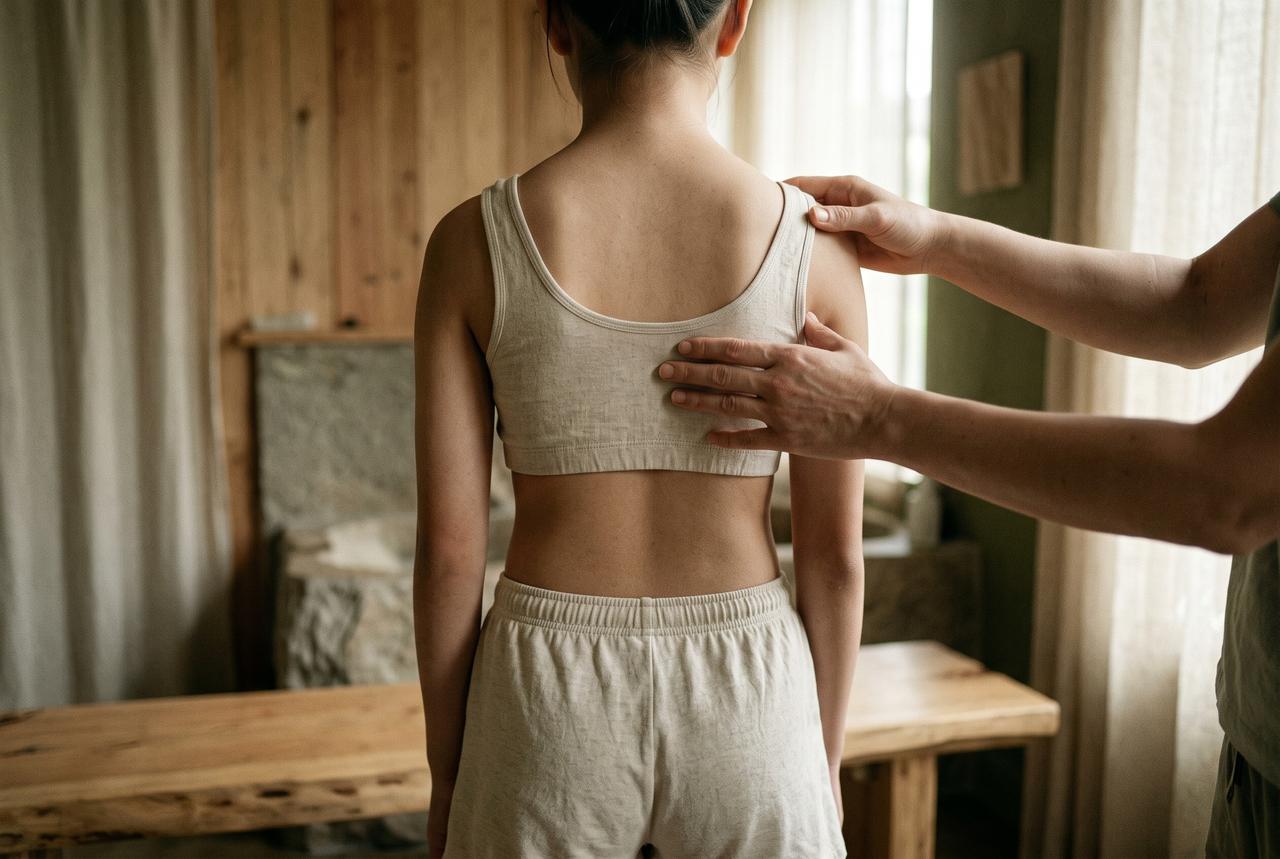
We assess shoulder and pelvic height and spinal curvature, using posture and imaging findings to plan growth monitoring and care.
When to seek a consultation
- My child's shoulders look uneven.When the spine curves to one side, the shoulders and pelvis can sit at different heights and the body may lean to one side.
- She never says it hurts, but her posture looks crooked.Childhood scoliosis often causes no pain, so it is sometimes noticed only through visible changes in posture.
- He often complains of neck tightness, headaches and back stiffness.When posture changes accompany neck or back pain or headaches, symptoms and movement are assessed together.
- She's entering puberty and I'm worried about her posture.Changes in shoulder height, back shape or balance during growth can be assessed in consultation.
How treatment proceeds
- 1Before care
We start by pinpointing the condition.
Posture and movement are examined; X-rays or other tests are discussed when indicated.
- 2During care
We proceed with a program tailored to your child.
Based on assessment results that predict how likely the curve is to progress, an individualized correction program is carried out.
- 3Reassessment
We re-check the results.
Symptoms and posture are reassessed. Further imaging is decided during consultation.
- 4Follow-up
We keep supporting you afterward.
Even after treatment, we track whether once-a-week exercise is being kept up and provide ongoing feedback.
Discuss your child’s assessment and therapy
Please call the Child Development Center on 02-521-7577 to discuss a visit.